
 Denmark
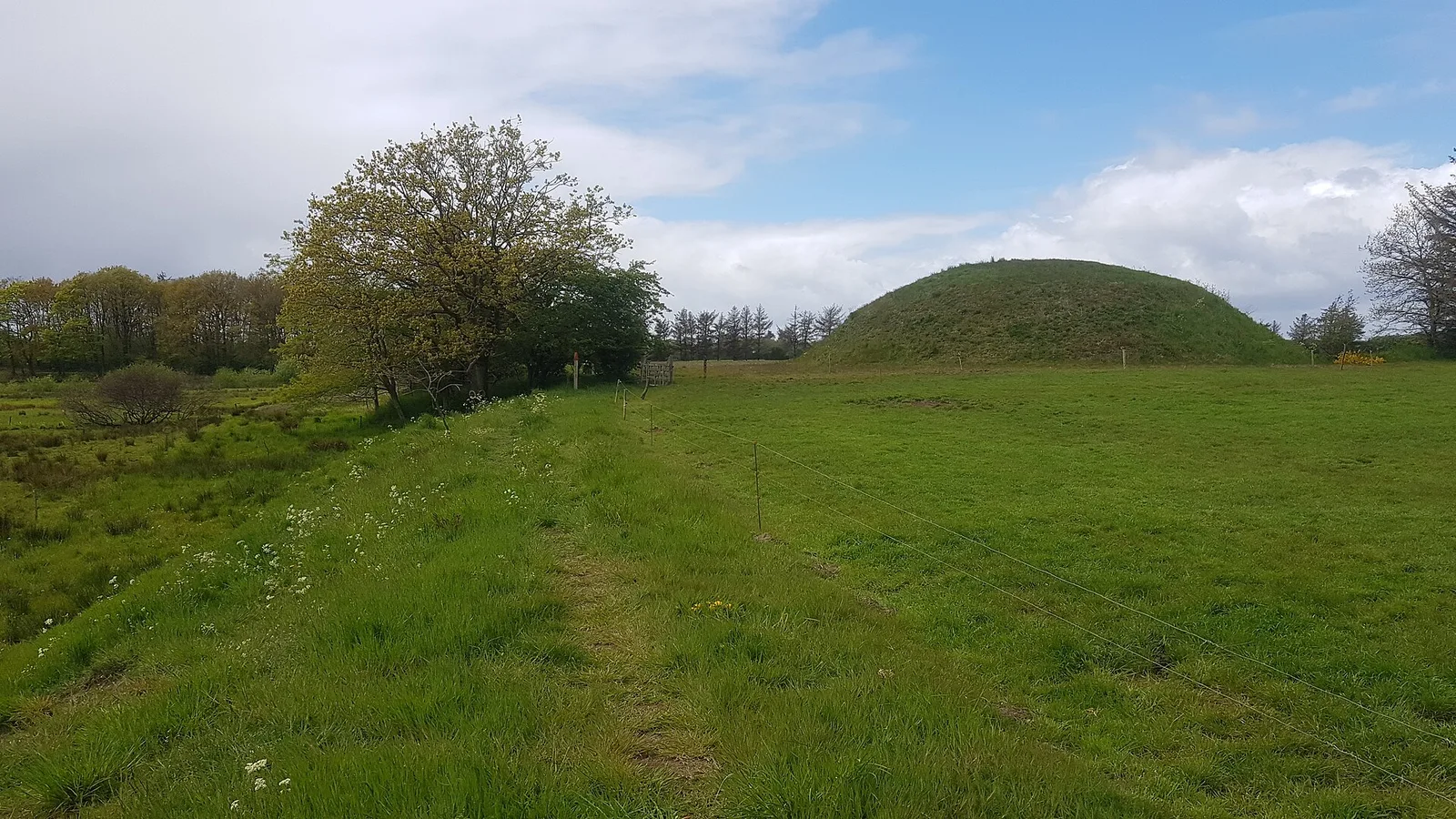
Skelhøj is a burial mound from the early Bronze Age [1]. It was archaeologically excavated between 2002 and 2004 [1]. Skelhøj is an individual burial mound that is part of a broader series of 26 along the Kongeå River in Southern Denmark [1]. The mound was dated to the 15th century BC using radiocarbon dating [1]. The mound was divided into eight sections, evocative of an eight-spoked wheel, each of which were constructed independently, and the groups involved in construction may have brought turf from the area they lived in [1]. The mound was robbed, likely shortly after construction, and another time in the 19th century [1]. Archeologists sought to study how the burial mound's oak coffin was preserved along with what was within it, how the barrow was constructed, and what the landscape around the mound looked like when the mound was constructed [1]. They concluded that the coffin had been covered in large amounts of water shortly after burial, which created what they described as an "iron capsule" around the coffin through a chemical reduction reaction [1].
Text: Wikipedia – 'Skelhøj' (revision of 2026-07-31), CC BY-SA 4.0 · sentences selected and shortened by an AI system · source →Skelhøj
| Type | Mound/tumulus |
|---|---|
| Period | 1500 - 500 BC |
| Country | Denmark |
| Coordinates | 55.4128° N, 8.8710° E |