
 Denmark
Klekkende Høj is a megalithic tomb on the island of Møn in Denmark [1]. The tomb is believed to date from the Neolithic Age, ca. 3500-2800 BC, and is one of the best preserved of more than 100 burial mounds on the island [1]. The tomb is a passage grave, which means that the central chamber within the mound is reached by a connecting passage [1]. Klekkende Høj is unusual in that there are two entrance passages running approximately parallel to each other, facing east [1]. Within the mound is a central space running approximately north-south, which is divided through the centre by two large stones [1]. The tomb was excavated in 1797 by Antoine de Bosc de la Calmette, who was governor of the island [1]. Inside were a considerable number of human remains, flint weapons, clay vessels and amber jewellery [1].
Text: Wikipedia – 'Klekkende Høj' (revision of 2026-06-10), CC BY-SA 4.0 · sentences selected and shortened by an AI system · source →Klekkende Høj
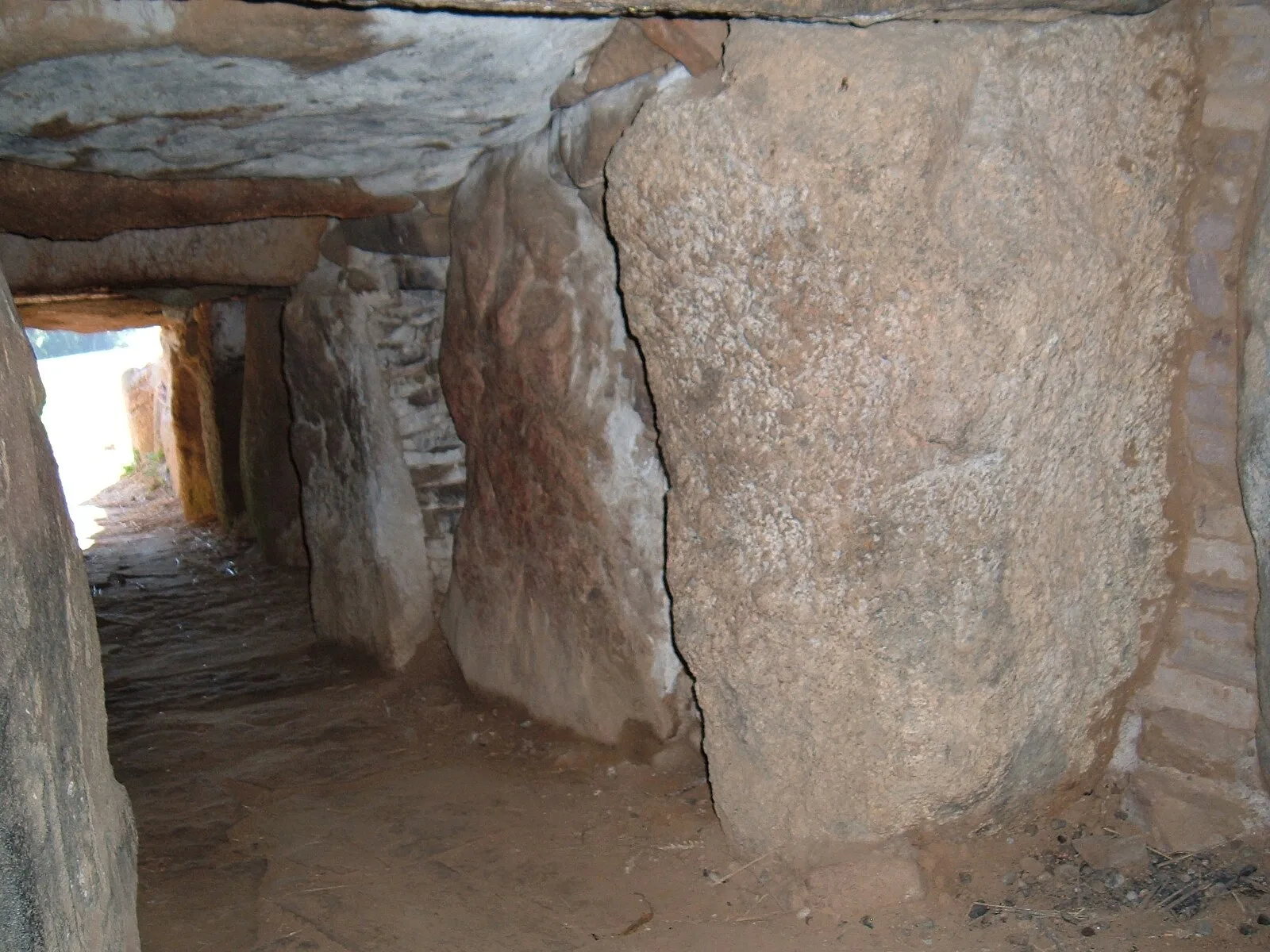
Also known as: Klekkende-Høj, Клеккенде Хёй, Клеккенде-Хёй
| Type | Tomb |
|---|---|
| Period | 4500 - 3000 BC |
| Country | Denmark |
| Coordinates | 54.9363° N, 12.1642° E |