
 Bulgaria
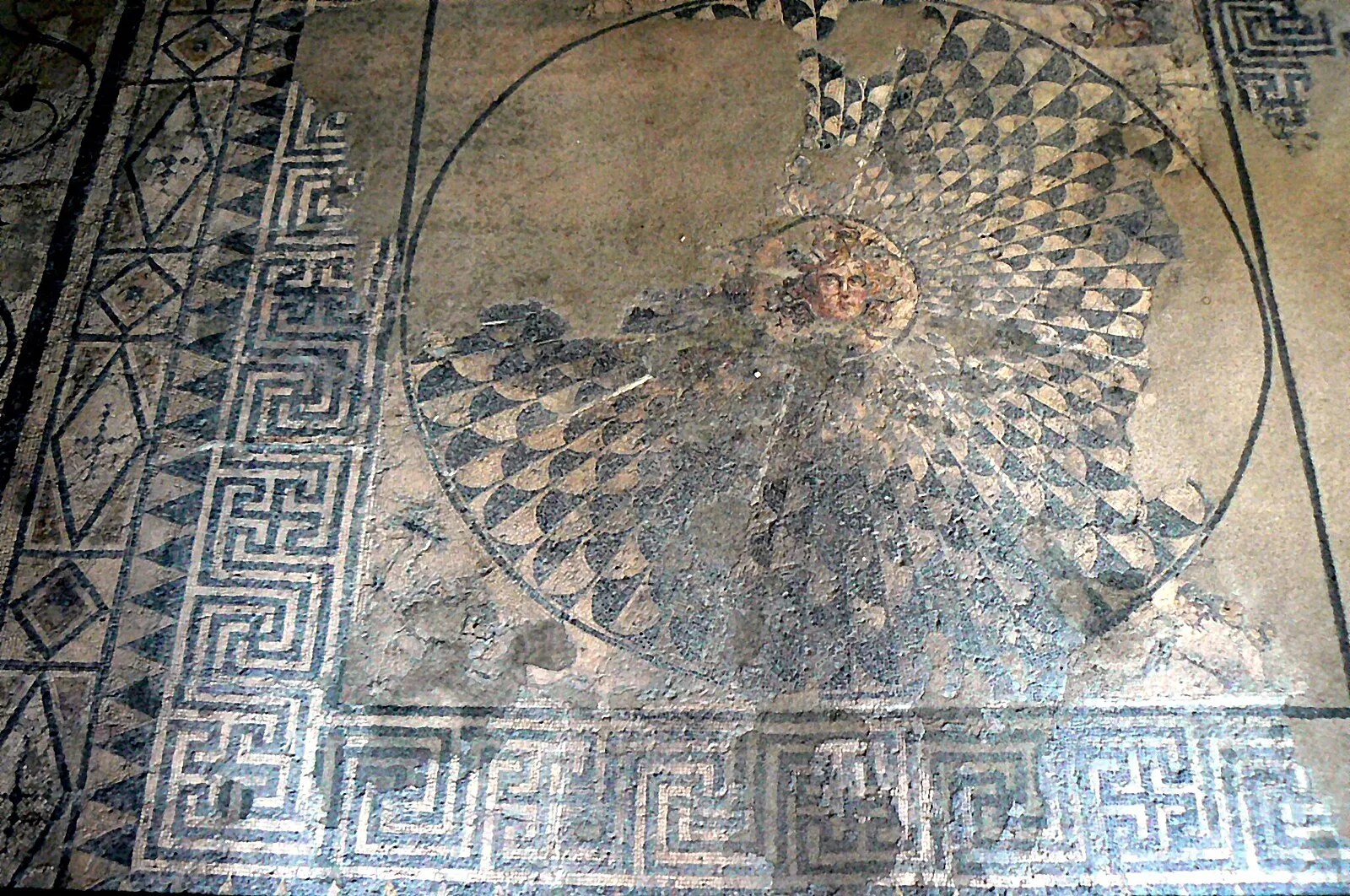
The Museum of Mosaics is a museum in the town of Devnya in Varna Province, northeastern Bulgaria [1]. The museum, built on top of a large ruined Roman villa from Late Antiquity, exhibits mosaics from the Roman and early Byzantine city of Marcianopolis [1]. The museum was founded as a result of archaeological research beginning in 1976, which uncovered the House of Antiope, a Late Roman villa decorated with floor mosaics [1]. The villa was constructed in the late 3rd or early 4th century AD, perhaps during the rule of Roman Emperor Constantine the Great [1]. Constructed on the site of earlier buildings destroyed during the Gothic raids in 250–251, it was abandoned in the 7th century due to Avar and Slavic invasions [1]. Despite the rise of Christianity during the reign of Constantine, the mosaics in the House of Antiope are exclusively pagan in character [1]. They feature depictions of characters from Greek and Roman mythology such as Zeus, Antiope, Ganymede and the gorgon Medusa [1].
Text: Wikipedia – 'Museum of Mosaics, Devnya' (revision of 2024-10-29), CC BY-SA 4.0 · sentences selected and shortened by an AI system · source →Museum of Mosaics, Devnya
Also known as: musée des mosaïques de Devnya, Museo de los Mosaicos, Museum of Mosaics, Museum of Mosaics (Devnya), Museum of Mosaics in Devnya, Museum van Mozaïeken, Muzej mozaika (Bugarska), Музей мозаики, Музей мозаики (Болгария), Музей мозаїк, Музей мозаїк (Девня), Музей на мозайките
| Type | Museum |
|---|---|
| Period | 1 - 500 AD |
| Country | Bulgaria |
| Coordinates | 43.2255° N, 27.5850° E |