
 Türkiye
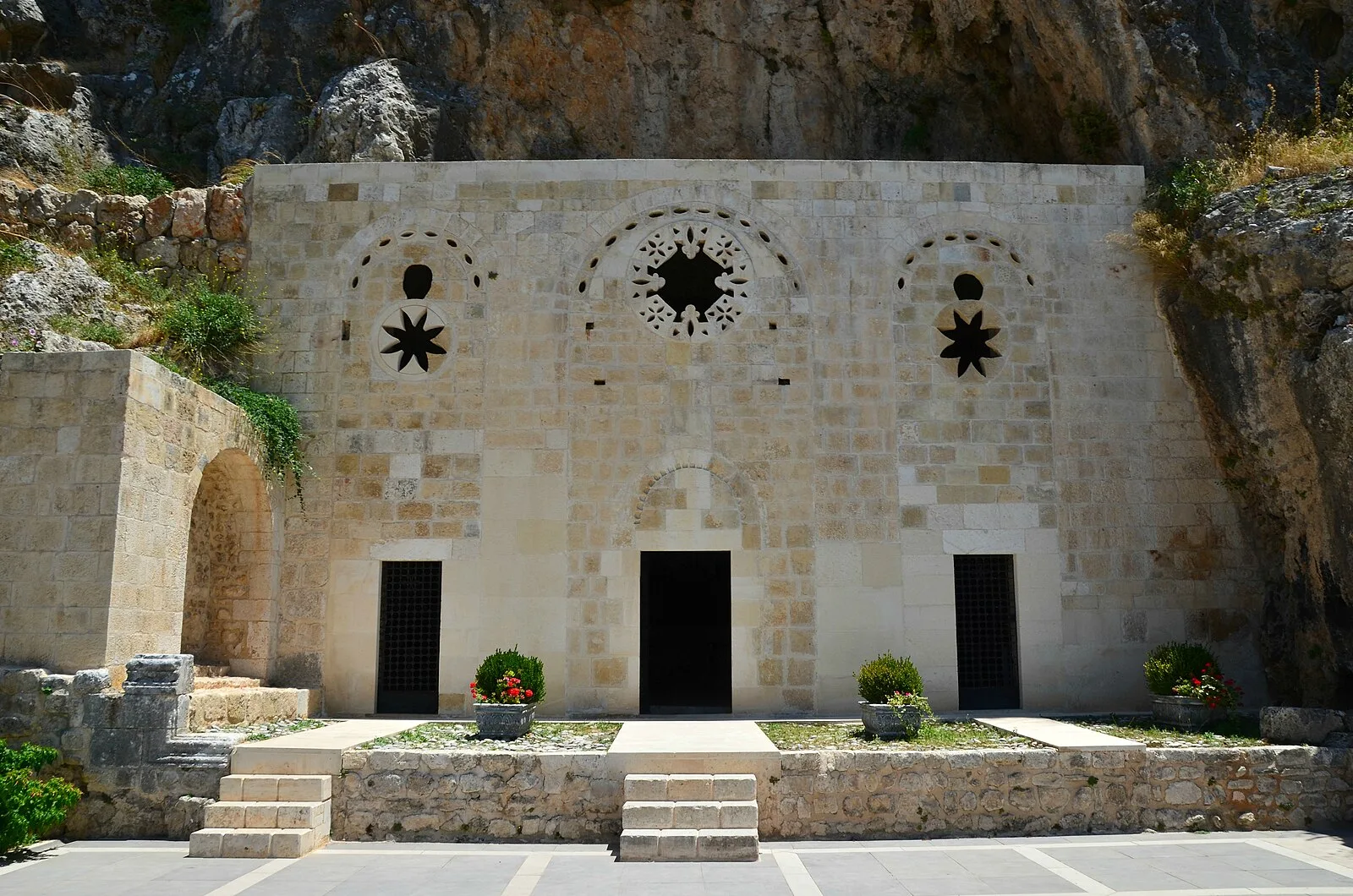
The Church of Saint Peter near Antakya (Antioch), is composed of a cave carved into the mountainside on Mount Starius with a depth of 13 m, a width of 9.5 m and a height of 7 m [1]. The oldest surviving parts of the church building date from at least the 4th or 5th century; these include some pieces of floor mosaics, and traces of frescoes on the right side of the altar [1]. Water which seeps from the nearby rocks was gathered inside to drink and to use for baptism; the flow of this water has lessened as a result of recent earthquakes [1]. St. Paul is believed to have been baptised here and the water was sought not only by Christians but also Alawites who attributed to the water a beneficent healing virtue [1]. The church has been also called St. John's grotto, possibly because of John Chrysostom who is believed to have given sermons and performed baptisms here [1].
Text: Wikipedia – 'Church of Saint Peter' (revision of 2026-06-15), CC BY-SA 4.0 · sentences selected and shortened by an AI system · source →Church of St. Peter
Also known as: Aziz Petrus Kilisesi, Aziz Petrus Kilisesi Anıt Müzesi, Biserica Sf. Petru, chiesa di San Pietro, Chiesa di San Pietro (Antiochia), Church of Saint Peter, église Saint-Pierre d'Antioche, Espenuca de San Pedro, Gereja Santo Petrus (Antakya), Grot van Sint Petrus, Grot van Sint-Petrus, Gruta de San Pedro
| Type | Cave Structures |
|---|---|
| Period | 1 - 500 AD |
| Country | Türkiye |
| Coordinates | 36.2095° N, 36.1789° E |