
 Türkiye
A Hittite Empire-period rock relief monument in central Anatolia, Turkey, carved on a cliff face atop a natural hill [1] [2]. The relief depicts three deities: two large male figures wearing pointed horned hats (a sign of divinity) and shoes with curled-up toes, carrying swords in their belts, walking toward a less visible seated goddess [1] [2]. First excavated by Von der Osten and Schmidt in 1930, with major surveys by Stephen Lumsden (1993-1998) for Bilkent University [2].
Gavur Kalesi
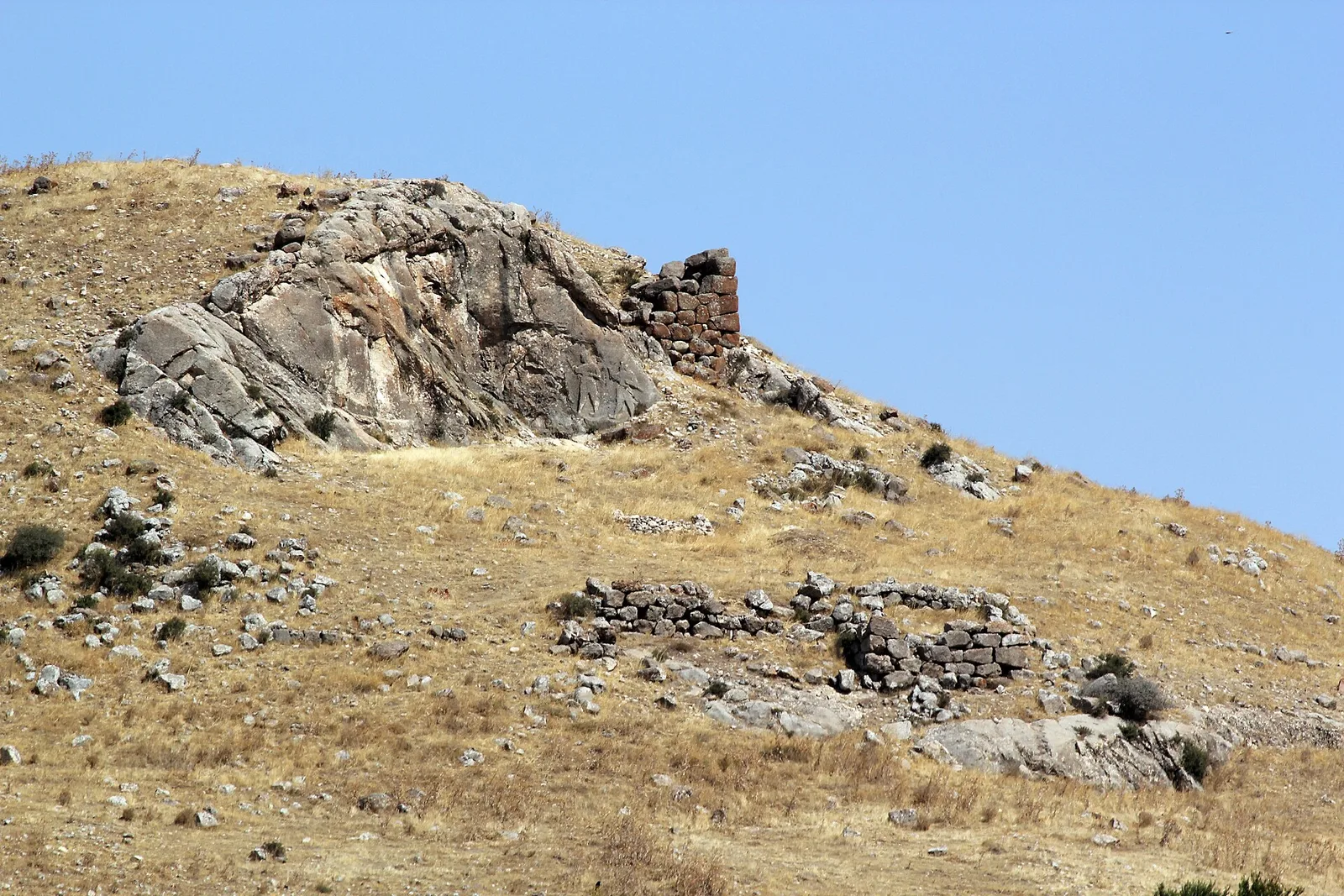
| Type | Rock relief/carving |
|---|---|
| Period | 3000 - 1500 BC |
| Country | Türkiye |
| Coordinates | 39.5315° N, 32.5591° E |