
 Scotland
Maeshowe is a Neolithic chambered cairn and passage grave situated on Mainland Orkney [1]. The grass-covered mound that encloses the tomb measures about 35 metres in diameter and rises to a height of 7.3 metres [1]. Beneath the mound lies a carefully constructed stone monument composed of a passage and central chamber built from large slabs of local flagstone [1]. The monument is aligned so that sunlight enters the passage at the winter solstice and reaches the rear wall of the central chamber [1]. Maeshowe was built by Neolithic farming communities living in central Orkney during the late fourth and early third millennia BC [1]. During the twelfth century Norse visitors broke into the mound and entered the central chamber [1]. Inside the chamber the visitors carved more than thirty runic inscriptions into the stone walls [1]. These carvings form the largest single collection of runic inscriptions known from one location [1].
Text: Wikipedia – 'Maeshowe' (revision of 2026-07-18), CC BY-SA 4.0 · sentences selected and shortened by an AI system · source →Maeshowe
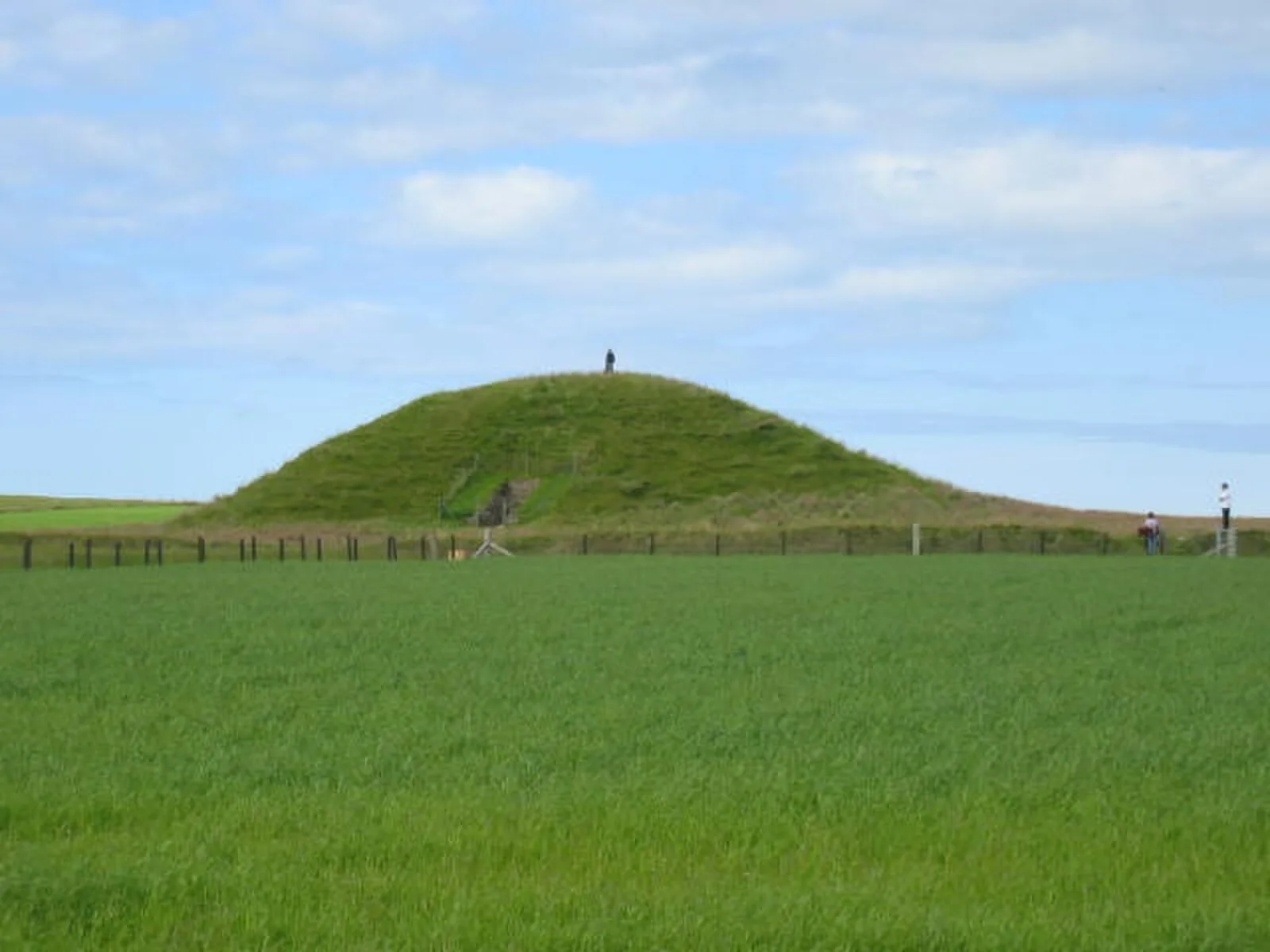
Also known as: Maes Howe, Maes Howe, chambered cairn, Τύμβος Μέισοου, Мейсхау, מיס האו, میزهو, メイズハウ, 梅肖韦古墓
| Type | Cairn |
|---|---|
| Period | 3000 - 1500 BC |
| Country | Scotland |
| Coordinates | 58.9967° N, 3.1881° W |