
 Saudi Arabia
Jabal al-ʿHayn is a prominent outcrop of red sandstone in Saudi Arabia, known for its pre-historic petroglyphs, tribal markings (wusūm) and inscriptions in early Semitic languages as well as Arabic [1]. Ancient petroglyphs carved on the rock faces of Jabal al-ʿHayn depict horned bison, standing figures and an exceptional wild cat with a curling tail [1]. Camels are shown in some petroglyphs that seem to be less ancient [1]. Among the many inscriptions at Jabal al-ʿHayn are a number in Arabic which date to the earliest years of the Islamic calendar [1]. One inscription quotes Quran, Surah 18 Al-Kahf verse 21 [1]. The inscription was studied by Fred Donner and published in 1984 [1]. In a second record of singular historical importance, an individual named Rāfiʿ bin 'Alī declares "I believe that there is no God except Him in whom the children of Israel believed, (believing as) a Muslim Hanif; nor am I among the polytheists." This gives a direct quote of Quran, Surah 10 Yunus verse 90 [1]. Also published by Donner is an inscription on a boulder invoking the name of God and giving an exceptional religious maxim [1].
Text: Wikipedia – 'Jabal al-ʿHayn' (revision of 2024-10-20), CC BY-SA 4.0 · sentences selected and shortened by an AI system · source →Jabal al-ʿHayn
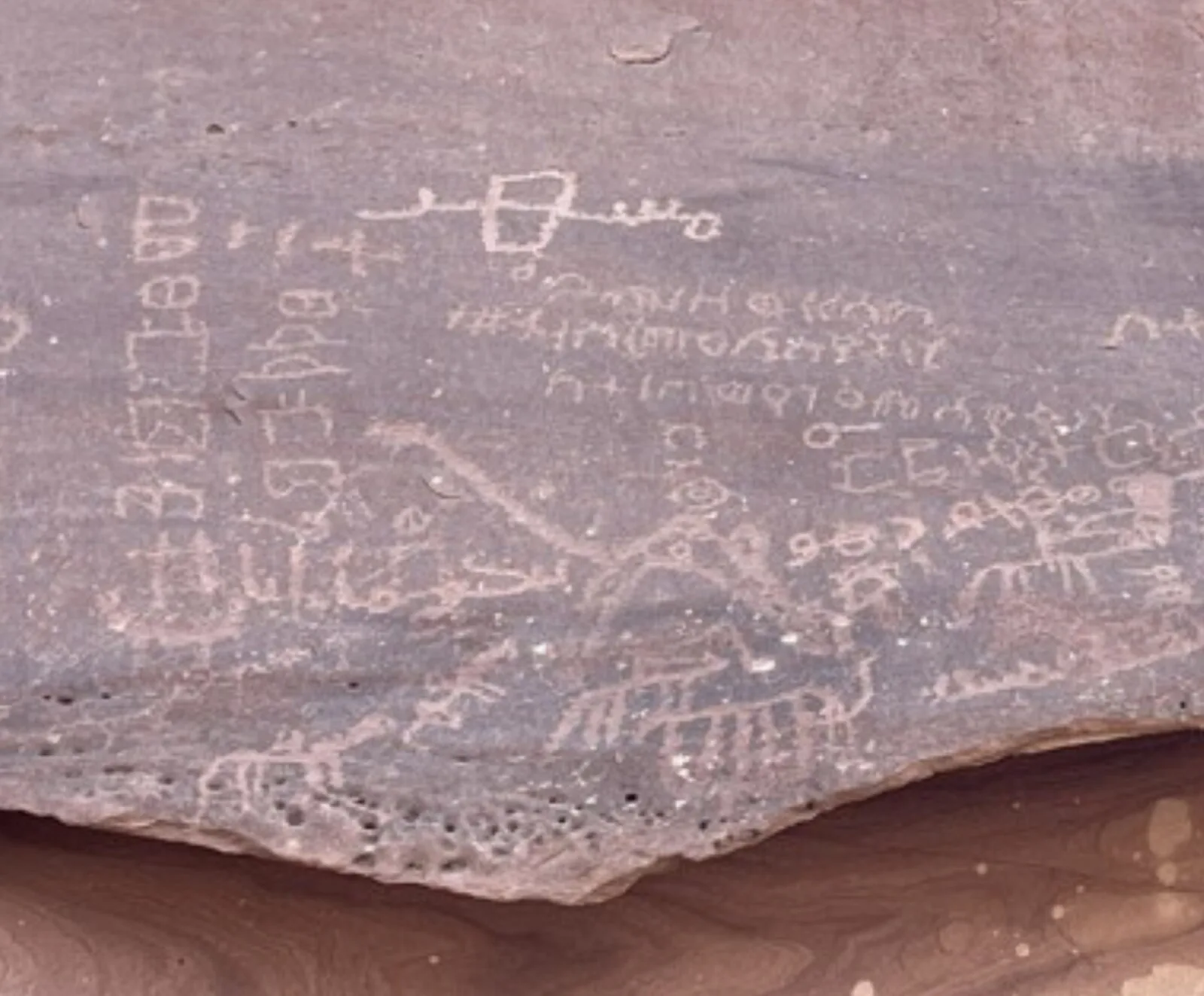
Also known as: جبل العهين
| Type | Petroglyphs |
|---|---|
| Period | < 4500 BC |
| Country | Saudi Arabia |
| Coordinates | 24.9900° N, 40.6407° E |