
 Saudi Arabia
Hegra (al-Hijr / Mada'in Salih) is Saudi Arabia's first UNESCO World Heritage Site, inscribed in 2008, located 22 km from al-Ula in the Hejaz region [1] [2] [3]. The largest conserved Nabataean site south of Petra, it features 111 monumental tomb facades carved into sandstone, 94 of which are decorated, dating from the 1st century BC to the 1st century AD [1]. The iconic Qasr al-Farid stands as an unfinished tomb with visible tool marks [4]. The Jebel Ithlib complex includes a 40-meter natural siq with sacred niches and a triclinium feasting chamber [2] [5] [6] [7]. The site also preserves pre-Nabataean Lihyanite inscriptions and evidence of later Roman occupation [1] [2].
Hegra - Mada'in Salih
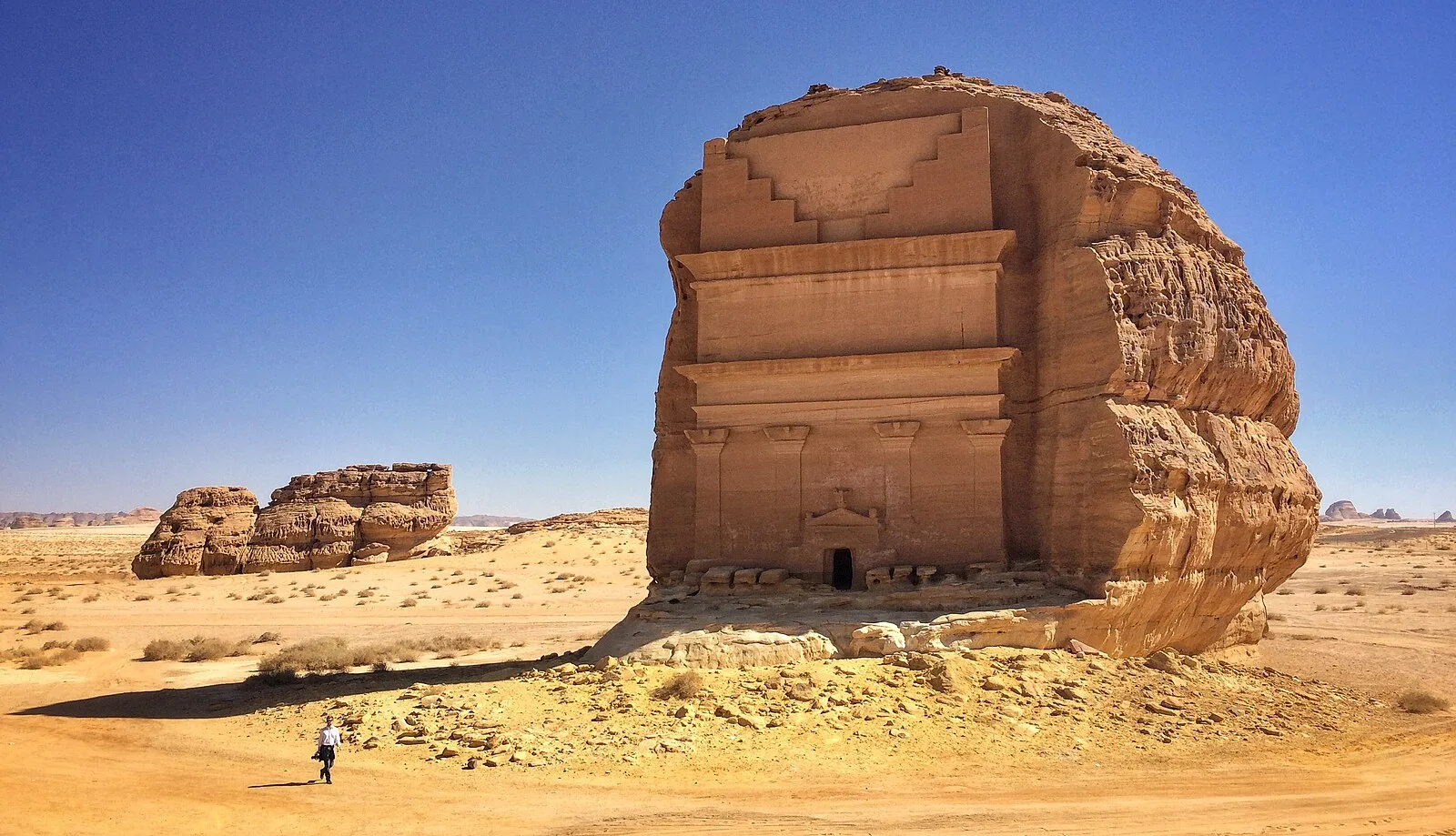
Also known as: 마다인 살레, Al-Hidjr, Al Hidžras, Al-Hijr, Al-Hijr Archaeological Site, Al-Hijrs arkeologiska plats, Egra, el Hijr, Hegra, Hegra (Madáin Sálih), Madaen Saleh, Madaim Salé
| Type | City/town/settlement |
|---|---|
| Period | 3000 - 1500 BC |
| Country | Saudi Arabia |
| Coordinates | 26.7918° N, 37.9527° E |