
 Saudi Arabia
The Columns of Rajajil is an archaeological site of sandstone pillars in the Al Jawf Region of Saudi Arabia, dated to the Chalcolithic period approximately 6,000 years ago [1]. Sometimes popularly described as "the Stonehenge of Saudi Arabia," the site comprises 54 groups of trimmed stone pillars, each group containing between two and 19 pillars, distributed across a wide sandy plain in the Qara suburb southeast of Sakakah [1]. The site is named Rajajil from a local Arabic term meaning "men," as the standing columns are said to resemble a gathering of human figures when viewed from a distance [1]. Excavations carried out by the Saudi General Administration of Antiquities and Museums between 1975 and 1976 recovered stone tools — including scrapers, awls, and blades — as well as a quantity of pottery fragments, confirming a date in the Copper Age of the fourth millennium BC [1]. Further documented finds at the site include obsidian stones, sandstone vessels, burnt ornaments, necklaces, and beads of metal, shell, and bone, alongside fan scrapers [1].
Text: Wikipedia – 'Columns of Rajajil' (revision of 2026-07-21), CC BY-SA 4.0 · sentences selected and shortened by an AI system · source →Columns of Rajajil
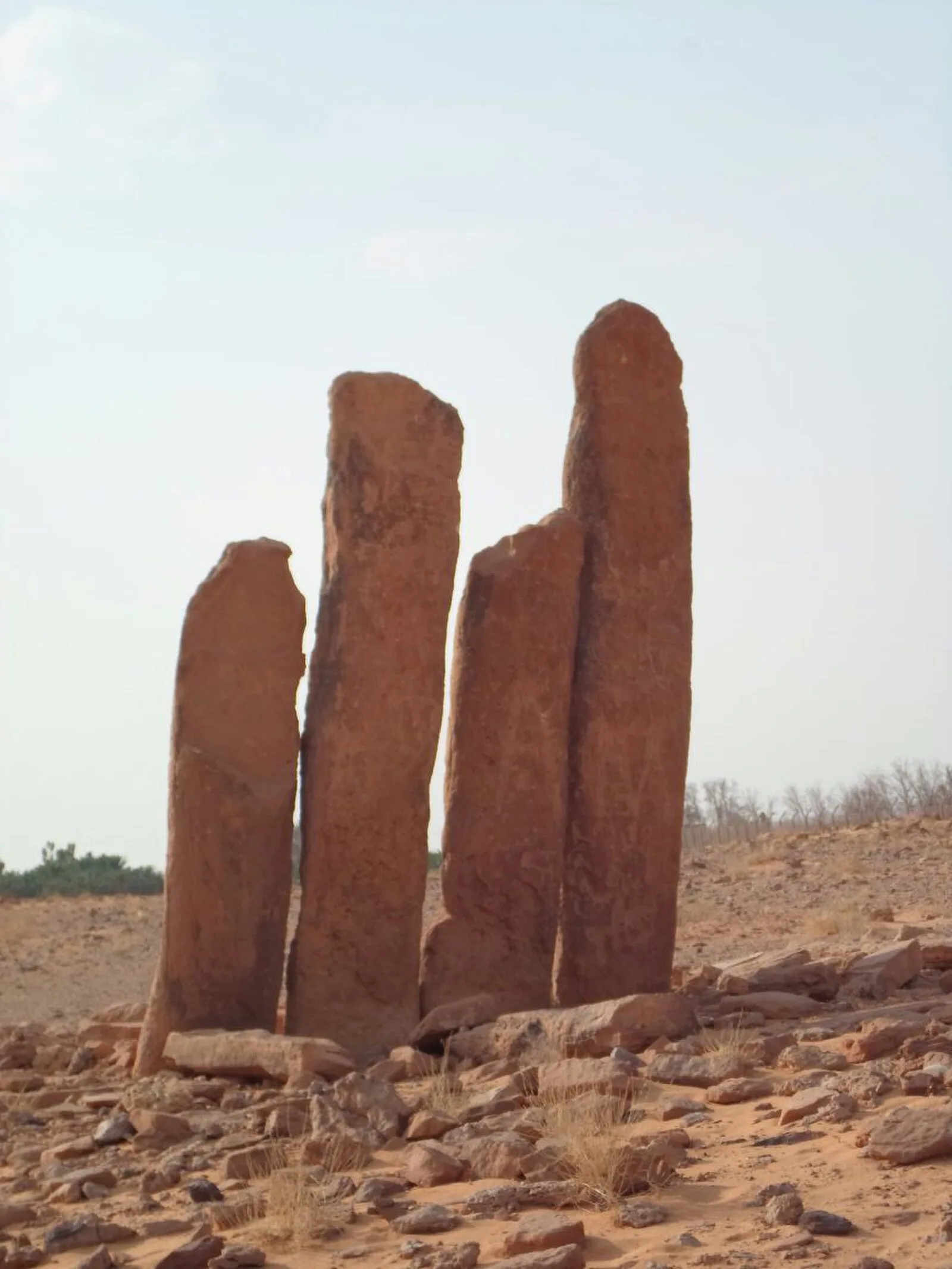
Also known as: Al Rajajil, Al-Rajajil, Rajajeel, Rajajil, Rajajil standing stones, Stonehenge of Saudi Arabia, עמודי רג'אג'יל, آثار الرجاجيل, أعمدة الرجاجيل
| Type | Megalithic stones |
|---|---|
| Period | 4500 - 3000 BC |
| Country | Saudi Arabia |
| Coordinates | 29.8126° N, 40.2200° E |