
 Saudi Arabia
The Tayma stones, also Teima or Tema stones, are a collection of more than 130 Achaemenid-era Aramaic inscriptions found in Tayma, in northwestern Saudi Arabia [1]. The most famous one from the collection, and the largest, is called the Tayma Stele [1]. The second largest is the Salm Stele [1]. Many of the inscriptions date to approximately the 5th and 6th centuries BCE [1]. French explorer Charles Huber saw the steles in situ in 1878 [1]. The first publication was made by Theodor Nöldeke on July 10, 1884, with information provided by Julius Euting [1].
Text: Wikipedia – 'Tayma stones' (revision of 2026-06-30), CC BY-SA 4.0 · sentences selected and shortened by an AI system · source →Tayma Stones
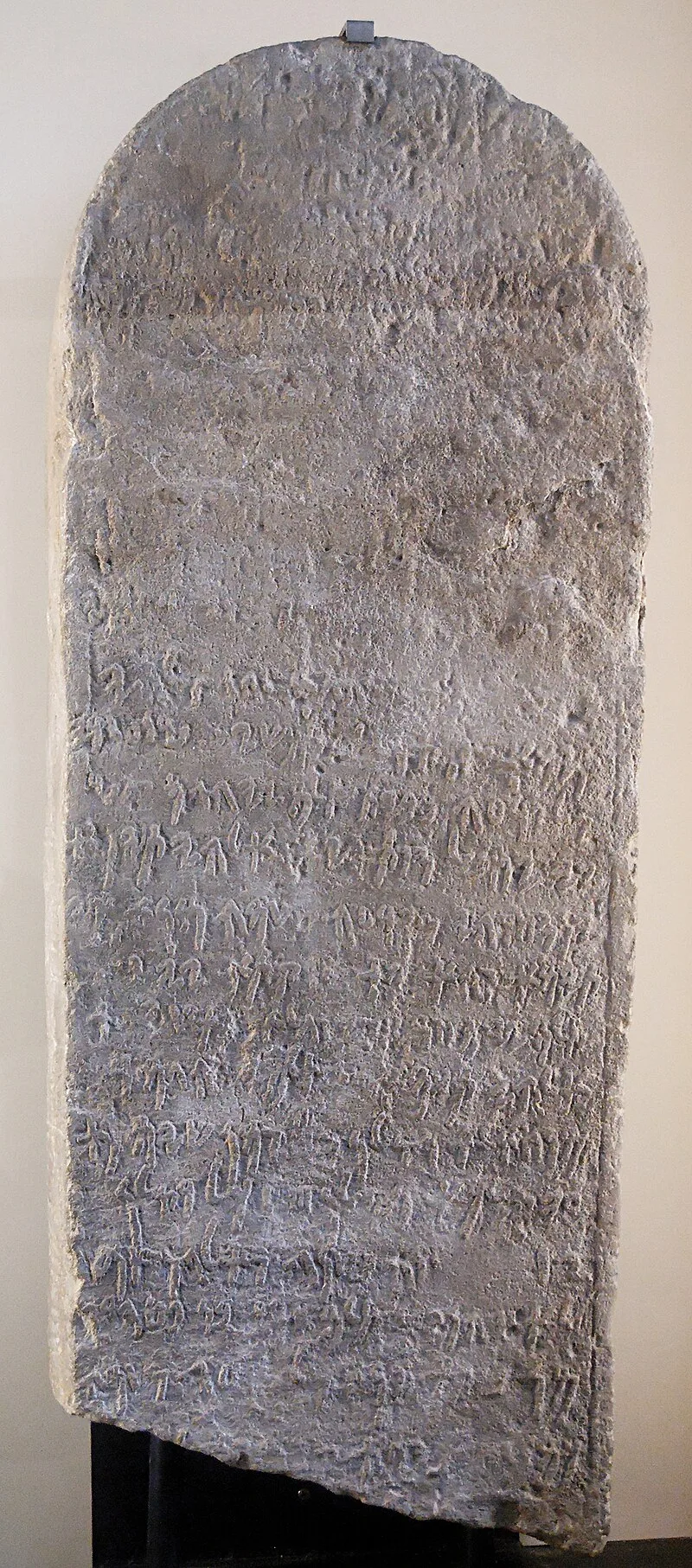
Also known as: Teyma yazıtı, مسلة تيماء
| Type | Inscription |
|---|---|
| Period | 500 BC - 1 AD |
| Country | Saudi Arabia |
| Coordinates | 27.6297° N, 38.5439° E |