
 Mexico
San Gervasio is an archaeological site of the pre-Columbian Maya civilization, located in the northern third of the island of Cozumel off the northeastern coast of the Yucatán Peninsula, in what is now the Mexican state of Quintana Roo [1]. San Gervasio's pre-Hispanic name was Tantun Cuzamil, Mayan for Flat Rock in the place of the Swallows [1]. The ruins were once a hub of worship of the goddess Ix Chel, an aged deity of childbirth, fertility, medicine, and weaving [1]. San Gervasio was founded around 300 CE as a small community [1]. Around 600, it began a period of rapid growth, with new construction and possible stronger connections with settlements on the northern coast of Quintana Roo [1]. After about 1000, San Gervasio expanded significantly, possibly influenced by the growing political and economic importance of Chichén Itzá [1]. By about 1200, San Gervasio had become the largest settlement on Cozumel and remained so until the arrival of the Spanish in the early 16th century [1].
Text: Wikipedia – 'San Gervasio (Maya site)' (revision of 2026-09-01), CC BY-SA 4.0 · sentences selected and shortened by an AI system · source →San Gervasio
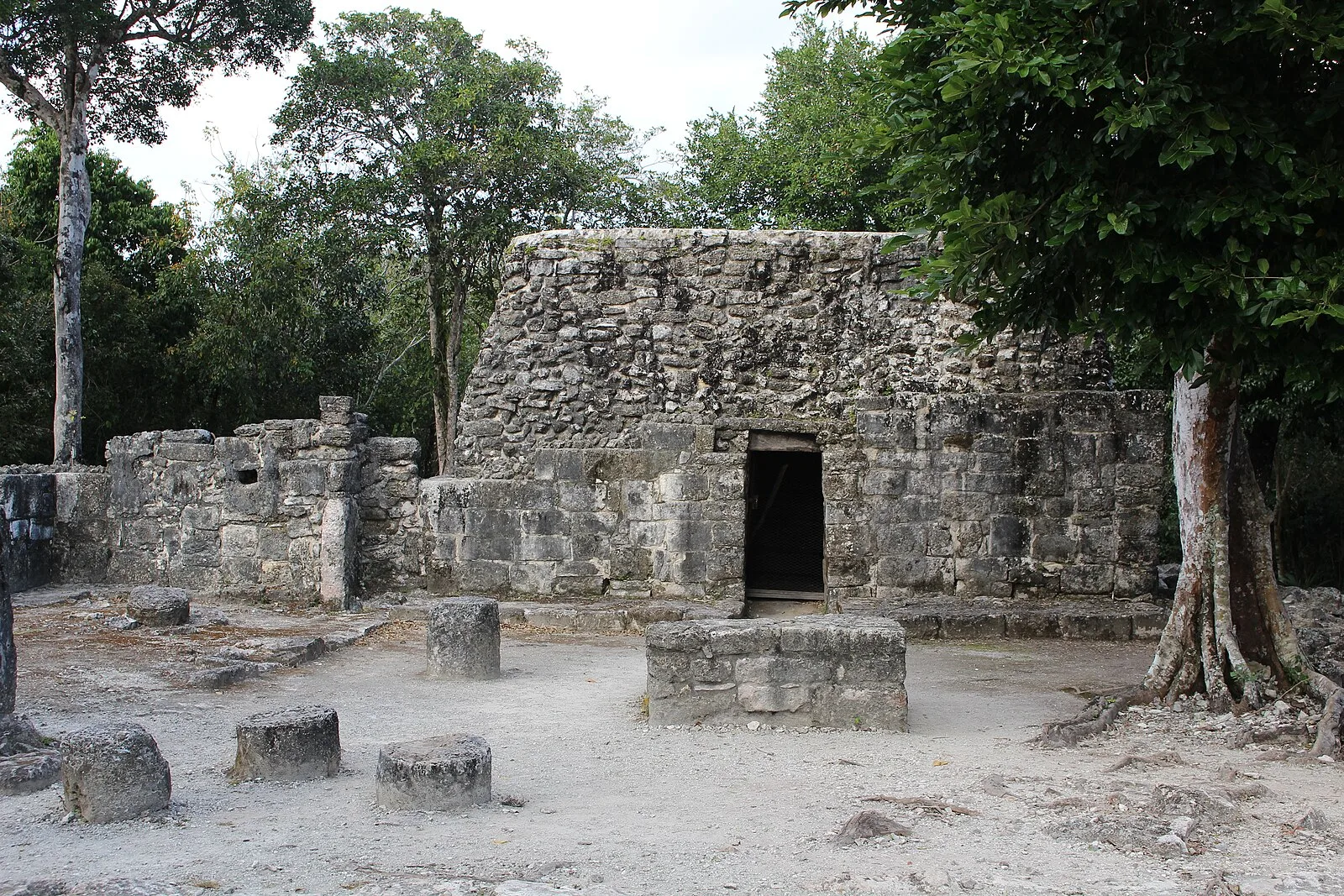
Also known as: Cozumel, Cozumel (zona arqueológica), San Gervasio (Maya-Ruinen), San Gervasio (Maya site), San Gervasio (sito archeologico), サン・ヘルバシオ, サン・ヘルバシオ遺跡
| Type | Temple complex |
|---|---|
| Period | 500 BC - 1 AD |
| Country | Mexico |
| Coordinates | 20.4978° N, 86.8466° W |