
 Egypt
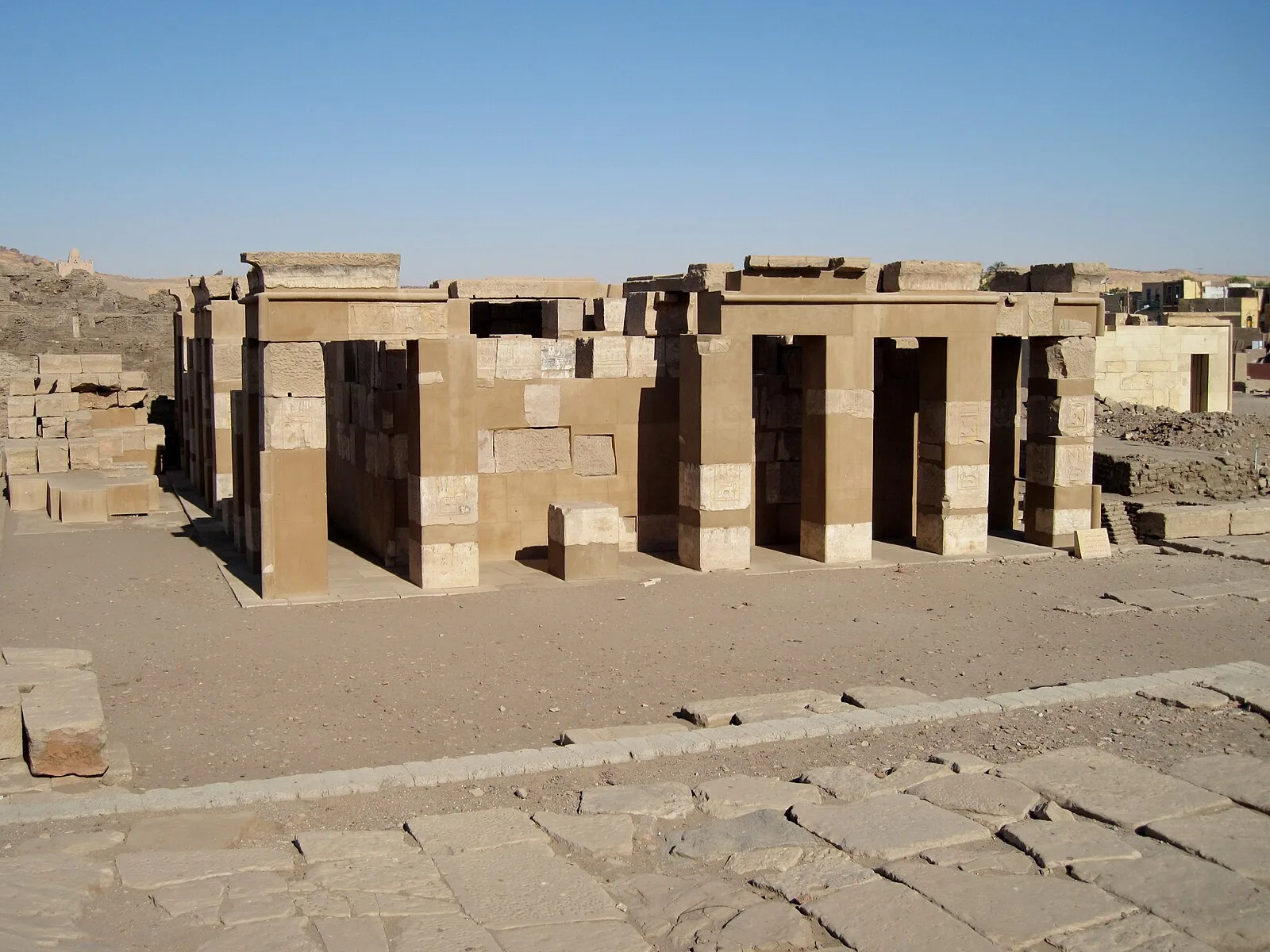
EgyptThe Temple of Satet or Satis was an ancient Egyptian temple dedicated to the goddess Satet, a personification of the Nile inundation [1]. The temple was located on the Nile Valley island of Elephantine, Egypt [1]. Founded during the late Predynastic Period around 3200 BC, it was enlarged and renovated several times from the Early Dynastic Period onwards over the next 3000 years until the Ptolemaic Period [1]. The earliest temple was built c. 3200 BC and was little more than a cultic niche lodged between three large natural granite boulders [1]. The temple was enlarged during the 1st and 2nd Dynasties and rebuilt during the Third Dynasty, but its old plan was kept [1]. During the New Kingdom period, the temple was built anew under queen Hatshepsut (1507–1458 BC) in the early 18th Dynasty and further enlarged by her successor, Thutmose III [1]. The temple was then a solid rectangular building, some 15.9 m × 9.52 m in size, completely surrounded by a 20.10 m × 13.52 m walkway that had 7 × 10 pillars on the outside [1].
Text: Wikipedia – 'Temple of Satet' (revision of 2026-08-31), CC BY-SA 4.0 · sentences selected and shortened by an AI system · source →Temple of Satet
Also known as: Satet-Tempel, Satis-Tempel, Szatet-templom, temple de Satet, معبد ساتت, معبد ساتیت, วิหารแห่งซาเทต, サテト神殿
| Type | Temple |
|---|---|
| Period | 4500 - 3000 BC |
| Country | Egypt |
| Coordinates | 24.0851° N, 32.8868° E |