
 Jordan
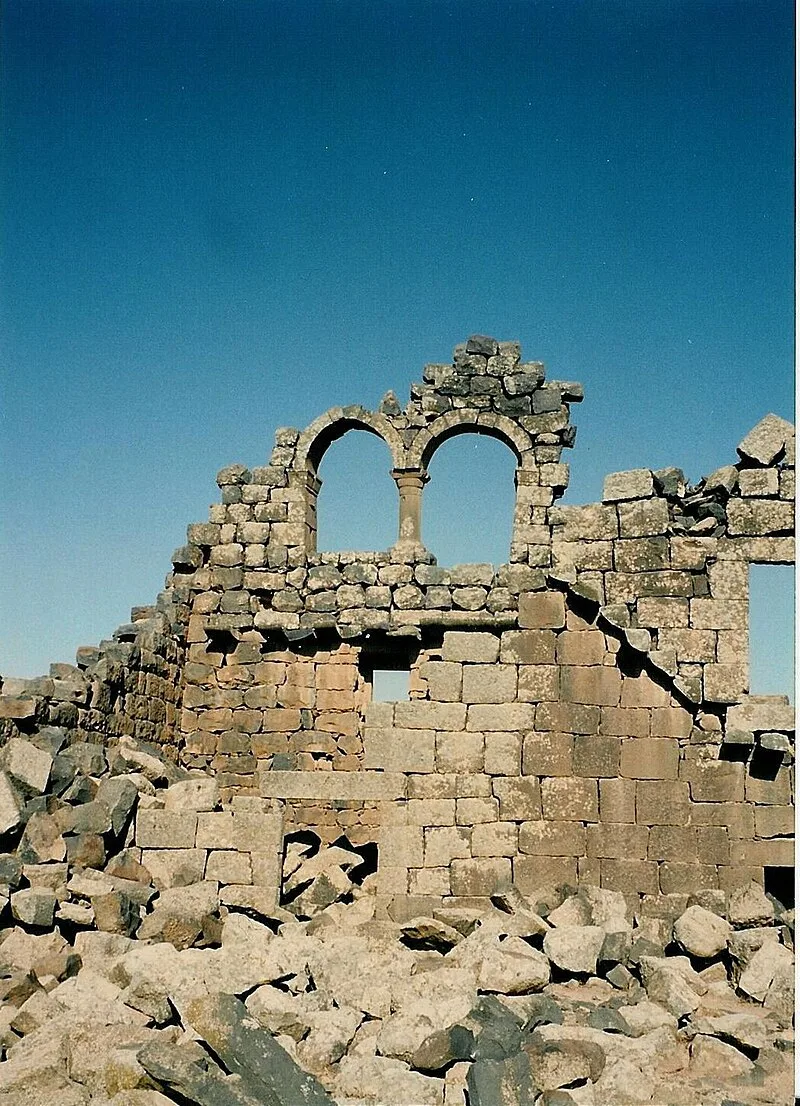
The ruins of an ancient village lie in the midst of modern Umm el-Jimal [1]. The ruins date from the Nabataean through the Abbasid periods [1]. The Nabataean peoples were the first to build permanent homesteads in the area in the first century AD [1]. The settlement was mainly a farming community and a trading outpost dependent on Bostra [1]. The 150 houses still standing today were constructed in this period, the fifth and sixth centuries [1]. In the sixth century there was an explosion of church construction, 15 of which can still be seen today [1]. The Islamic era at Umm el-Jimal began in 640 when the Rashidun Caliphs took control of the area [1]. The site was completely deserted under the Abbasid Caliphs in the ninth century [1].
Text: Wikipedia – 'Umm el-Jimal' (revision of 2026-09-04), CC BY-SA 4.0 · sentences selected and shortened by an AI system · source →Umm el-Jimal
Also known as: Um al Džimalis, Um el-Jimal, Umm al-Dschimal, Umm al-Džamal, Umm al-Džammal, Umm al-Dżimal, Umm Al-Jimāl, Umm el-Cemal, Umm el Jimal, Умм-ель-Джималь, Умм-эль-Джималь, אום אל-ג'ימאל
| Type | City/town/settlement |
|---|---|
| Period | 1 - 500 AD |
| Country | Jordan |
| Coordinates | 32.3253° N, 36.3680° E |