
 Jordan
Pella was an ancient city in what is now northwest Jordan, and contains ruins from the Neolithic, Chalcolithic, Bronze Age, Iron Age, Canaanite, Hellenistic and Islamic periods [1]. It is located near a rich water source within the eastern foothills of the Jordan Valley, close to the modern village of Ṭabaqat Faḥl some 27 km south of the Sea of Galilee [1]. The University of Sydney's Pella Excavation Project discovered at Tabaqat Fahl the remains of Neolithic housing dated to ca. 6000 BCE [1]. The Australian teams also found storage complexes from the Chalcolithic period (ca. 4200 BCE) [1]. The Middle Bronze Age IIA city of ca. 1800 BCE boasted massive mud-brick city walls [1]. Australian archaeologists also discovered Middle and Late Bronze Age temples and palatial residences (ca. 1800-1200 BCE) [1]. The city was first mentioned in the 19th century BCE in Egyptian execration texts, and it continued to flourish throughout the Bronze Age [1]. By the Byzantine era, Pella had reached its maximum size and, probably, prosperity [1].
Text: Wikipedia – 'Pella, Jordan' (revision of 2026-07-18), CC BY-SA 4.0 · sentences selected and shortened by an AI system · source →Pella
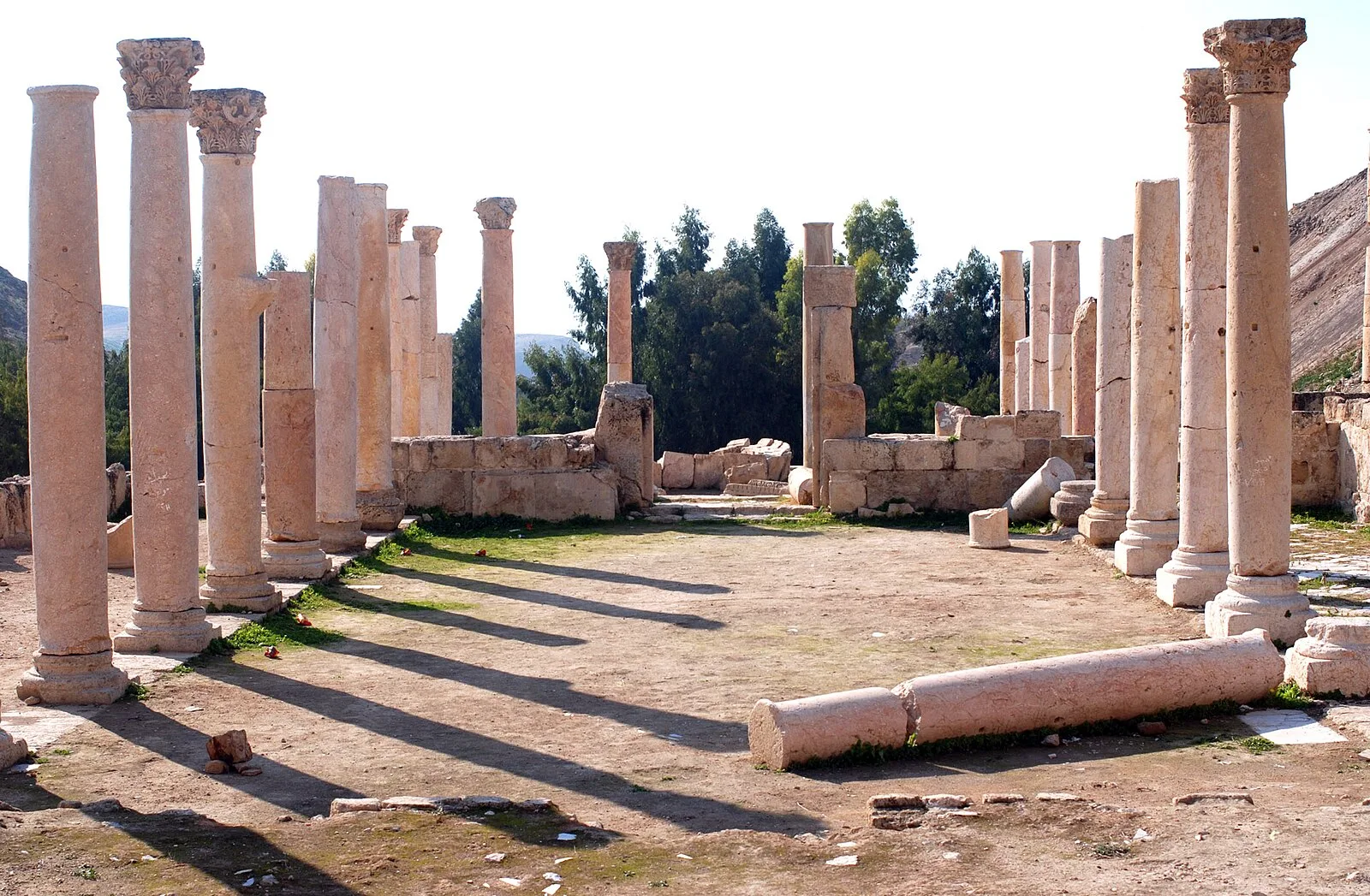
Also known as: Mint of Pella, Pela, Pela (Jordânia), Pel·la, Pella (Decapolis), Pella (Giordania), Pella (Jordan), Pella, Jordan, Pella (Jordania), Pella (Jordanie), Pella (Jordanien), Pella (Palestiina)
| Type | City/town/settlement |
|---|---|
| Period | 4500 - 3000 BC |
| Country | Jordan |
| Coordinates | 32.4499° N, 35.6159° E |