
 Jordan
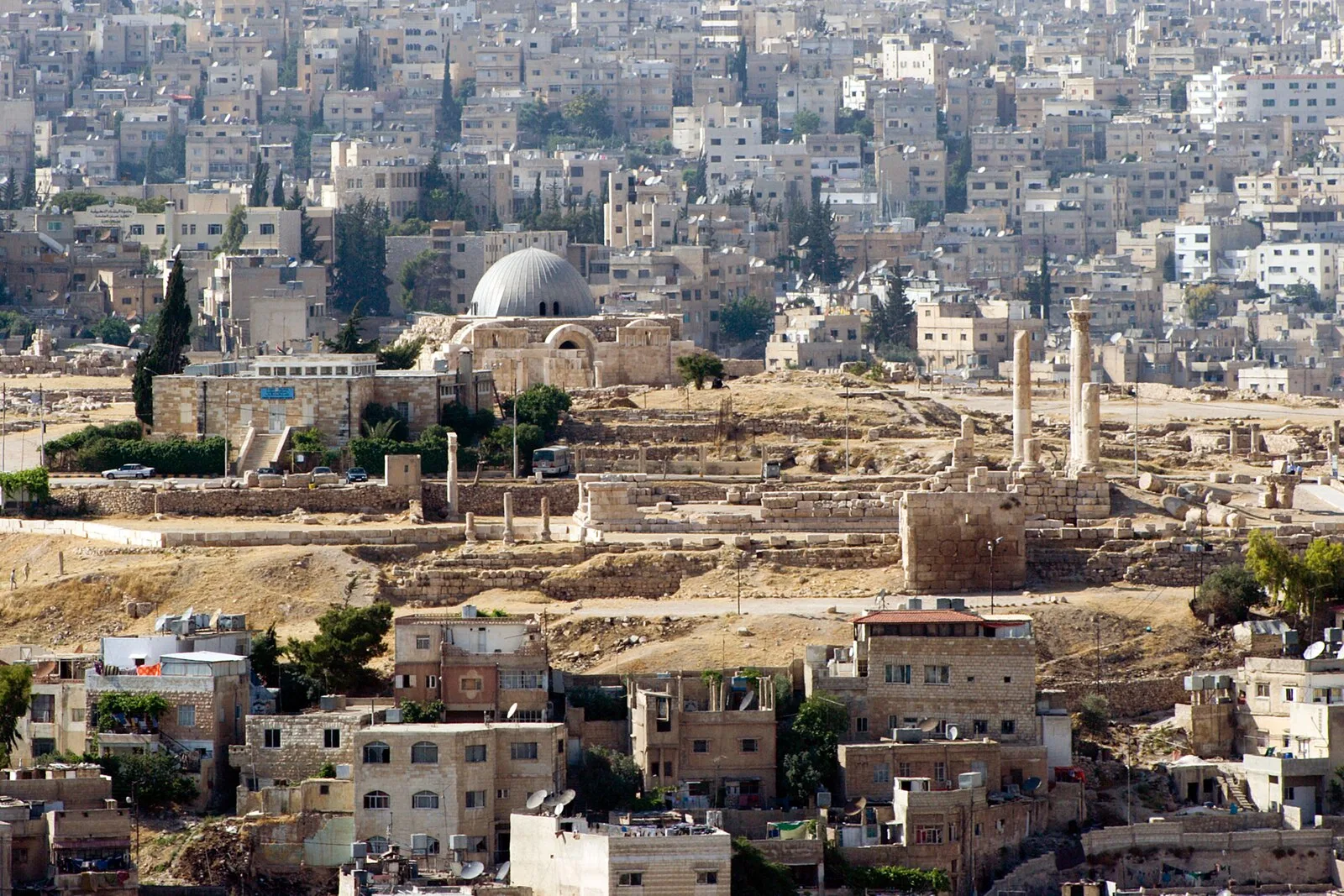
The Amman Citadel is considered to be among the world's oldest continuously inhabited places [1]. While archaeological discoveries have been made at many sites within modern Amman, Citadel Hill still holds particularly high potential [1]. The Great Temple, better but inaccurately known as the Temple of Hercules, is thought to be the most significant Roman structure within the Amman Citadel [1].
Text: Wikipedia – 'Amman Citadel' (revision of 2026-08-10), CC BY-SA 4.0 · sentences selected and shortened by an AI system · source →Amman Citadel
Also known as: 암만 성채, Amanska citadela, Amman citadell, Ammáni citadella, Amman Kalesi, Benteng Amman, Cetatea Ammanului, Cidadela de Amã, citadelle d'Amman, Citadelo de Amano, Citadel van Amman, Cittadella di Amman
| Type | Fortress/citadel |
|---|---|
| Period | 3000 - 1500 BC |
| Country | Jordan |
| Coordinates | 31.9543° N, 35.9359° E |