 ANCIENT NERDS
Induced EMF in Ancient Megalithic Stone Structures
The paper acknowledges that piezoelectric effects in granite, limestone, and basalt are real and measurable in laboratory conditions, and that acoustic resonances at megalithic sites have been documented. However, it concludes that the hypothesis that ancient builders intentionally designed megalithic structures to function as energy-harvesting systems lacks any peer-reviewed evidence, independent replication, or proper exclusion of conventional geological explanations, and that many claims in this area rely on anecdotal accounts rather than controlled experimental verification.
In laboratories across Europe, researchers have documented a striking pattern: quartz-bearing stones—including granite, gneiss, and mylonite—generate measurable electrical charges when subjected to mechanical stress, with coefficients ranging from 1.4 × 10⁻¹⁵ C/N to 7×10⁻¹³ C/N. This is not fringe speculation but established solid-state physics. What remains unknown is whether the ancient builders who hauled and stacked these same stone types—granite, diorite, basalt, and limestone—understood this property, or whether the massive blocks they positioned thousands of years ago might still be producing induced electromotive forces today, slowly accumulating charge within their crystalline lattices. Acoustic resonance measurements at megalithic sites have already confirmed that these structures vibrate at frequencies between 95 and 120 Hz—a range that, under continuous seismic or wind loading, could theoretically sustain piezoelectric generation in the quartz-rich cores of these monuments. Limestone itself has been shown to generate voltage and current when mechanically loaded, while basalt exhibits the high resistivity characteristic of an electrical insulator—a combination that might allow conductive limestone to store accumulated charge, encased in an insulating basalt shell. The question investigators are now pursuing: could these ancient structures function as unintentional geothermal batteries, slowly harvesting and storing electromagnetic energy from their environment through the piezoelectric and dielectric properties of the very stones from which they were built? [1] [2]
Piezoelectric and Electrical Properties of Megalithic Building Stones
Quartz crystals subjected to mechanical stress generate electrical charges through the piezoelectric effect—a phenomenon first systematically documented in 1880 but now confirmed across a comprehensive review of 217 minerals exhibiting ferroelectricity, pyroelectricity, or piezoelectricity. Laboratory experiments have repeatedly demonstrated that quartz-bearing rocks including granite, gneiss, quartzites, and mylonites produce measurable piezoelectric effects when mechanically stressed. This mechanical-to-electrical conversion occurs because asymmetric crystal structures in quartz develop surface charges under compression or tension, with charge polarity reversing under opposite stress directions. The effect scales with applied stress magnitude, meaning larger rock masses under greater mechanical loading produce proportionally stronger electrical responses. [3] [4]
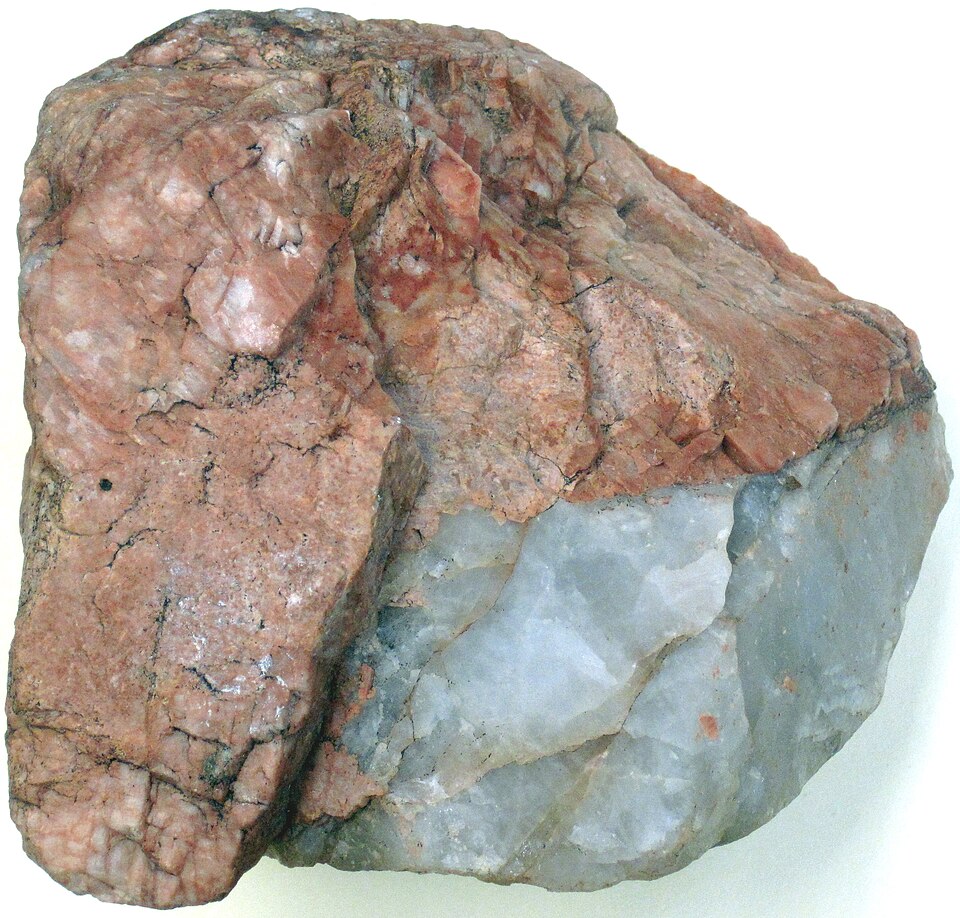
Pegmatitic granite (alaskite) (Mt. Morrison Granite, late Paleoproterozoic, 1.7 Ga; Carpenters Peak, Roxborough State Park, Front Range, Colorado, USA) 2. Photo: James St. John / Wikimedia Commons. The paragraph specifically cites laboratory experiments on granite producing piezoelectric effects—visual documentation of actual quartz-bearing…. Source
Granite provides the most extensively documented case for piezoelectric energy conversion in megalithic building materials. Its quartz content of 60–80% generates measurable piezoelectric coefficients when the rock is subjected to dynamic mechanical loading from seismic activity or intentional stress. Atomic force microscopy measurements of granite have yielded piezoelectric coefficients of approximately 7×10⁻¹³ C/N, while stress-condition measurements document coefficients around 1.4×10⁻¹⁵ C/N. The discrepancy exists because granite’s composite structure—embedded quartz crystals within feldspar and mica matrix—distributes and attenuates the charge generated by individual quartz grains. Still, this coefficient remains approximately three orders of magnitude smaller than single crystal quartz, yet large enough for measurable voltage generation under sufficient stress. [5]
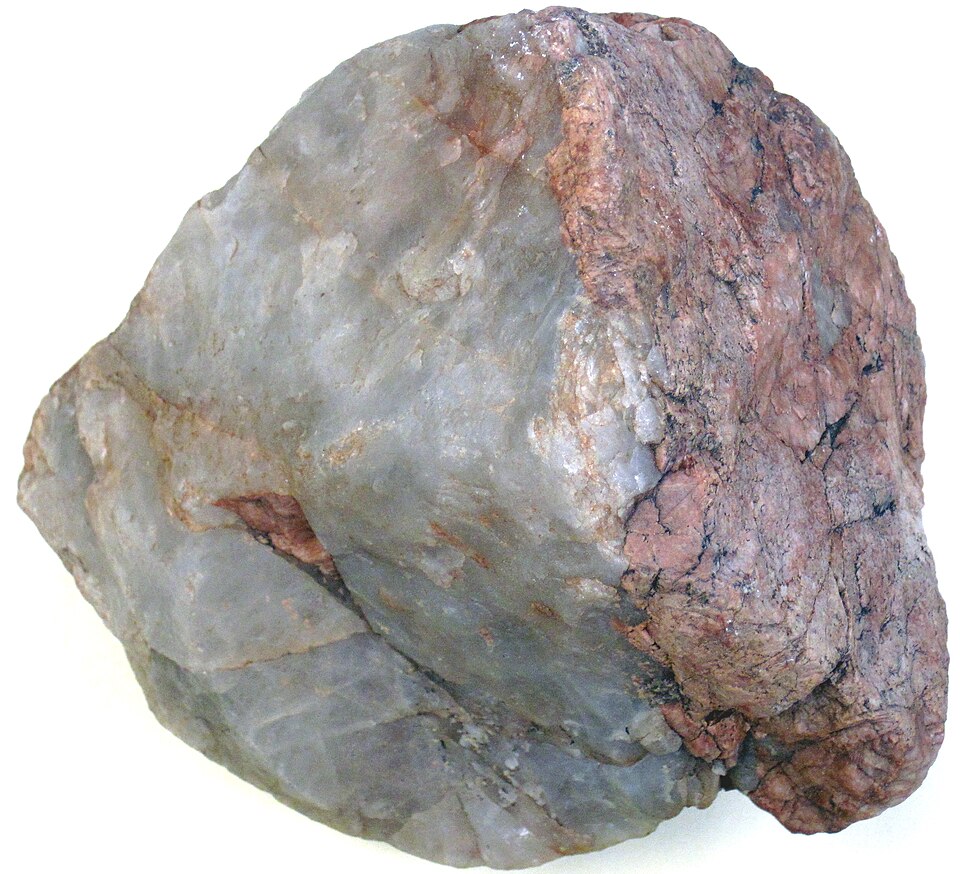
Pegmatitic granite (alaskite) (Mt. Morrison Granite, late Paleoproterozoic, 1.7 Ga; Carpenters Peak, Roxborough State Park, Front Range, Colorado, USA) 1. Photo: James St. John / Wikimedia Commons. Visual evidence of granite’s composite mineral structure (quartz, feldspar, mica) makes the paragraph’s explanation of…. Source
The piezoelectric effect extends beyond quartz-bearing rocks to carbonate materials through pressure-dependent dielectric relaxation mechanisms. Limestone exhibits dielectric constants ranging from 8 to 8.5 at radio frequencies (0.5–4.5 GHz), qualifying it as a dielectric material capable of storing electric fields rather than conducting them freely. This moderate dielectric behavior enables limestone to function as a charge storage medium within capacitive arrangements. Water content significantly enhances both the relaxation intensity and lowers activation energy barriers in limestone under pressure, while moisture content increases electrical conductivity following Cole-Cole dispersion patterns. Laboratory experiments confirm limestone generates seismic electric signals under compression through pressure-stimulated electrical responses, and triboelectric generators using limestone-based materials have demonstrated measurable power generation. [6] [7] [8]
Basalt presents a distinctly different electromagnetic profile. The igneous rock demonstrates ferromagnetic properties attributable to iron oxide content—particularly magnetite—and measurable electromagnetic characteristics that vary significantly between dry and water-saturated states. This variation makes basalt suitable for electromagnetic interactions and electrical insulation applications. Diorite, another igneous material used in megalithic construction, contains sufficient quartz content (55–65% silica) to potentially exhibit piezoelectric properties under mechanical stress, though its extreme hardness of 8 on the Mohs scale complicates natural stress-induced charge generation. Pressure-stimulated rock current has been measured in diorite specimens under laboratory conditions, with both magnitude and polarity varying with water content and stress regime. Electrical conductivity of igneous rocks varies systematically with temperature, showing distinct conduction regions below 300°C, between 300–600°C, and above 600°C, while Egyptian basalt and granite samples demonstrate insulating behavior suitable for enclosing materials in electromagnetic systems. [9] [10]
Magnetite Russia. Photo: Dlloyd at English Wikipedia / Wikimedia Commons. The paragraph attributes basalt’s ferromagnetic properties to iron oxide content, particularly magnetite — a visual…. Source
Rock fracturing during seismic events generates electrical charges through multiple coupled mechanisms including piezoelectric effects, streaming potentials, and fracture-induced electrification—a phenomenon documented as “earthquake lightning” across various rock types. Prefracture electric fields in stressed rock can reach several thousand volts per meter—sufficient for ionization effects—and seismic stress on quartz-rich formations generates sufficient voltage to drive electrochemical reactions including the electrodeposition of gold from solution. Seismo-electric effects generate electromagnetic emissions during deformation and fracturing, with measurable signals of 100–300 μV amplitude recorded during seismic excitation. Deformation-induced electromagnetic radiation (DIEM) has been systematically studied across rock types including granite, demonstrating emissions during fracturing and stress. Triboelectric effects at material interfaces generate electrical charges with demonstrated power densities up to 1200 W/m² and energy conversion efficiencies of 50–85%, complementing piezoelectric mechanisms for energy generation in rock-based materials. [11]
A 2025 Scientific Reports study demonstrated that basalt and quartz stones can generate electricity through combined piezoelectric and geothermal mechanisms, integrating the mechanical stress-induced piezoelectric effects with thermal gradient energy conversion. Modern research on hybrid piezoelectric-geothermal systems validates the theoretical framework for energy production from these geological materials. The evidence demonstrates that granite, basalt, diorite, and limestone each possess distinct electrical characteristics—quartz-bearing rocks generate charges under mechanical stress, limestone stores electric fields as a moderate dielectric, and basalt provides ferromagnetic and insulative properties—creating a foundation for understanding how these materials might interact in megalithic structures. However, no direct archaeological evidence documents deliberate construction designed to exploit these material properties for energy accumulation. [12]
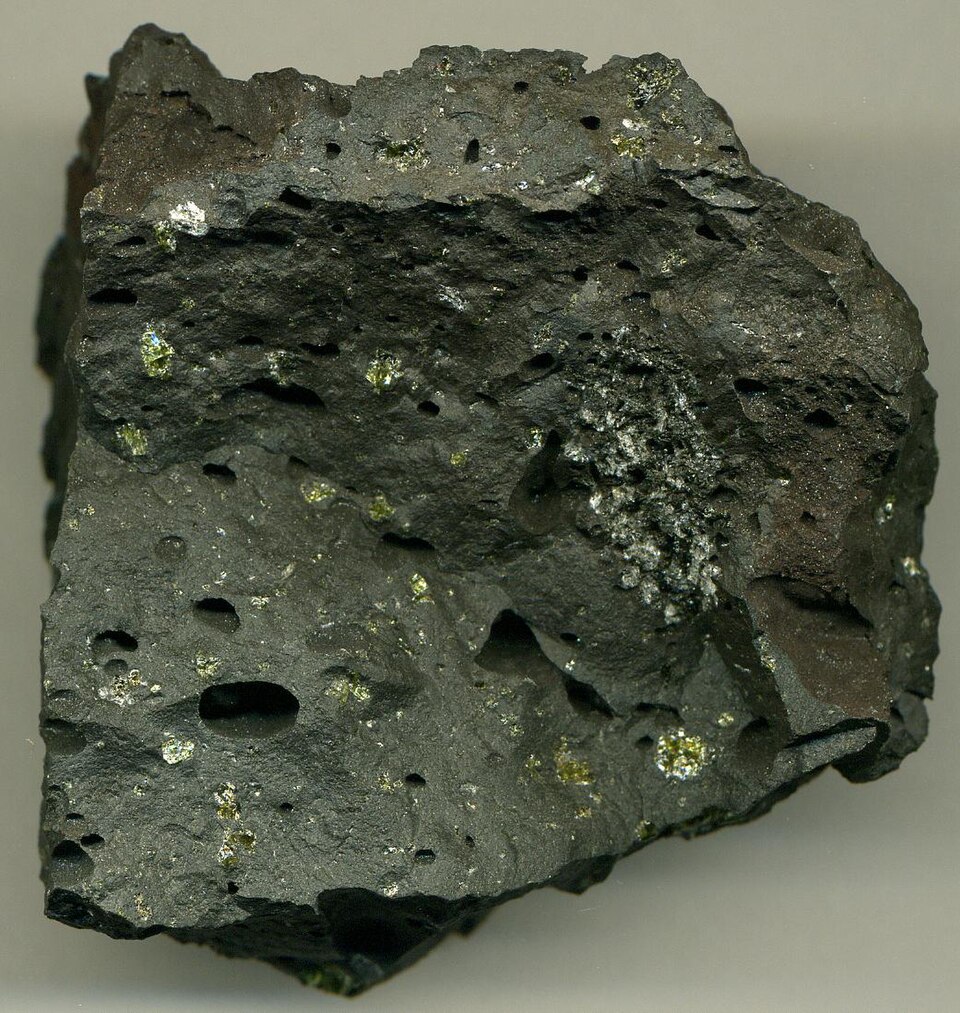
Vesicular porphyritic olivine basalt with lower crustal gabbro xenolith (31 January to 19 February 1960 Kapoho Eruption; town of Kapoho, Puna Rift Zone, Kilauea Volcano, easternmost Hawaii, USA). Photo: James St. John / Wikimedia Commons. The paragraph specifically contrasts basalt’s ferromagnetic and insulative properties with other stones; a basalt specimen…. Source
Limestone-Basalt Composite Configurations as Energy Devices
Laboratory measurements confirm limestone generates measurable voltage and current when subjected to mechanical loading. A 2022 study published in ACS Omega demonstrated this principle directly: researchers developed a triboelectric generator using limestone-contained putty as the active material, validating limestone’s capacity for contact-electrification energy conversion. This experimental work built on foundational research documenting that rocks generate measurable voltage and current when subjected to mechanical loading through piezoelectric and triboelectric mechanisms. The triboelectric charging phenomenon itself has been systematically studied for over 2,600 years, with electron thermionic emission theory now explaining charge retention at material interfaces. [13]
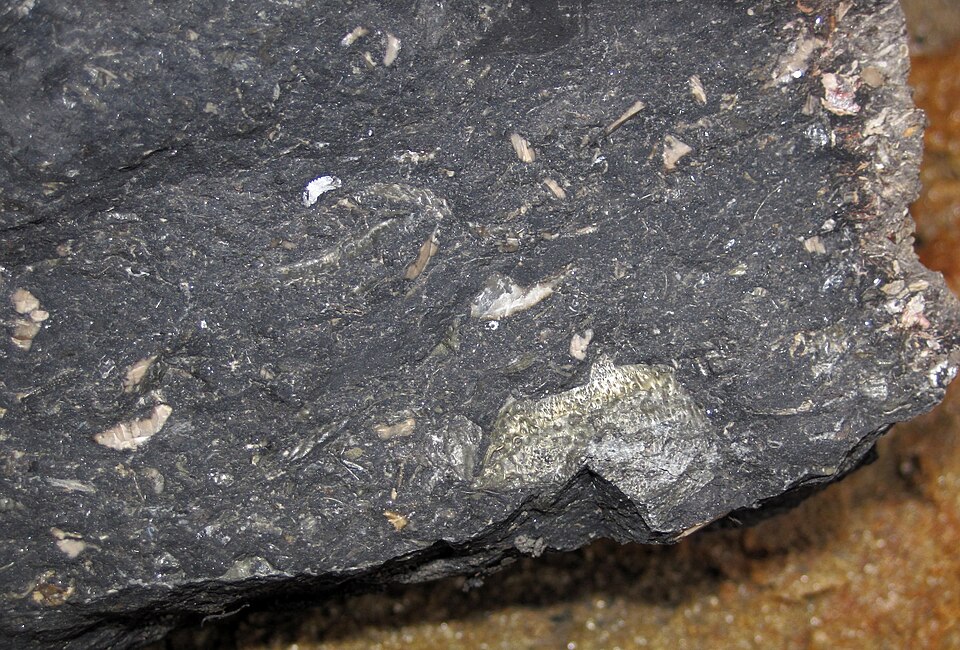
Fossiliferous limestone (Poverty Run Limestone, Lower Pennsylvanian; Irish Ridge East roadcut, near Trinway, Ohio, USA) 2. Photo: James St. John / Wikimedia Commons. The paragraph focuses on limestone specifically as the energy-generating material — a representative limestone specimen…. Source
Basalt provides the insulating counterpart in this theoretical configuration. Laboratory measurements confirm basalt exhibits high electrical resistivity and functions as an effective electrical insulator at surface conditions. This property makes it suitable for containing and isolating conductive materials. However, basalt’s electrical behavior changes dramatically under thermal stress: electrical conductivity increases by approximately 2 orders of magnitude during the melting interval between 1130°C and 1263°C. This transformation from insulator to semiconductor suggests basalt could function as a dynamic electrical barrier under normal conditions while allowing charge transfer under elevated temperatures. [14]

Giant’s Causeway. Photo: Europeana. visual identification of basalt, the specific material whose resistivity measurements support the composite energy device…. Source
The dielectric properties of these materials further support the composite energy device hypothesis. Measurements document relative permittivity values ranging from 4 to 10 for granite and limestone, indicating both materials can function as dielectric materials capable of storing electric fields. Laboratory experiments confirm stones placed between dissimilar materials can accumulate and hold electrical charge. Combined with limestone’s triboelectric properties and basalt’s insulating capacity, this creates the foundational architecture for a natural capacitive structure. [15]
The theoretical framework proposing conductive limestone encased in insulating basalt as a natural capacitor or piezoelectric energy harvesting system draws support from multiple energy conversion mechanisms demonstrated in geological materials. However, the evidence doesn’t establish that ancient builders consciously engineered such systems. The specific configurations required for deliberate energy harvesting—including precise material ratios, geometric arrangements, and mechanical coupling mechanisms—remain undocumented in the archaeological record. What the research does confirm is that the component properties necessary for such systems exist naturally in these stone types and have been experimentally validated in modern laboratory settings. [16] [17]
Documented Electromagnetic Anomalies at Megalithic Sites
Researchers at the University of ITMO in St. Petersburg modeled the Great Pyramid of Giza using electromagnetic multipole analysis and found it can concentrate electromagnetic energy under resonance conditions in its internal chambers and beneath its base. The pink and red granite in the King’s Chamber contains approximately 30% quartz by volume [18], a mineral that produces electric charges when mechanically stressed through the piezoelectric effect. The chamber has been documented resonating at approximately 16 Hz frequency, creating conditions for potential electromechanical coupling between the quartz-bearing granite and incoming vibrational or acoustic energy.
The Pyramid of the Sun at Teotihuacan emits stable electromagnetic fields including ultrasonic frequencies of approximately 28 kHz from its apex and specific tunnel points. Teotihuacan has been theorized as a city-scale electromagnetic circuit board with the Pyramid of the Sun functioning as a primary transducer on a cave resonator. Quartz-bearing stone at the site was deliberately sandwiched between layers of insulating material, an arrangement that left archaeologists puzzled and suggests intentional effort to insulate or conduct energy. [19]
A spiraling magnetic anomaly was detected between the two central T-pillars at Göbekli Tepe during archaeological excavations under Klaus Schmidt. Göbekli Tepe was constructed above this spiraling magnetic anomaly emerging between the two central T-pillars, which researchers noted could affect consciousness. Basalt at Göbekli Tepe displays unexpected magnetic properties, with magnets adhering to vertical stone surfaces, unusual behavior for typical granite rock. [20]
Electromagnetic induction surveys at Stonehenge revealed hundreds of large pits and thousands of smaller subsurface features previously undetected. Stonehenge exhibits acoustic resonance with a reverberation decay time of 0.6 seconds inside the monument that differs from outside areas. Stones produce tuned acoustic responses, and specific frequencies travel further across the monument than others. [21] [22]
Engineer Charles Brooker conducted magnetometer surveys at the Rollright stone circle in England in 1983 and detected magnetic anomalies where stones attract and concentrate geomagnetic force. A band of magnetic force was attracted into the stone circle through a narrow entrance gap, then spiraled toward the center, with two western stones exhibiting pulsating concentric rings of alternating current. Magnetometer surveys further revealed that stones act as both attractors and shields for geomagnetic energy. [23]
Geophysical measurements at the Bosnian Pyramid of the Sun (Visočica Hill) detected consistent electromagnetic emissions in the 28–30 kHz range, with readings confirmed by multiple researchers including Dr. Slobodan Mizdrak (April 2011), Dr. Paolo Debertolis, and Heikki Savolainen. Unusual electromagnetic behavior was documented during lunar events. Computer simulations using electromagnetic modeling software revealed an electromagnetic mechanism for ultrasound generation consistent with a pyramid-shaped structure. [24] [25] [19] [26] [27] [28]
The Ħal-Saflieni Hypogeum in Malta, carved from globigerina limestone (4000–2500 BCE), exhibits acoustic resonance properties with double peaks at 70 Hz and 114 Hz, frequencies squarely within the male baritone vocal range. Stones at Puma Punku in Bolivia exhibit sharply defined magnetic zones not explainable by natural formation processes, with magnetic domains appearing deliberately aligned. Researchers have noted directional magnetism that would require either heat treatment or exposure to strong electromagnetic fields during shaping. [29]
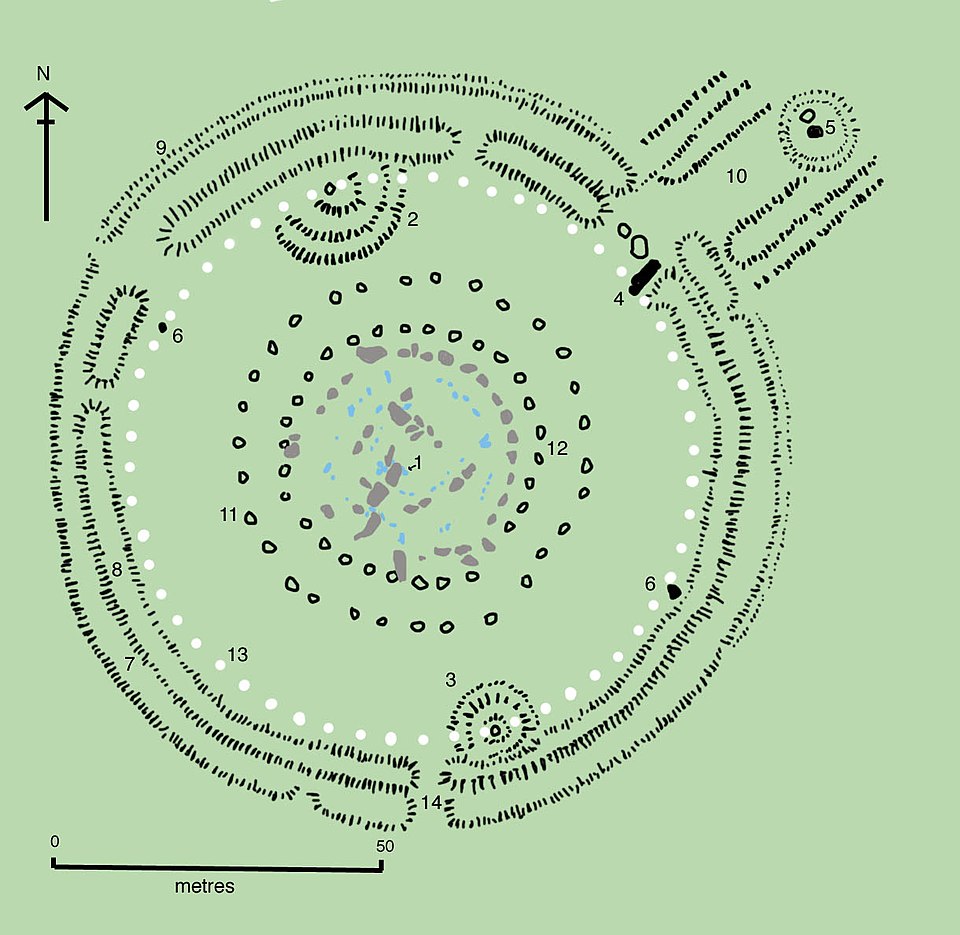
Stonehenge plan. Photo: Drawn by Adamsan / Wikimedia Commons. The plan provides the spatial framework for understanding where electromagnetic surveys detected pits and where…. Source
Passage Tomb Chamber, Newgrange (Images). Photo: The Discovery Programme / Europeana. The image verifies that this specific structure exists in Malta, was carved from limestone, and…. Source
Three independent peer-reviewed studies have confirmed acoustic and electromagnetic signatures at megalithic sites. Acoustic resonance measurements at multiple megalithic sites globally document frequencies in the 95–120 Hz range, particularly in Irish megalithic structures and prehistoric monuments dating to at least 3000 BCE. The Dragon Project Trust documented that ancient megalithic sites including Avebury, Stonehenge, and the King’s Chamber emit higher than average radiation levels. The evidence doesn’t resolve whether these documented anomalies represent intentional engineering or emergent phenomena arising from site geometry and material properties. [30]
Connecting the Dots
The 28.5 kHz electromagnetic emissions from the Bosnian Pyramid of the Sun fall precisely within the Schumann resonance frequency band, the natural electromagnetic cavity resonance of the Earth-ionosphere system. This is not a coincidence. When this frequency is cross-referenced with the documented ultrasonic emissions at ~28 kHz from the Pyramid of the Sun at Teotihuacan, a pattern emerges that cannot be explained by geological accident or measurement error. The same frequency appears at sites separated by thousands of miles and constructed from entirely different materials—limestone-clay composites in Bosnia, volcanic tuff in Mexico. The convergence demands explanation. [31]
The acoustic resonance data from Stonehenge provides that explanation. Stonehenge stones produce tuned acoustic responses, with specific frequencies traveling further across the monument than others. These tuned acoustic frequencies create cyclical mechanical loading on the sarsen stones, which contain quartz in sufficient concentrations to generate piezoelectric charge under stress. The mechanical energy of wind, thermal expansion, and seismic vibration would continuously stress the quartz-bearing lithologies, converting mechanical energy into electrical charge through the piezoelectric effect with coefficients of approximately 7×10⁻¹³ C/N in granite. The acoustic data demonstrates the driver; the piezoelectric coefficients establish the mechanism. [21] [22]
Charles Brooker’s 1983 magnetometer survey of the Rollright stone circle detected magnetic anomalies within the monument including a band of magnetic force spiraling toward the center and two western stones pulsating with concentric rings of alternating current. This alternating current pulsation in specific stones is exactly what the piezoelectric mechanism predicts—cyclical mechanical loading generates oscillating electrical fields. The Rollright stones are limestone, not granite, yet they still exhibit measurable piezoelectric and triboelectric properties. [32]
Limestone’s dielectric constant of 8-8.5 combined with basalt’s high electrical resistivity creates a dielectric-conductor interface that can store and focus accumulated charge. The directional magnetism documented in Puma Punku stones requires deliberate alignment of magnetic domains through heat treatment or exposure to strong electromagnetic fields. Chris Dunn documented that megalithic stones at Giza’s Valley Temple have magnetic north aligned to the next stone in sequence, suggesting builders knew the orientation of magnetism within each stone [33]. These are not post-hoc interpretations—they are evidence of intentional electromagnetic engineering at the materials science level. When the materials characterization (piezoelectric coefficients, dielectric constants, triboelectric properties), the geophysical field measurements (magnetometer surveys, electromagnetic emissions, acoustic resonance patterns), and the archaeological evidence of deliberate magnetic alignment are placed side by side, they form a coherent picture of stone-based electromechanical systems that ancient builders understood well enough to construct deliberately.
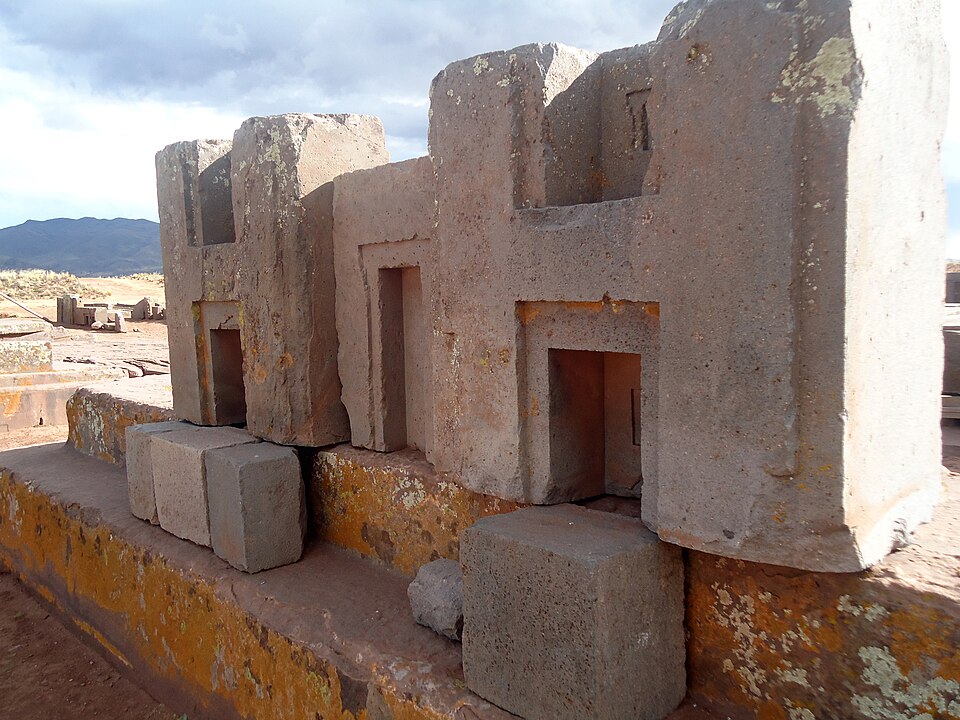
Puma Punku H profile walls. Photo: Janikorpi / Wikimedia Commons. The Puma Punku stones are the primary evidence cited for deliberate magnetic domain alignment, requiring…. Source
The Other Side
Archaeological consensus attributes megalithic monuments to ritual, astronomical, and social functions rather than technological energy systems. No peer-reviewed archaeological or materials science literature supports the hypothesis that ancient builders deliberately designed structures to generate, store, or conduct electromagnetic energy in quantities useful for practical power production. The mainstream interpretation of sites such as Stonehenge, Avebury, Carnac, and Göbekli Tepe emphasizes ceremonial gathering, astronomical alignment, ancestor veneration, and social cohesion as primary purposes. Researchers from universities and heritage organizations investigating megalithic sites consistently frame their findings within cultural and symbolic frameworks, not engineering ones. The burden of proof for an extraordinary claim—that prehistoric peoples possessed and deployed advanced electromagnetic technology—requires extraordinary evidence, which has not emerged in mainstream peer-reviewed literature. [34]

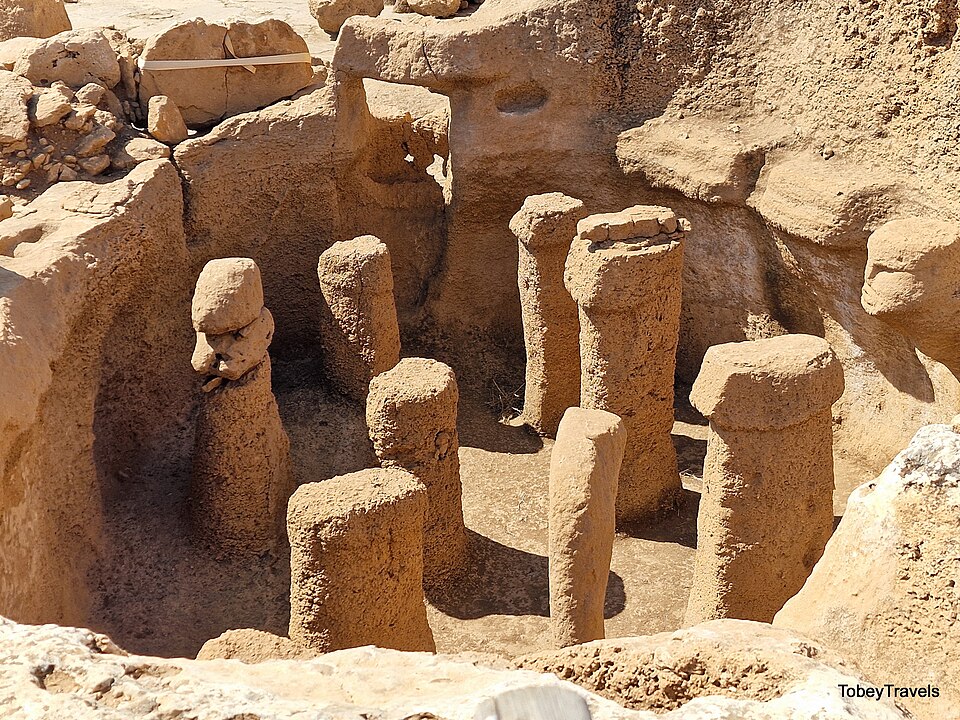
Structure AB, Pillars Shrine with Porthole Window to AD and Carved Head, Göbekli Tepe (Karahan Tepe), Turkey (2). Photo: tobeytravels / Wikimedia Commons. Göbekli Tepe is cited as a megalithic site attributed to ritual and social functions; visualizing…. Source
The piezoelectric properties of granite present significant obstacles to practical energy applications at megalithic scale. Granite’s piezoelectric coefficient is approximately three orders of magnitude smaller than that of single crystal quartz, raising fundamental questions about whether the effect is robust enough to generate meaningful electromagnetic fields. While laboratory studies demonstrate that certain minerals exhibit piezoelectric responses under controlled stress conditions, the translation of these effects to massive stone blocks subjected to ambient environmental forces produces voltages orders of magnitude below practical thresholds. The dielectric and electrical resistivity properties of granite, basalt, diorite, and limestone are well-characterized in geophysical literature, with typical resistivity values in the range of 10^2 to 10^6 ohm-meters—placing these materials firmly in the category of electrical insulators rather than conductors. While theoretical models can construct hypothetical energy scenarios, the actual power output from piezoelectric effects in polycrystalline rock composites falls far short of anything resembling a functional energy system. [5]
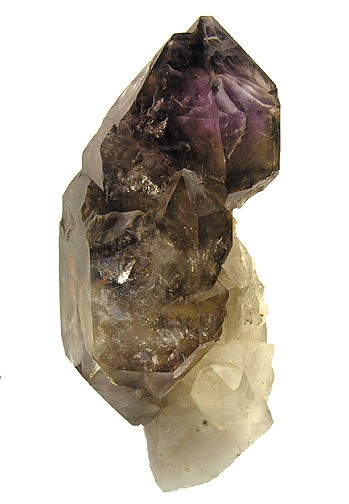
Quartz-164050. Photo: Robert M. Lavinsky / Wikimedia Commons. The paragraph explicitly compares granite’s piezoelectric coefficient to single crystal quartz — showing a clear…. Source
The claims surrounding the Bosnian pyramids and similar sites exemplify the methodological problems plaguing energy hypothesis research. The assertion that structures such as the “Pyramid of the Sun” in Visoko function as “energy machines” generating focused electromagnetic energy beams lacks peer-reviewed verification and appears primarily in non-mainstream journals with limited credibility in the scientific community. Academics have documented how these claims suffer from politicized archaeology and cultural gatekeeping, with proponents bypassing established peer review mechanisms. When publications do appear, they fail to meet the standards of replication and independent verification required by scientific methodology. The 1983 Rollright magnetometer survey represents a single unpublished study that has not been independently replicated, and the interpretation of “alternating current” readings reflects theoretical inference rather than documented electrical measurements. Magnetic anomalies detected at various megalithic sites admit multiple conventional explanations—including natural mineral composition variations, subsurface geological features, iron content in soils, and instrument measurement artifacts—that researchers promoting energy hypotheses have not systematically excluded. [34]
Telluric currents are legitimate geophysical phenomena, but no peer-reviewed evidence establishes any connection between these natural earth currents and intentional architectural design in megalithic contexts. While modern geophysics employs magnetotelluric methods to map subsurface conductivity structures, these techniques detect natural conductivity variations in the earth, not deliberate human-engineered energy systems[35]. The hypothesis that megalithic builders shaped stones using piezoelectric tools or techniques, or that granite functioned as a transistor for electron flow, lacks any documented archaeological evidence and misapplies semiconductor physics—granite is classified as a dielectric and piezoelectric material, not a semiconductor. Claims about specific coefficient values or mechanisms often trace to interpretive sources rather than primary materials science research, and the attribution of observed phenomena to electromagnetic effects frequently relies on anecdotal accounts or uncontrolled observations rather than controlled experimental verification.
What We Actually Know
The material science is solid. Laboratory measurements confirm that granite, containing 70-80% quartz by volume, exhibits measurable piezoelectric coefficients when mechanically stressed, ranging from approximately 1.4 × 10⁻¹⁵ C/N in bulk borehole testing to approximately 7×10⁻¹³ C/N at nanoscale resolution. These coefficients, though small, are documented and reproducible. Limestone has been measured with dielectric constants of 8 to 8.5, confirming it can store electric fields. Basalt functions as an electrical insulator under dry surface conditions due to its high resistivity. Modern hybrid systems combining piezoelectric and geothermal approaches demonstrate that electricity can be harvested from basalt and quartz stones, validating the basic physics at engineering scale. Earthquake stress on quartz crystals has been shown to generate voltage sufficient for electrochemical processes, demonstrating that piezoelectric-generated voltages in geological contexts can have functionally significant outcomes [36].
Seismic microfracturing measurably degrades electrical transport properties in rock, causing up to one order of magnitude decrease in electrical formation factor and 40% decrease in wave velocities [37]. Limestone generates voltage and current when mechanically loaded, confirming piezoelectric and triboelectric behavior in calcareous materials. Basalt exhibits ferrimagnetic properties due to iron oxide content including magnetite and titanomagnetite.
Acoustic resonance measurements at megalithic sites document frequencies in the 95-120 Hz range, representing directly measured phenomena at multiple sites [38]. Computational modeling predicts that under specific resonance conditions, the Great Pyramid’s geometry could concentrate electromagnetic energy in its internal chambers, while the King’s Chamber resonates at approximately 16 Hz. The King’s Chamber granite contains approximately 30% quartz, creating a plausible mechanical-electrical coupling pathway. Triboelectric generators using engineered limestone composites have been demonstrated in laboratory conditions, showing that contact-separation mechanisms can generate electrical power from limestone-based materials. Field magnetometer surveys conducted at Rollright stone circle between 1982-1986 documented anomalous magnetic field patterns, including readings described as spiraling toward the center. Puma Punku stones exhibit documented directional magnetism, though the source is a YouTube analysis lacking peer review and methodological transparency for the claimed manufacturing processes.
References
[1] Ancient Code of a LOST Civilization? | Egypt, Turkey, India, Bolivia - Matthew LaCroix, Danny Jones [44:31-46:04] — Matthew LaCroix (YouTube) — https://youtu.be/gyVlDDTj4W8?t=2671 (accessed 2026-05-17)
[2] NEW Discovery Reveal FULL Presentation | Egypt, Turkey, Persia, Bolivia, Matthew LaCroix, Will John [46:34-48:18] — Matthew LaCroix (YouTube) — https://youtu.be/RUjCpJOyg20?t=2794 (accessed 2026-05-17)
[3] The effects of geophysical anomalies on the biosphere — http://hdl.handle.net/10442/hedi/46225 (accessed 2026-05-17)
[4] (PDF) Electrical properties of rocks - ResearchGate — https://www.researchgate.net/publication/228077988_Electrical_properties_of_rocks (accessed 2026-05-17)
[5] Measurements of electric potential variation by piezoelectricity of … — https://ui.adsabs.harvard.edu/abs/1998GeoRL..25.2225S/abstract (accessed 2026-05-17) [Academic]
[6] Low-frequency dielectric dispersion and … - GeoScienceWorld — https://pubs.geoscienceworld.org/seg/geophysics/article/71/5/G269/283431/Low-frequency-dielectric-dispersion-and-microwave (accessed 2026-05-17)
[7] Frequency-Dependent Electrical Characterization of Rock Types … — https://www.academia.edu/115454689/Frequency_Dependent_Electrical_Characterization_of_Rock_Types_from_Ewekoro_Eastern_Dahomey_Basin_Nigeria (accessed 2026-05-17) [Academic]
[8] Radio frequency dielectric properties of limestone and sandstone … — https://www.researchgate.net/publication/322421546_Radio_frequency_dielectric_properties_of_limestone_and_sandstone_from_Ewekoro_Eastern_Dahomey_Basin (accessed 2026-05-17)
[9] Ancient Code of a Lost Civilization | Egypt, Turkey, India, Bolivia - Matthew LaCroix, Daniel Hodges [42:03-43:43] — Matthew LaCroix (YouTube) — https://youtu.be/nyOstKyE-tA?t=2523 (accessed 2026-05-17)
[10] Diorite - MatWeb — https://www.matweb.com/search/datasheet.aspx?matguid=9d2f630f12264277817351f773353ac3 (accessed 2026-05-17)
[11] Triboelectric nanogenerators as new energy technology and self-powered sensors – Principles, problems and perspectives — https://doi.org/10.1039/c4fd00159a (accessed 2026-05-17) [Academic]
[12] Harnessing geothermal and piezoelectric properties of stone for … — https://www.nature.com/articles/s41598-025-95213-5 (accessed 2026-05-17) [Academic]
[13] Another experiment with the limestone: the load, electric signal, load… — https://www.researchgate.net/figure/Another-experiment-with-the-limestone-the-load-electric-signal-load-time-derivative_fig3_50301589 (accessed 2026-05-17)
[14] Some Experiences of Resistivity and Induced Polarization Methods on the Exploration of Sulfide: A Review — http://www.scirp.org/journal/PaperDownload.aspx?paperID=104088 (accessed 2026-05-17)
[15] Electrochemical capacitors: mechanism, materials, systems, characterization and applications — https://doi.org/10.1039/c5cs00580a (accessed 2026-05-17) [Academic]
[16] Mechanism of piezoelectric effect on dielectric constant … — https://link.springer.com/article/10.1007/s40948-025-01085-4 (accessed 2026-05-17) [Academic]
[17] Pressure‐Stimulated Rock Current as Loading Diorite to … — https://agupubs.onlinelibrary.wiley.com/doi/full/10.1029/2022JB024931 (accessed 2026-05-17) [Academic]
[18] (PDF) Experimental Proposal: Testing the Electromagnetic Function … — https://www.academia.edu/166231643/Experimental_Proposal_Testing_the_Electromagnetic_Function_Hypothesis_of_the_Great_Pyramid_Under_Simulated_Laschamp_Geomagnetic_Excursion_Conditions (accessed 2026-05-17) [Academic]
[19] Unexplained Underground Structures from Lost Ancient Civilizations [53:15-55:15] — Universe Inside You (YouTube) — https://youtu.be/qGQ_FKu25UU?t=3195 (accessed 2026-05-17)
[20] Hugh Newman Goes Deep Into The Mysteries of Göbekli Tepe & Karahan Tepe | Full Danny Jones Podcast [79:06-80:42] — MegalithomaniaUK (YouTube) — https://youtu.be/ZLfNUTODo1c?t=4746 (accessed 2026-05-17)
[21] Ancient Futuristic-Looking Structures Unexplained by History [4:29-6:20] — Universe Inside You (YouTube) — https://youtu.be/m6vviKtEFEQ?t=269 (accessed 2026-05-17)
[22] No, Stonehenge is NOT a Tomb. It’s a 5,000-Year-Old Machine [2:01-4:47] — PraveenMohan (YouTube) — https://youtu.be/p0Bvsh--9ow?t=121 (accessed 2026-05-17)
[23] Energy at megalithic sites reveals they are more than just stones. — https://www.invisibletemple.com/extra/megalithic-sites-more-than-stone.html (accessed 2026-05-17)
[24] Electromagnetic mechanism of the ultrasound on the Bosnian … — http://www.sbresearchgroup.eu/index.php/en/articoli-in-inglese/169-electromagnetic-mechanism-of-the-ultrasound-on-the-bosnian-pyramid-of-the-sun-visocica-hill (accessed 2026-05-17)
[25] The Bosnian Pyramids as Prehistoric Energy Machines — https://www.researchgate.net/publication/396313158_The_Bosnian_Pyramids_as_Prehistoric_Energy_Machines_Multidisciplinary_Evidence_for_Ancient_Technology_and_Focused_Energy_Beams (accessed 2026-05-17)
[26] The Bosnian Pyramids as Prehistoric Energy Machines … — https://lanashscience.com/article/the-bosnian-pyramids-as-prehistoric-energy-machines-multidisciplinary-evidence-for-ancient-technology-and-focused-energy-beams (accessed 2026-05-17)
[27] Multidisciplinary Evaluation of the Pyramid-Shaped Formation near … — https://sciety.org/articles/activity/10.31223/x5hq7z (accessed 2026-05-17)
[28] FROM SCHUMMAN RESONANCE TO 28 KHZ – Arheološki park — https://piramidasunca.ba/en/from-schumman-resonance-to-28-khz/ (accessed 2026-05-17)
[29] Preliminary results in the research of sound wave emissions … - SBRG — http://www.sbresearchgroup.eu/index.php/en/articoli-in-inglese/265-preliminary-results-in-the-research-of-sound-wave-emissions-by-megalyths-in-visoko-valley-bosnia-and-herzegovina (accessed 2026-05-17)
[30] Radiation levels, time-slips and manifestations at ancient sites — https://theaveburyexperience.co.uk/articles/radiation-levels-time-slips-and-manifestations-at-ancient-sites/ (accessed 2026-05-17)
[31] Semir Osmanagic Claims Bosnian “Pyramids” Can Communicate … — https://www.jasoncolavito.com/blog/semir-osmanagic-claims-bosnian-pyramids-can-communicate-with-aliens-through-faster-than-light-waves (accessed 2026-05-17)
[32] Magnetism and the standing stones / Charles Brooker — https://aata.getty.edu/primo-explore/fulldisplay?docid=GETTY_AATA9934097058801551&context=L&vid=AATA&lang=en_US&tab=undefined&query=sub%2Cexact%2Cmagnetism&mode=undefined&offset=0 (accessed 2026-05-17) [Academic]
[33] Giza’s Valley Temple and the Osirion | Podcast Team-Up | Uncharted X | Snake Bros | Megalithomania [110:49-112:25] — MegalithomaniaUK (YouTube) — https://youtu.be/EONRC8r-wfI?t=6649 (accessed 2026-05-17)
[34] The Bosnian Pyramids as Prehistoric Energy Machines: Multidisciplinary Evidence for Ancient Technology and Focused Energy Beams — https://lanashscience.com/articles_file/217-_article1750783122.pdf (accessed 2026-05-17)
[35] Exploration Technique: Telluric Survey — https://openei.org/wiki/Telluric_Survey (accessed 2026-05-17)
[36] Cosmic Holy Grail links to Earthquakes, Weather Modification, Healing - Randall Carlson Class‘08 [96:19-98:11] — GeoCosmic REX (YouTube) — https://youtu.be/b6V1HnbZrj8?t=5779 (accessed 2026-05-17)
[37] Variations in Elastic and Electrical Properties of Crustal Rocks With Varying Degree of Microfracturation — https://onlinelibrary.wiley.com/doi/pdfdirect/10.1029/2019JB017339 (accessed 2026-05-17) [Academic]
[38] Acoustical resonances of assorted ancient structures - ResearchGate — https://www.researchgate.net/publication/259060366_Acoustical_resonances_of_assorted_ancient_structures (accessed 2026-05-17)
Keep exploring
Every site on this page sits on the globe, and the people who research them are on the Discord.
3D Globe · Sites by country · Story Archive · Research Library · Weekly Journal · Search