
 Thailand
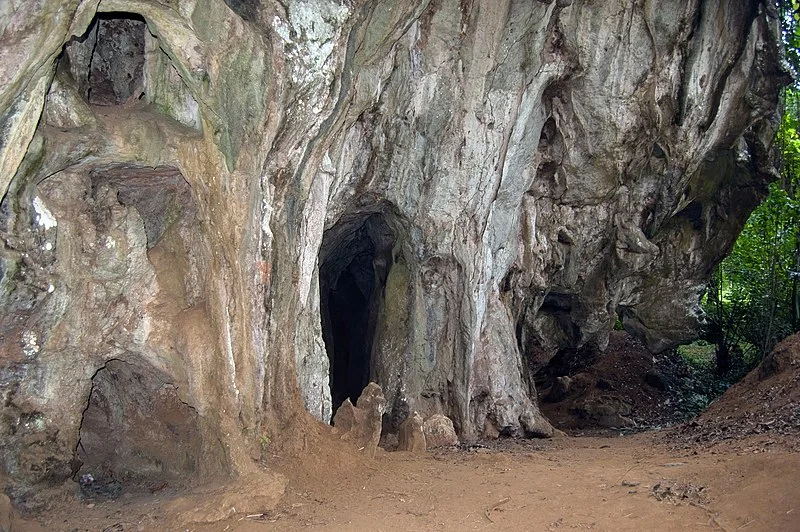
The Hoabinhian hunter-gatherers who lived at the Lang Rongrien rock shelter used the site as a temporary habitation site [1]. The oldest use for the rock shelter was as a campground for hunters in the late Pleistocene epoch [1]. The excavated areas of the Lang Rongrien rock shelter have been divided into ten stratigraphic layers, or cultural deposit layers [1]. The eighth and ninth layers are similar to each other, with charcoal remains, stone artifacts and flakes, and animal bones that are scattered about among these layers [1]. The oldest pieces of charcoal found in the lower most layers where human habitation is seen have been dated to around 39,000 years ago [1]. Charcoal pieces from the upper layers have been dated to about 9,000 years ago [1].
Text: Wikipedia – 'Lang Rongrien Rock Shelter' (revision of 2026-09-19), CC BY-SA 4.0 · sentences selected and shortened by an AI system · source →Lang Rongrien Rock Shelter
| Type | Archaeological site |
|---|---|
| Period | 500 BC - 1 AD |
| Country | Thailand |
| Coordinates | 8.1803° N, 98.8808° E |