
 Thailand
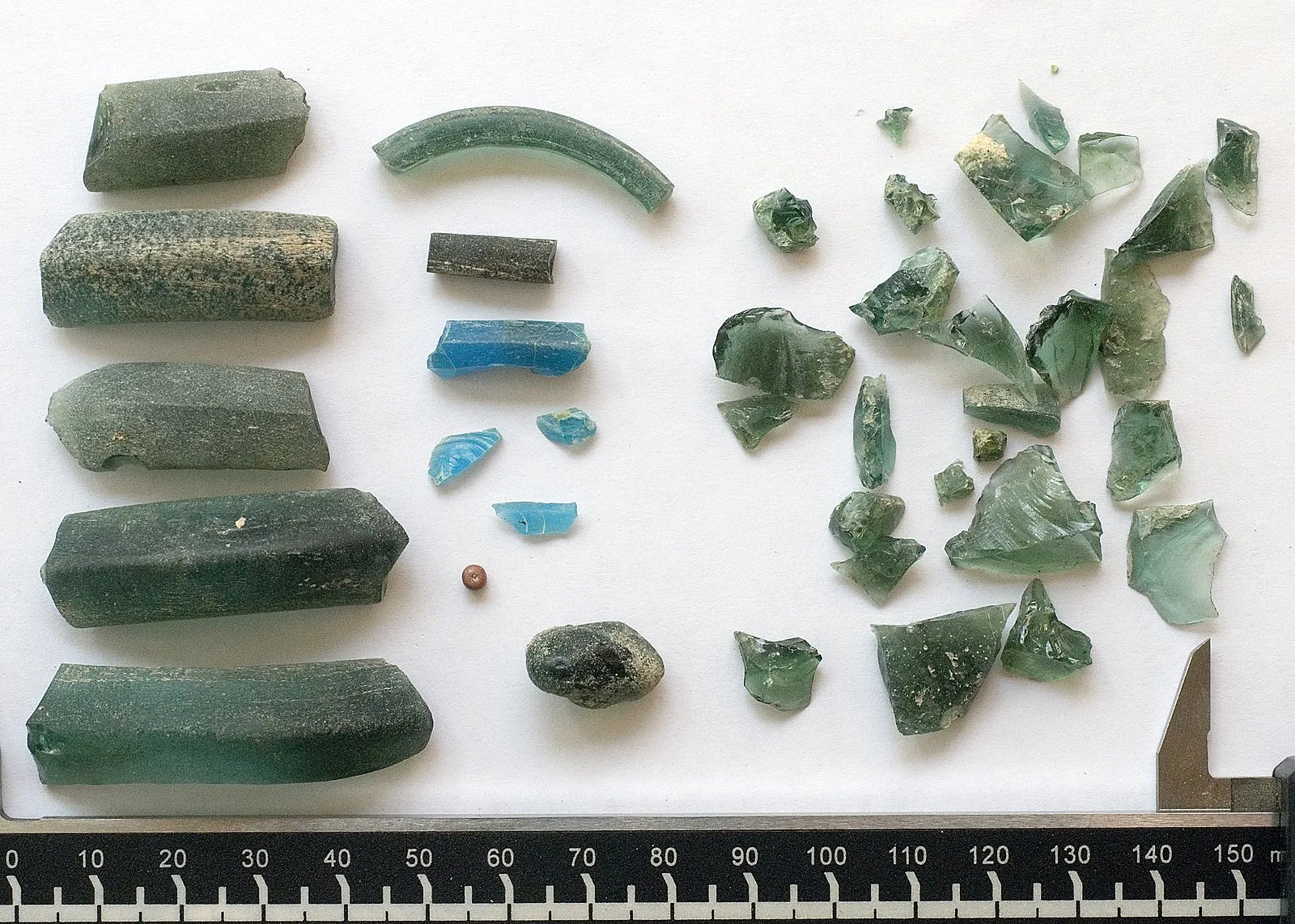
Khao Sam Kaeo is an archaeological site in Thailand's Chumphon province [1]. It is located in Na Cha-ang subdistrict of Mueang Chumphon district, just north of the town of Chumphon, on the east coast of the Malay Peninsula [1]. Dated 400–100 BCE, Khao Sam Kaeo served as an extremely important port, as well as a crossroads for Asian connection and interaction [1]. By the 4th or 5th century BCE there were settlements on the middle peninsula using portage routes to join the trade systems of the Indian Ocean and the South China Sea, and between the 4th and 2nd centuries BCE a large Indian-style settlement appeared at Khao Sam Kaeo on the east coast [1]. Khao Sam Kaeo was settled around four hills, with most of the settlement being located on the hills as the lower areas were believed to have been subjected to periodic flooding [1]. Copper metallurgical typologies found at the site reflect Vietnamese, Southern Asian, and Han technologies [1]. Roman intaglios have been found, made of yellow carnelian, featuring carvings of Roman gods [1].
Text: Wikipedia – 'Khao Sam Kaeo' (revision of 2026-09-19), CC BY-SA 4.0 · sentences selected and shortened by an AI system · source →Khao Sam Kaeo
Also known as: เขาสามแก้ว
| Type | City/town/settlement |
|---|---|
| Period | 500 BC - 1 AD |
| Country | Thailand |
| Coordinates | 10.5273° N, 99.1821° E |