
 Türkiye
The Heroon of Trysa is the modern name for an ancient tomb, built around 380 BCE in Trysa, in ancient Lycia in southwest Turkey [1]. It was discovered in 1841 by the gymnasium teacher Julius August Schönborn during his field research in Lycia [1]. The figural frieze originally consisted of c. 152 plates, which decorated the square outer wall of the tomb [1]. They are currently in the Kunsthistorisches Museum in Vienna, where they were brought in 1882 after excavations by Otto Benndorf and Felix von Luschan [1].
Text: Wikipedia – 'Heroon of Trysa' (revision of 2024-08-10), CC BY-SA 4.0 · sentences selected and shortened by an AI system · source →Heroon of Trysa
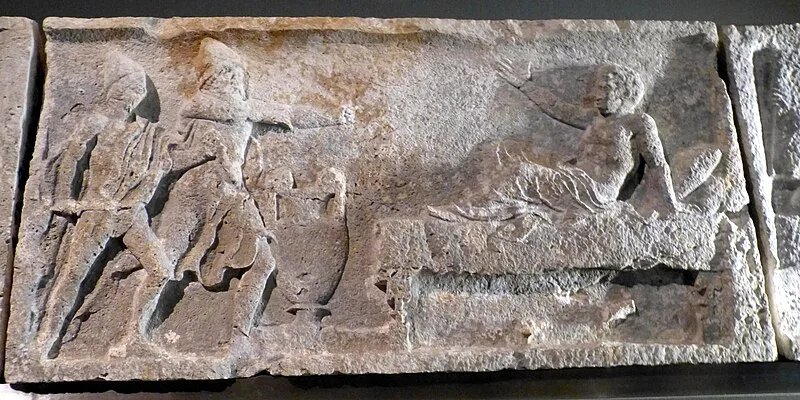
Also known as: Heroon de Trysa, Heroon von Trysa, Trysa Heroonu
| Type | Tomb |
|---|---|
| Period | 500 BC - 1 AD |
| Country | Türkiye |
| Coordinates | 36.2689° N, 29.9015° E |