
 Guatemala
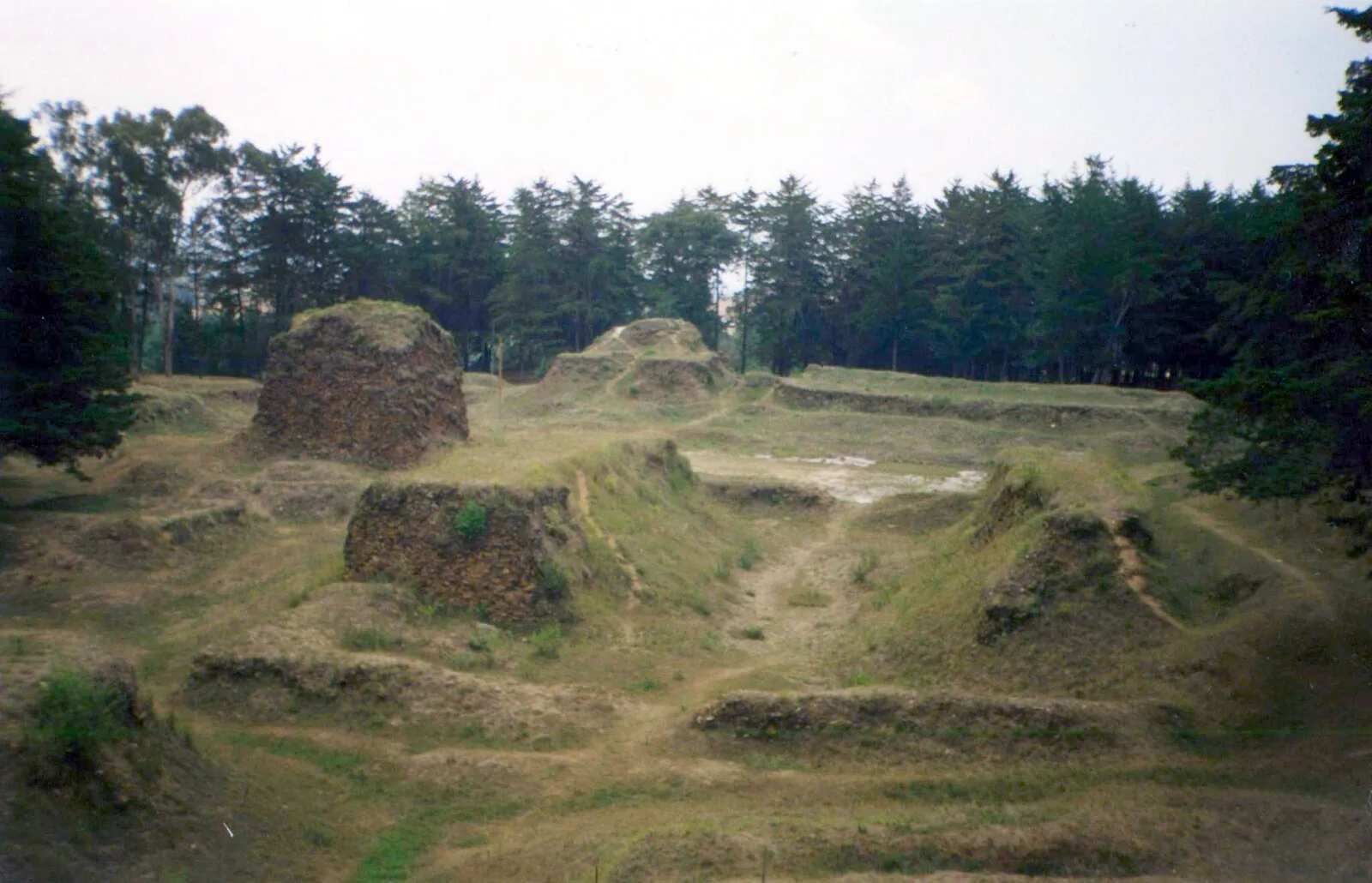
Qʼumarkaj is an archaeological site in the southwest of the El Quiché department of Guatemala [1]. Qʼumarkaj is also known as Utatlán, the Nahuatl translation of the city's name [1]. Qʼumarkaj was one of the most powerful Maya cities when the Spanish arrived in the region in the early 16th century [1]. It was the capital of the Kʼicheʼ Maya in the Late Postclassic Period [1]. In 1470 the city was seriously weakened by a rebellion among the nobility that resulted in the loss of key allies of the Kʼicheʼ [1]. The ruins of the city are 2.5 kilometres to the west of the modern city of Santa Cruz del Quiché [1]. Qʼumarkaj completely occupies 120,000 square metres of an easily defended plateau surrounded by ravines over 100 metres deep [1]. Ceramic remains from the site include pieces that date as far back as the Preclassic Period but the majority of finds date to the Late Postclassic and the height of the Kʼicheʼ kingdom [1].
Text: Wikipedia – 'Qʼumarkaj' (revision of 2026-09-05), CC BY-SA 4.0 · sentences selected and shortened by an AI system · source →Qʼumarkaj
Also known as: Utatlán, Утатлан, کومارکاخ, กูมาร์คัฆ, ウタトラン, 库马尔卡赫
| Type | City/town/settlement |
|---|---|
| Period | 1000 - 1500 AD |
| Country | Guatemala |
| Coordinates | 15.0238° N, 91.1721° W |