
 China
ChinaThe Yangshan Quarry has been worked from the time of the Six Dynasties, the local limestone being used for construction of buildings, walls, and statues in and around Nanjing [1]. The Yangshan quarry became the main source of stone for the major construction projects that changed the face of Nanjing [1]. In 1405, Hongwu's son, the Yongle Emperor, ordered the cutting of a giant stele in this quarry, for use in the Ming Xiaoling Mausoleum of his deceased father [1]. In accordance with the usual design of a Chinese memorial stele, three separate pieces were being cut: the rectangular stele base (pedestal), the stele body, and the stele head (crown, to be decorated with a dragon design) [1]. After most of the stone-cutting work had been done, the architects realized that moving stones that big from Yangshan to Ming Xiaoling, let alone installing them there in a proper way, would not be physically possible [1].
Text: Wikipedia – 'Yangshan Quarry' (revision of 2026-09-19), CC BY-SA 4.0 · sentences selected and shortened by an AI system · source →Yangshan Quarry
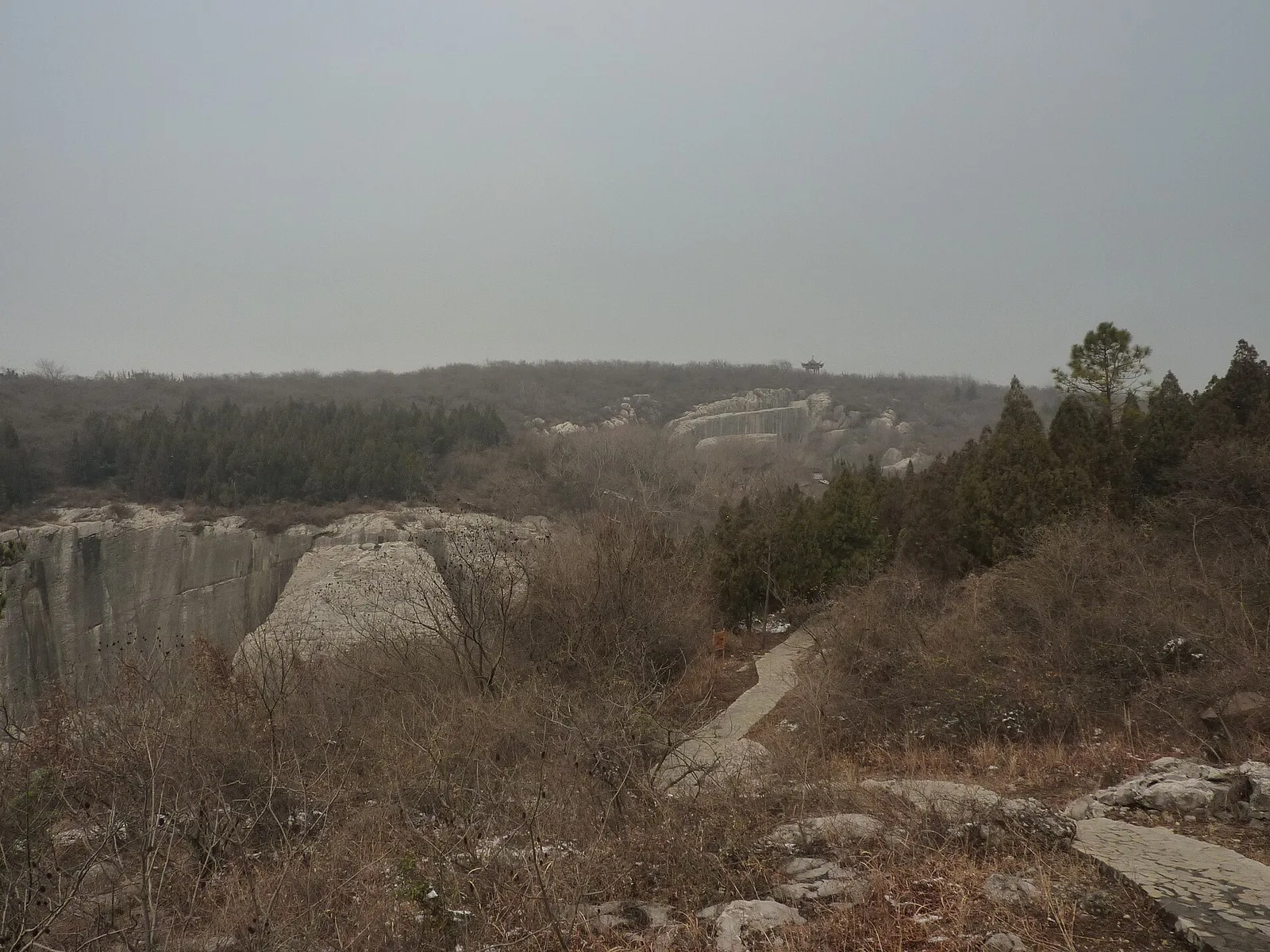
Also known as: Kamenolom Jang-šan, Кар'єр Яншань, Яншаньский карьер, Яньшаньский карьер, 南京明文化村・陽山碑材, 阳山碑材, 陽山碑材
| Type | Mine/quarry |
|---|---|
| Period | 1 - 500 AD |
| Country | China |
| Coordinates | 32.0623° N, 119.0024° E |