
 China
ChinaA ruined earthen city atop a leaf-shaped plateau between two river valleys near Turpan, Xinjiang. Capital of the Anterior Jushi Kingdom from 108 BC to 450 AD, it served as a key Silk Road stop. Buildings were carved from the natural loess plateau rather than constructed, making it the world's largest and best-preserved earthen city. Inscribed as a UNESCO World Heritage Site in 2014 as part of the Silk Roads corridor. The city was 1,650 m long and 300 m wide, with no city walls due to its natural cliff defenses.
Ancient City of Jiaohe
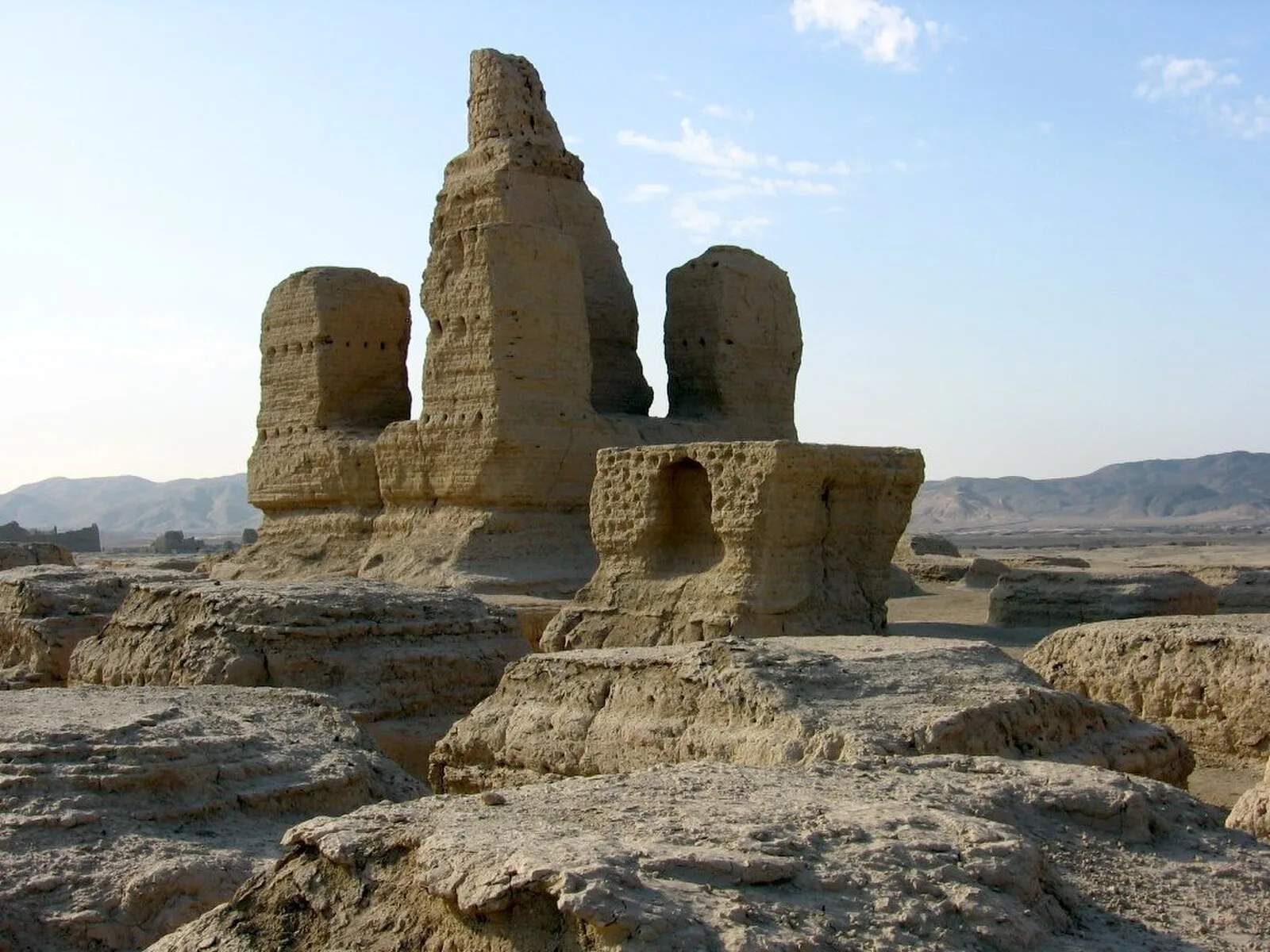
Also known as: 교하성, 교하고성, 자오허 고성, Dziaohė, Jiaohe, Jiaohe City Ruins, Jiaohe gucheng, Jiaohe hondarrak, Jiaohe (Ruinenstadt), Jiaohe Ruins, Jiaohe (ruiny), Phế tích Giao Hà
| Type | City/town/settlement |
|---|---|
| Period | 500 BC - 1 AD |
| Country | China |
| Coordinates | 42.9534° N, 89.0660° E |