
 China
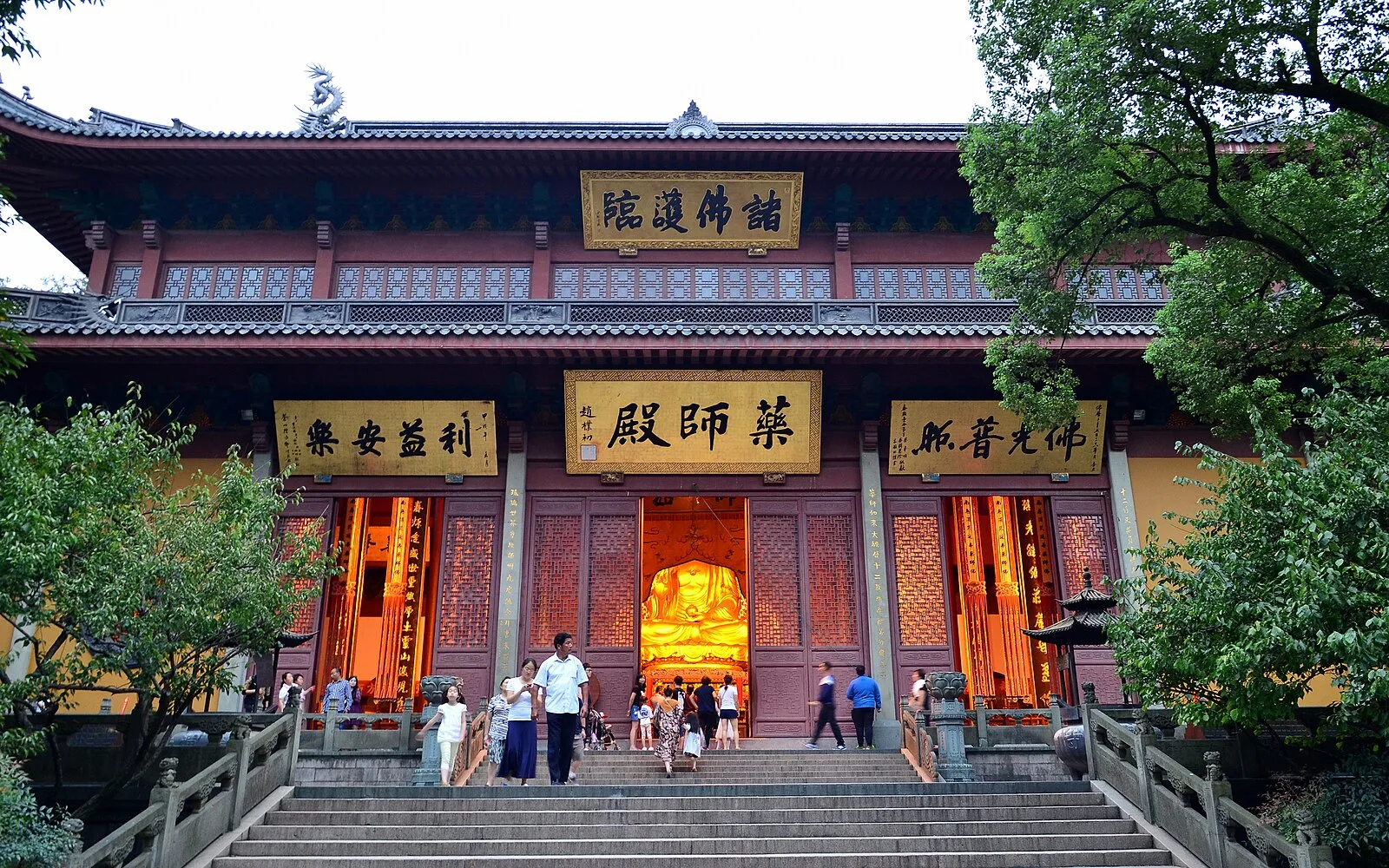
ChinaLingyin Temple (simplified Chinese: 灵隐寺; traditional Chinese: 靈隱寺; pinyin: Língyǐn Sì) is a prominent Chan Buddhist temple near Hangzhou that is renowned for its many pagodas and grottos [1]. Its name is commonly and literally translated into English as Temple of the Soul's Retreat [1]. The monastery is the largest of several temples in the Wulin Mountains, which feature renowned grottos and religious rock carvings [1]. According to tradition, the monastery was founded in 328 AD during the Eastern Jin dynasty (266–420) by an Indian monk, named Huili in Chinese [1]. From its inception, Lingyin was a famous monastery in the Jiangnan region [1]. At its peak under the Wuyue Kingdom (907–978), the temple boasted 18 pavilions, 72 halls, more than 1300 dormitory rooms, inhabited by more than 3000 monks [1]. Many of the rich Buddhist carvings in the Feilai Feng grottos and surrounding mountains also date from this era [1]. During the Southern Song (1127–1279), the monastery was regarded as one of the ten most important temples of the Chan sect in the Jiangnan region [1].
Text: Wikipedia – 'Lingyin Temple' (revision of 2026-07-30), CC BY-SA 4.0 · sentences selected and shortened by an AI system · source →Lingyin Temple
Also known as: 링인쓰, Kuil Lingyin, Ling-jin, Lingyin, Lingyin Kloster, Lingyin-Kloster, Lingyinsi, Lingyin Si, Ling-yin-ssu, Ling-yin Ssu, Lingyin Tempel, Lingyin-Tempel
| Type | Temple complex |
|---|---|
| Period | 1 - 500 AD |
| Country | China |
| Coordinates | 30.2411° N, 120.1015° E |