
 Chile
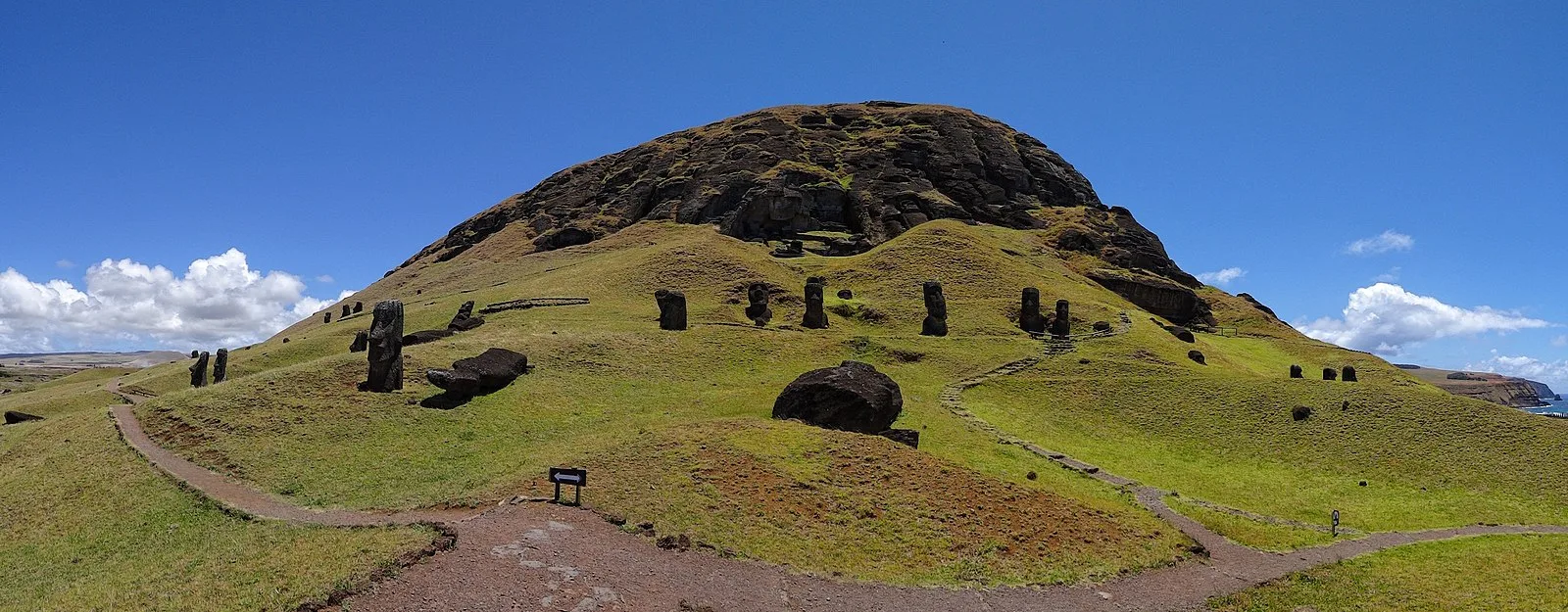
ChileRano Raraku is a volcanic crater formed of consolidated volcanic ash, or tuff, and located on the lower slopes of Terevaka in the Rapa Nui National Park on Easter Island in Chile [1]. It was a quarry for about 500 years until the early eighteenth century, and supplied the stone from which about 95% of the island's known monolithic sculptures (moai) were carved [1]. Rano Raraku is a visual record of moai design vocabulary and technological innovation, where 887 moai remain [1]. The incomplete statues in the quarry are remarkable for their number, for the inaccessibility of some that were high on the outside crater wall and for the size of the largest; at 21.6 m in height, almost twice that of any moai ever completed and weighing an estimated 270 tonnes [1]. On the outside of the quarry are a number of moai, some of which are partially buried to their shoulders in the spoil from the quarry [1]. They are distinctive in that their eyes were not hollowed out, they do not have pukao and they were not cast down in the island's civil wars [1].
Text: Wikipedia – 'Rano Raraku' (revision of 2026-02-23), CC BY-SA 4.0 · sentences selected and shortened by an AI system · source →Rano Raraku
Also known as: Rano Raraku (volcano), Rano Raraku (vulkan i Chile), Silla de San Carlos, Рано Рараку, Рано-Рараку, რანო-რარაკუ, رانو راراكو, رانو راراکو, ڕانۆ ڕاراکو, ラノ・ララク, 拉諾拉拉庫
| Type | Geological interest |
|---|---|
| Period | 1000 - 1500 AD |
| Country | Chile |
| Coordinates | 27.1230° S, 109.2861° W |