
 Chile
ChileAhu Tongariki is the largest ahu on Easter Island [1]. Its moais were toppled during the island's civil wars, and in the twentieth century the ahu was swept inland by a tsunami [1]. It has since been restored and has fifteen moai, including one that weighs eighty-six tonnes, the heaviest ever erected on the island [1]. Ahu Tongariki is one kilometer from Rano Raraku and Poike in the Hotu-iti area of Rapa Nui National Park [1]. All the moai here face sunset during the winter solstice [1]. Ahu Tongariki was the main centre and capital of the Hotu-iti clan, the eastern confederation of the Rapa Nui people [1]. Ahu Tongariki was substantially restored in the 1990s through the efforts of a multidisciplinary team headed by archaeologists Claudio Cristino and Patricia Vargas Casanova [1].
Text: Wikipedia – 'Ahu Tongariki' (revision of 2025-10-27), CC BY-SA 4.0 · sentences selected and shortened by an AI system · source →Ahu Tongariki
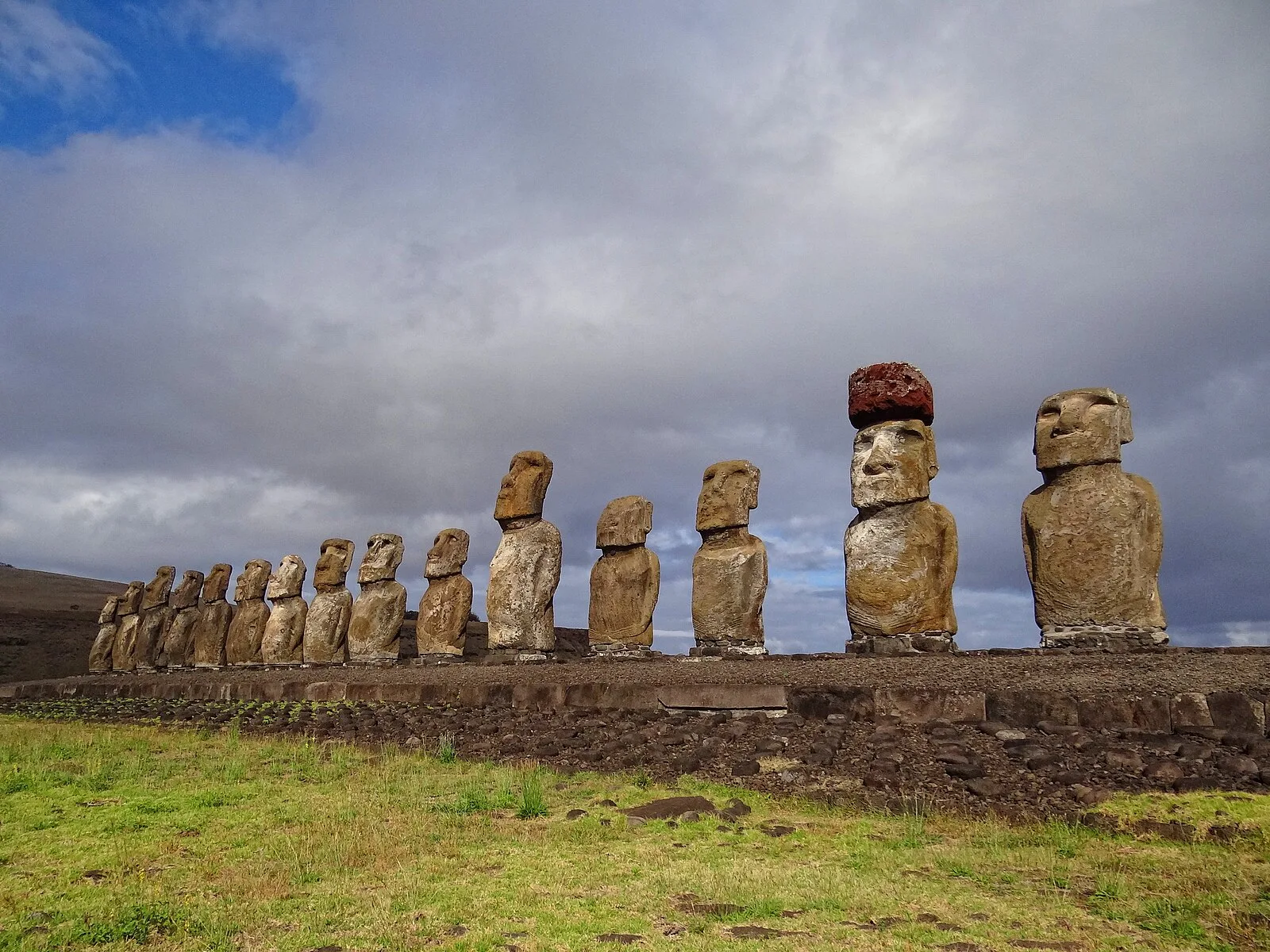
Also known as: Ahu Tonqariki, Άχου Τονγκαρίκι, Аху Тонгарики, آهو تونغاريكي, آهو تونگاریکی, ئاھو تۆنگاریکی, आहू टोंगारिकी, アフ・トンガリキ, 阿胡東加里奇
| Type | Megalithic statues |
|---|---|
| Period | Undated |
| Country | Chile |
| Coordinates | 27.1256° S, 109.2763° W |