

The back carvings on some Moai statues were NOT original! New research shows they were added centuries later by specialists. The carvings depict ceremonial designs which some researchers associate with the later Birdman cult. Microscopic analysis reveals these were added over hundreds of years in layers. The motifs show bird figures carved in low relief or incised. A British Museum basalt Moai shows birdmen figures with bird characteristics. However, the exact origin date of the Birdman cult remains uncertain - sources conflict on timing.
Moai back carvings depict Birdman cult added after 1400 AD
 Chile, Easter IslandArtifactNew Research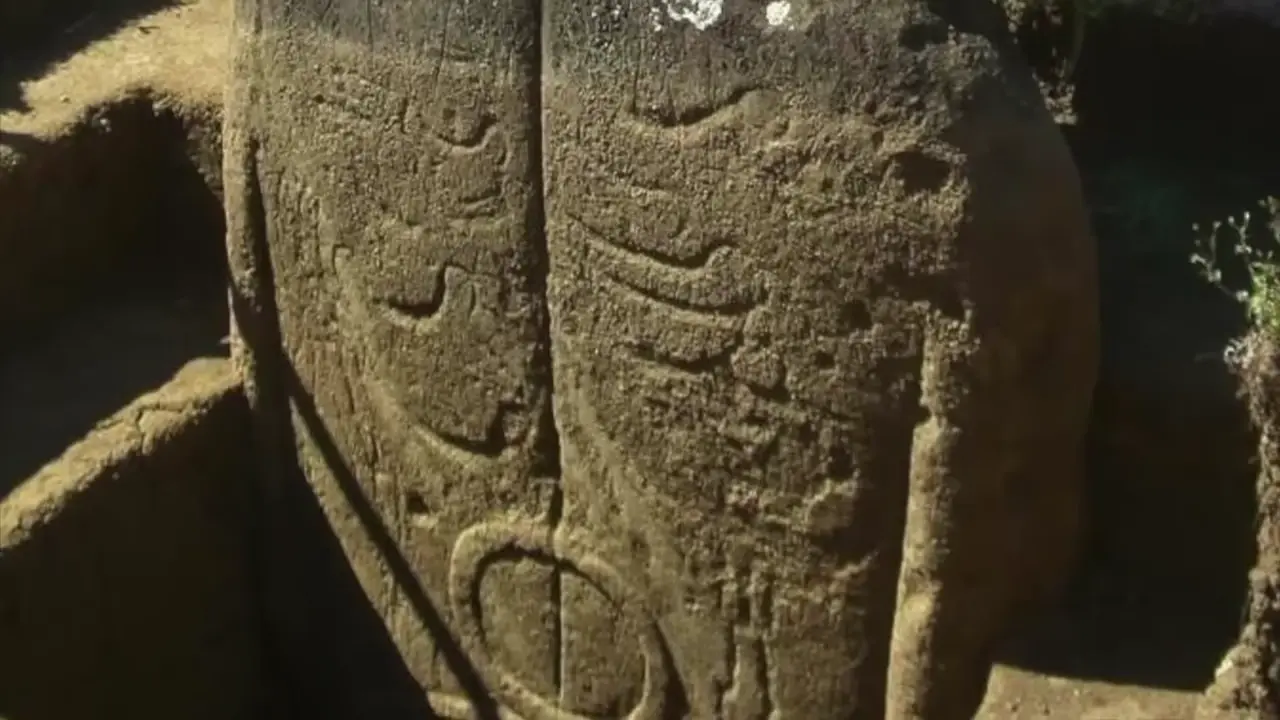
Key facts
- Back carvings on Moai statues relate to the Birdman cult called Rapanui which developed around 1400 AD
- Carvings are NOT original features - added at later date by experts
- Motifs carved in low relief or incised
- British Museum basalt Moai shows two birdmen with frigot bird heads but human hands and feet
- One bird has shorter beak - identified as male, the other as female
- Center back has small fledgling bird with open beak flanked by ceremonial dance paddles (AO)
- Right ear has four inverted V shapes representing female vulva
- Carvings added over hundreds of years, not as one planned project - determined by microscopic weathering profiles
- Original back carvings are three bands around waist representing Rapanoi symbolic loin cloth
- Later additions: two engraved camari/vulva symbols, then male fledgling and two birdmen below overprinting older design
- Rise of Birdman cult came at expense of traditional ancestor worship and Moai creation
- Birdman was emblem of warrior class Matatoa
- Birdman cult signifies power struggle and transference on the island
- Volcanic tuff erodes easily so many carvings are worn away; basalt statues preserve detail better
Site mentioned
Sources
thehistoryblog.com
Linked in video description
bradshawfoundation.com
Linked in video description
eisp.org
Linked in video description
Was this story useful?
Keep exploring
Every site on this page sits on the globe, and the people who research them are on the Discord.
3D Globe · Sites by country · Story Archive · Research Library · Weekly Journal · Search
AI-generated text · images from the original sources · always verify with the sources.