

About 1,000 moai were sculpted from volcanic stone over roughly a 150-year period at Rano Raraku quarry. The average moai weighed about 12.5 tons, with some exceeding 20 tons, and were likely transported using the 'walking' method documented in recent experiments. Research challenges the collapse narrative—Rapa Nui society demonstrated remarkable resilience, adapting to environmental changes while continuing cultural practices.
Easter Island moai construction and Rapa Nui society collapse
 Chile, Easter IslandGeneral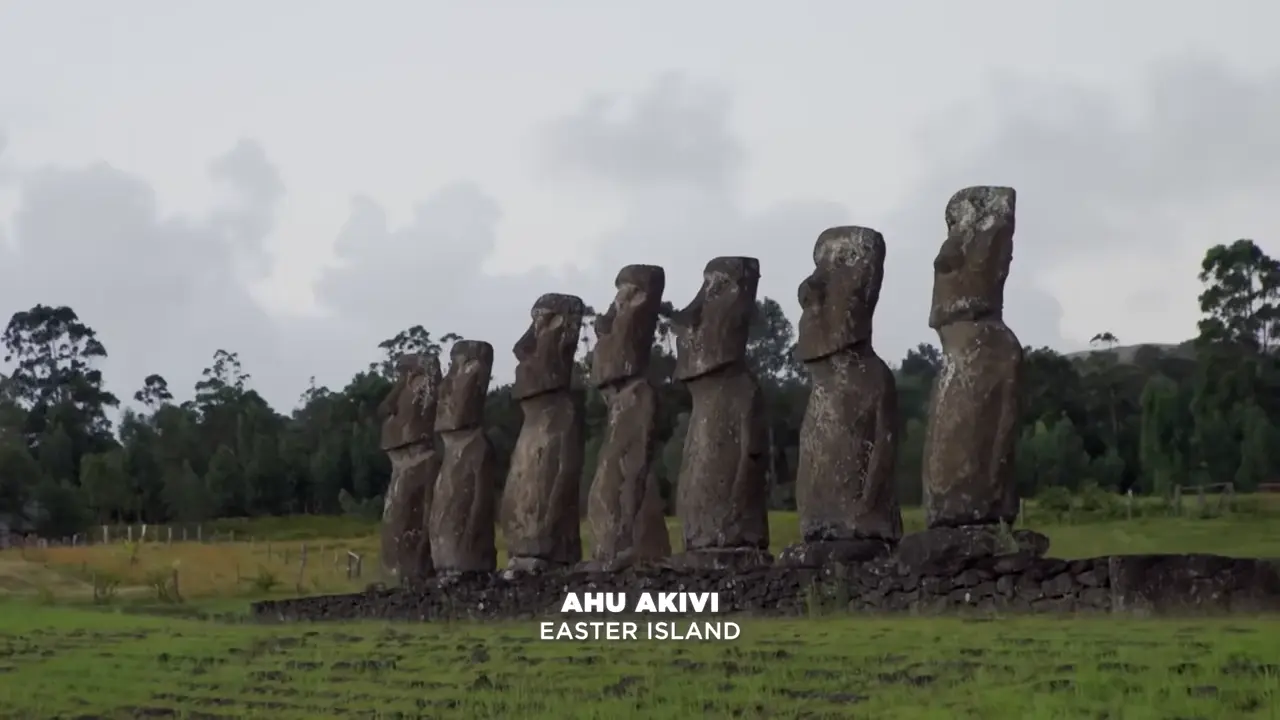
Key facts
- Easter Island is located 3,700 km from Chile's coast and 4,000 km from French Polynesia
- About 1,000 moai were sculpted from volcanic stone in a 100-year period
- Moai weigh between 40-60 tons and were transported 15 km from the quarry
- The largest moai at Rano Raraku measures 22m high and weighs about 250 tons
- Ahu Vinapu is the most ancient ahu still in place
- Population was reduced to 110-111 people due to epidemics, slave raids, and forced labor
- Genetic analysis shows contact between Easter Island and Peru
Site mentioned
Sources
ANCIENT GIANTS THAT WALKED ACROSS EASTER ...weirddarkness.com
The team built a 4.35-ton replica moai with the distinct forward-lean design and successfully moved it about 328 feet in 40 minutes with a team ...
Rapa Nui (Easter Island) Moaismarthistory.org
The moai were probably carved to commemorate important ancestors and were made from around 1000 C.E. until the second half of the seventeenth century. Over a ...
Easter Island quarry reveals how Polynesians made ...cnn.com
The average statue was 4 meters (13 feet) tall and weighed 12.5 tons, with some exceeding 20 tons, Lipo said.
The truth behind the 'walking' statues of Easter Islandbbc.com
For years, the island has been the subject of intrigue. Who built the Moai? How did they move such huge statues without the use of modern tools?
Easter Island moai statues — history, meaning, transport ...easterisland.travel
The moais were built in approximately 1400 - 1650 A.D. by the natives of this island also known as Rapa Nui. Many know them as the Easter Island heads . This is ...
Was this story useful?
Keep exploring
Every site on this page sits on the globe, and the people who research them are on the Discord.
3D Globe · Sites by country · Story Archive · Research Library · Weekly Journal · Search
AI-generated text · images from the original sources · always verify with the sources.