
 Syria
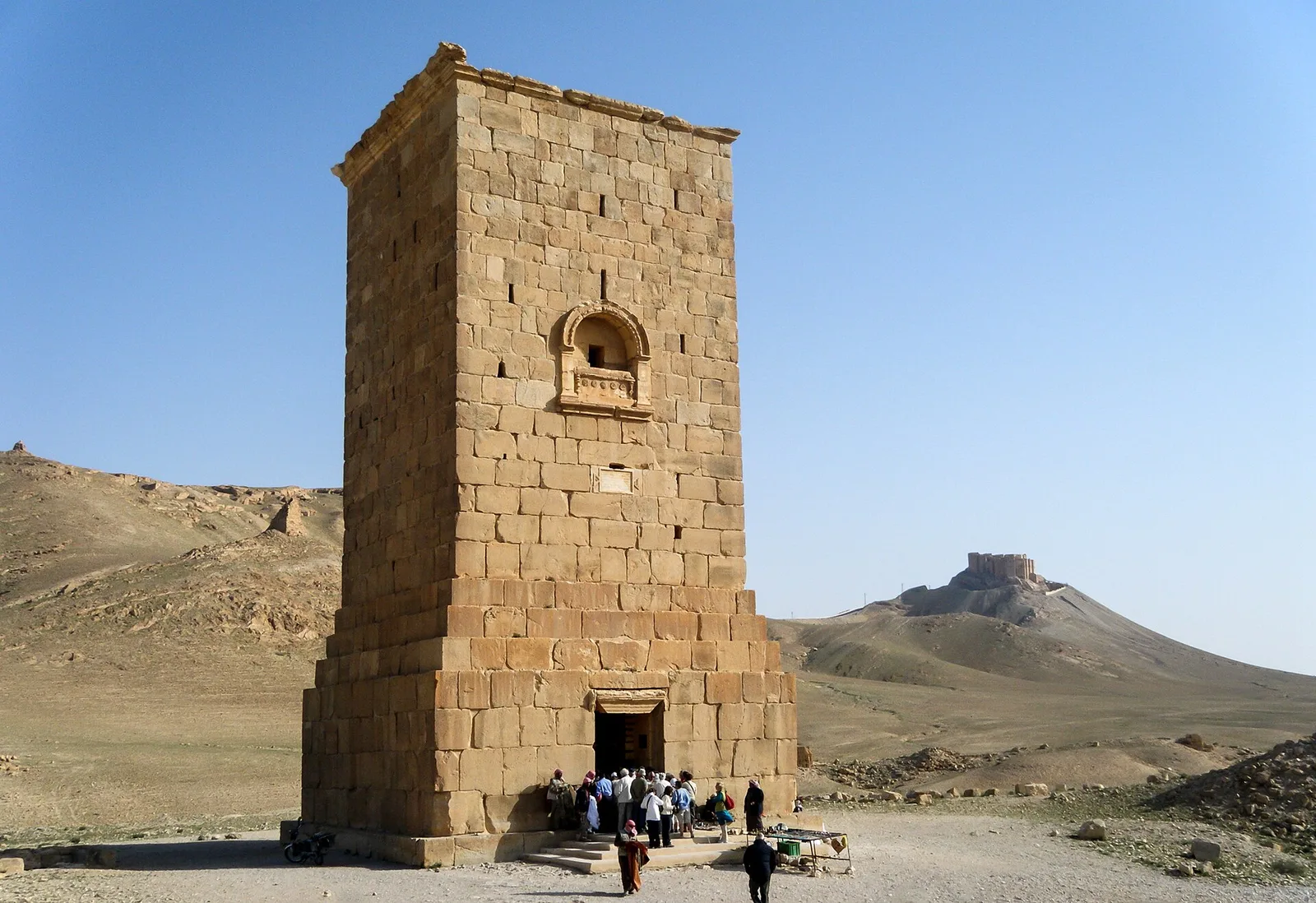
SyriaThe Tower of Elahbel (also known as Tower 13 or Kubbet el 'Arus) was a four-storey sandstone tower tomb near the ancient city of Palmyra in Syria [1]. The tower was one of several built outside the city walls of Palmyra, in an area known as the Valley of the Tombs [1]. The tower was important in the history of textiles: fragments of very early Chinese silk yarns, dated to the 1st century AD, were discovered in the tombs at the tower [1]. The tower was completed in AD103 by a Palmyrene aristocrat Marcus Ulpius Elahbelus and his three brothers, Manai, Shakaiei, and Malku; they were all sons of Wahballat [1].
Text: Wikipedia – 'Tower of Elahbel' (revision of 2026-07-14), CC BY-SA 4.0 · sentences selected and shortened by an AI system · source →Tower of Elahbel
Also known as: Elahbel, Menara Elahbel, Torre de Elahbel, Torre di Elahbel, tour d'Elahbel, מגדל 13, מגדל אלהבל, קֻבּת אל-ערוּס, برج إيلابيل, एलाबेल का टावर, एलाबेल का टॉवर, エラベールの塔墓
| Type | Necropolis/tombs complex |
|---|---|
| Period | 1 - 500 AD |
| Country | Syria |
| Coordinates | 34.5537° N, 38.2516° E |