
 Norway
The Tune stone is a runestone written circa 200–450 AD [1]. It is written in the Elder Futhark script, and its language is Proto-Norse [1]. It was discovered in 1627 in the church yard wall of the church in Tune, Østfold, Norway [1]. Today it is housed in the Norwegian Museum of Cultural History in Oslo [1]. The Tune stone is possibly the oldest Norwegian attestation of burial rites, inheritance, and beer [1]. The stone has inscriptions on two sides, called side A and side B. Side A consists of an inscription of two lines, and side B consists of an inscription of three lines [1]. The runic inscription was first interpreted by Sophus Bugge in 1903 and Carl Marstrander in 1930, but the full text was not interpreted convincingly until 1981 by Ottar Grønvik in his book Runene på Tunesteinen [1].
Text: Wikipedia – 'Tune stone' (revision of 2026-06-08), CC BY-SA 4.0 · sentences selected and shortened by an AI system · source →Tune Stone
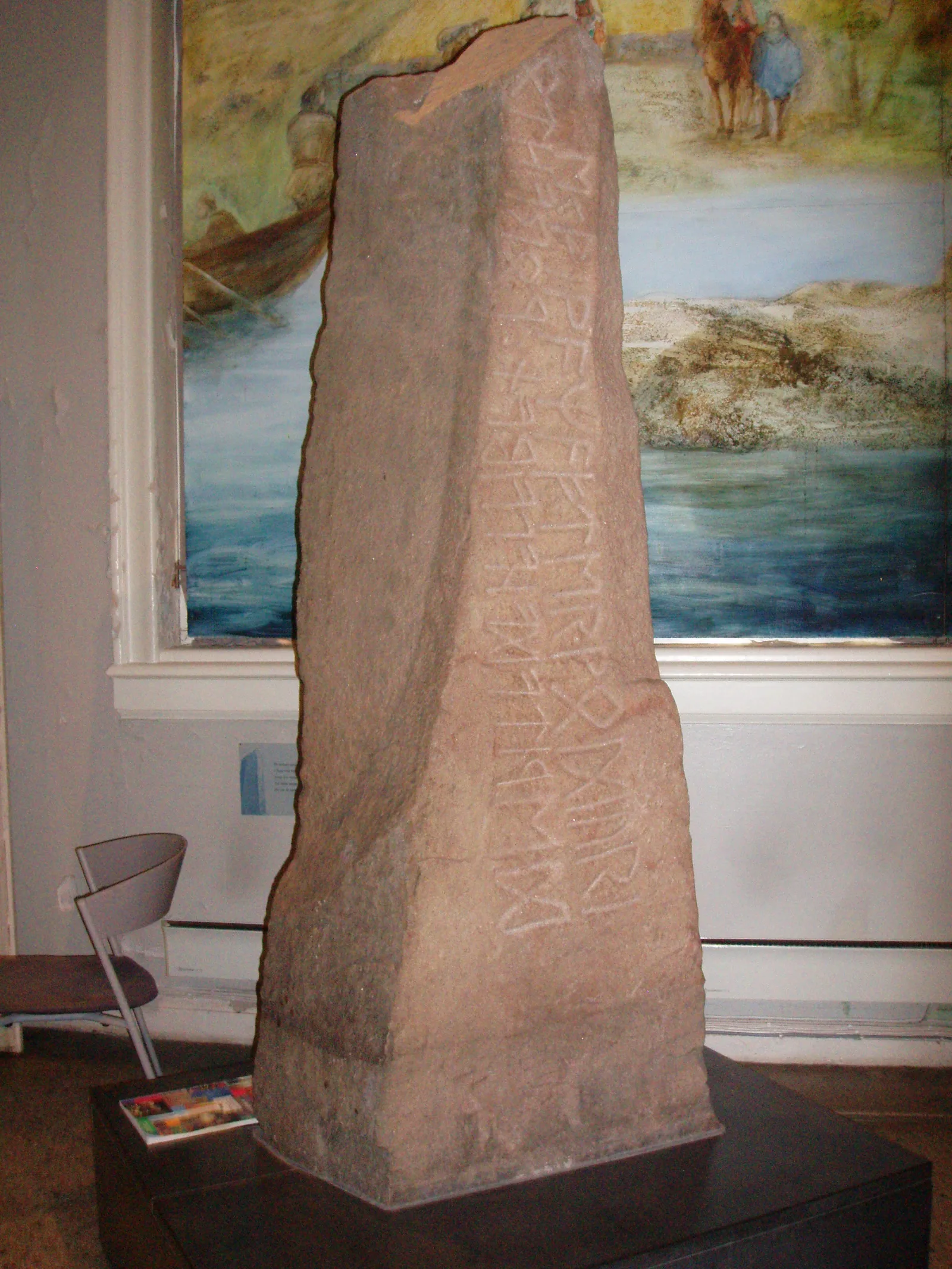
Also known as: Kamień runiczny z Tune, N KJ72, Pietra di Tune, Runenstein von Tune, Tunesteinen, Tunestenen
| Type | Rock relief/carving |
|---|---|
| Period | 1 - 500 AD |
| Country | Norway |
| Coordinates | 59.2923° N, 11.0833° E |