

The Varna Necropolis cemetery, radiocarbon-modeled to about 4600–4350 BC, overlaps the busiest years of Solnitsata salt production. The Varna Museum keeps roughly 3,000 gold objects totaling more than 6 kg. Distribution looks strikingly unequal: about 80% of the wealth sits in 20% of graves, with one individual holding around a third of all the gold. Whether these were kings or merchant lords is still debated. 💛⚱️
Varna gold hoard (c. 4600-4350 BC) holds 3,000 objects weighing over 6 kg
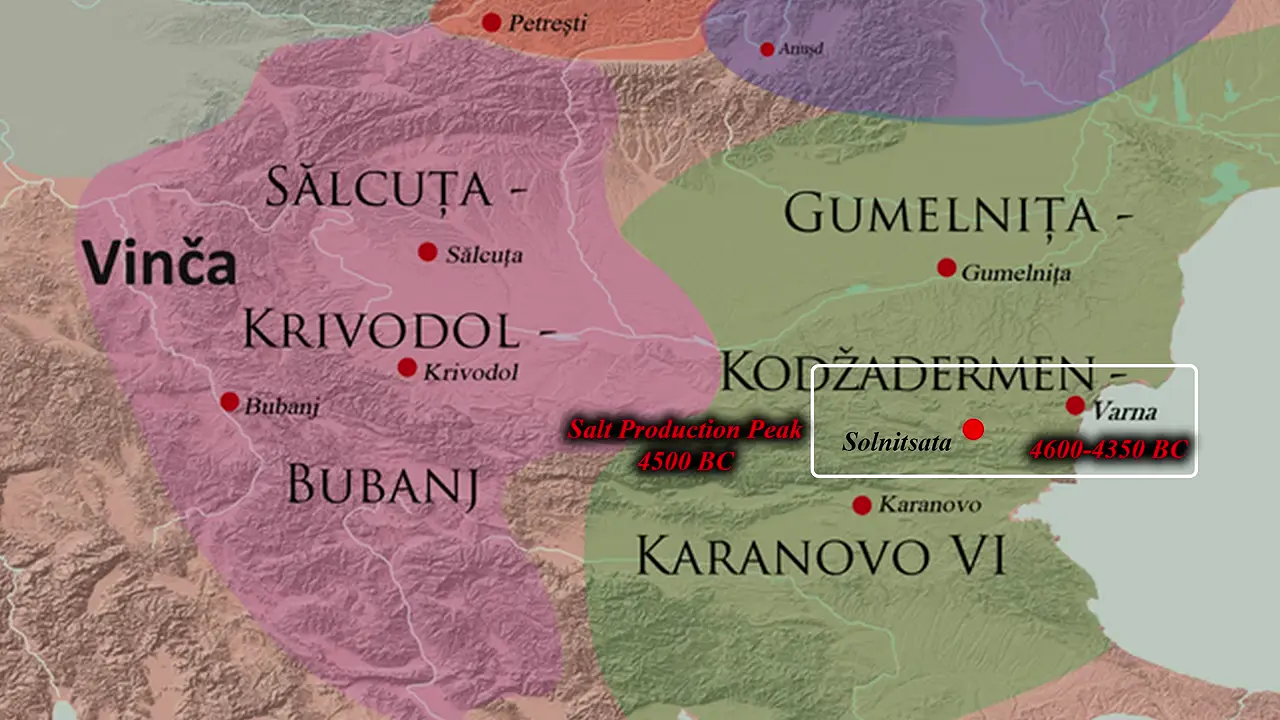
Site mentioned
📍 Varna Necropolis
Key facts
- Radiocarbon modeling places the Varna gold cemetery between about 4600 and 4350 BC, overlapping the most intense period of salt production at Solnitsata
- The Varna Museum holds about 3,000 gold objects with a combined weight of more than 6 kg (13 lbs)
- Distribution of the gold follows an 80/20 pattern: 80% of the wealth lies in 20% of the graves, with even greater inequality among those, and one individual holding roughly a third of all the gold
- It remains debated whether the burials belonged to kings or merchant lords; the video notes the cemetery's proximity to the salt source as grounds for a possible connection
- The video frames the Varna gold as the 'yellow gold' counterpart to the 'white gold' produced at Solnitsata
Sources
new ams radiocarbon dates for the varna eneolithic cemetery ...researchgate.net
Varna Necropolisen.wikipedia.org
"Oldest Gold of Humankind" Found in Varna Necropolis Was Buried ...earthlymission.com
Was this story useful?
Keep exploring
Every site on this page sits on the globe, and the people who research them are on the Discord.
3D Globe · Sites by country · Story Archive · Research Library · Weekly Journal · Search
AI-generated text · images from the original sources · always verify with the sources.