

Tenam Puente was a major Maya trade hub high above the Comitán plain, connecting the Chiapas/Guatemala highlands with the central depression. With three ball courts — more than any other Comitán Valley site! — and Structure 7 rising ~75 feet, it flourished into the Postclassic until ~1200 CE. 🏯
Tenam Puente: highland Maya trade center with three ball courts and tiered acropolis
 MexicoGeneral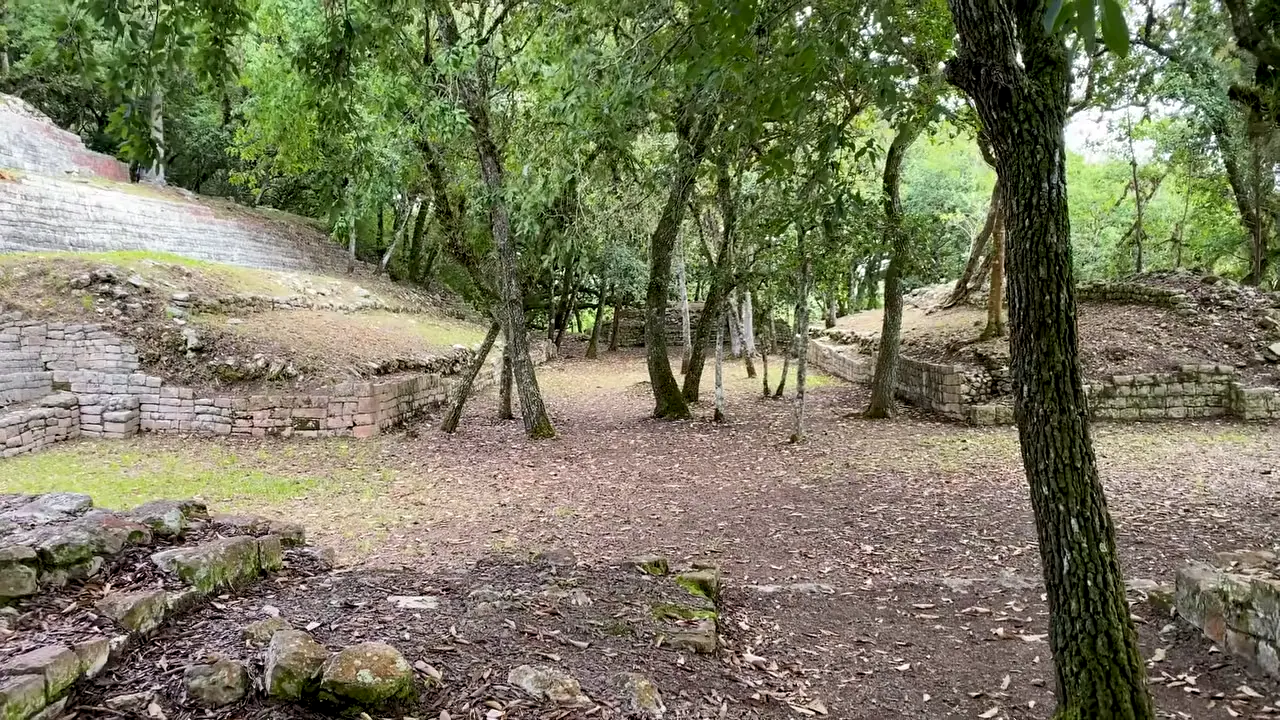
Key facts
- Tenam Puente sits on a high elevation with panoramic views across the Comitán plain; the name is a mixture of Nahuatl and Spanish meaning "fortified bridge"
- The acropolis began construction during the Early Classic period between 250 and 600 CE, with major modifications during the Late Classic between 600 and 900 CE
- The main plaza served as a marketplace beginning in the Late Classic period, with recent excavations confirming this function
- Tenam Puente was a major commercial center controlling trade routes between the Chiapas/Guatemala highlands and the central depression
- The city brought in exotic materials from the Gulf Coast, the Soconusco region, and distant Maya cities
- Tenam Puente has three ball courts, more than any other site in the Comitán Valley or neighboring regions
- A deer bone fragment found inside one ball court was carbon-dated to the Late Classic period
- A stela in front of Structure 7 bears a date of 790 CE, likely marking the pyramid's inauguration
- Structure 7 rises about 75 feet (23 meters) above the third terrace platform
- Structure 20 contained the tomb of one of the site's rulers
- The architectural style follows the Chiapas Highland tradition, using dry stone masonry with precisely cut limestone blocks and no mortar
- Tenam Puente, Chinkultic, Tonalm Rosario, Santa Elena, and Pocolinic all survived the Classic Maya collapse, with Tenam Puente flourishing in the Postclassic until approximately 1200 CE
Site mentioned
Was this story useful?
Keep exploring
Every site on this page sits on the globe, and the people who research them are on the Discord.
3D Globe · Sites by country · Story Archive · Research Library · Weekly Journal · Search
AI-generated text · images from the original sources · always verify with the sources.