

In 1518, a Spanish explorer sailing down the coast became the first European to glimpse what we believe was Tulum. He described a citadel on a cliff with hundreds of Maya waving him in. Frightened, he declined to land and sailed onward.
Maya citadel of Tulum observed by Juan de Grijalva in 1518
 MexicoGeneral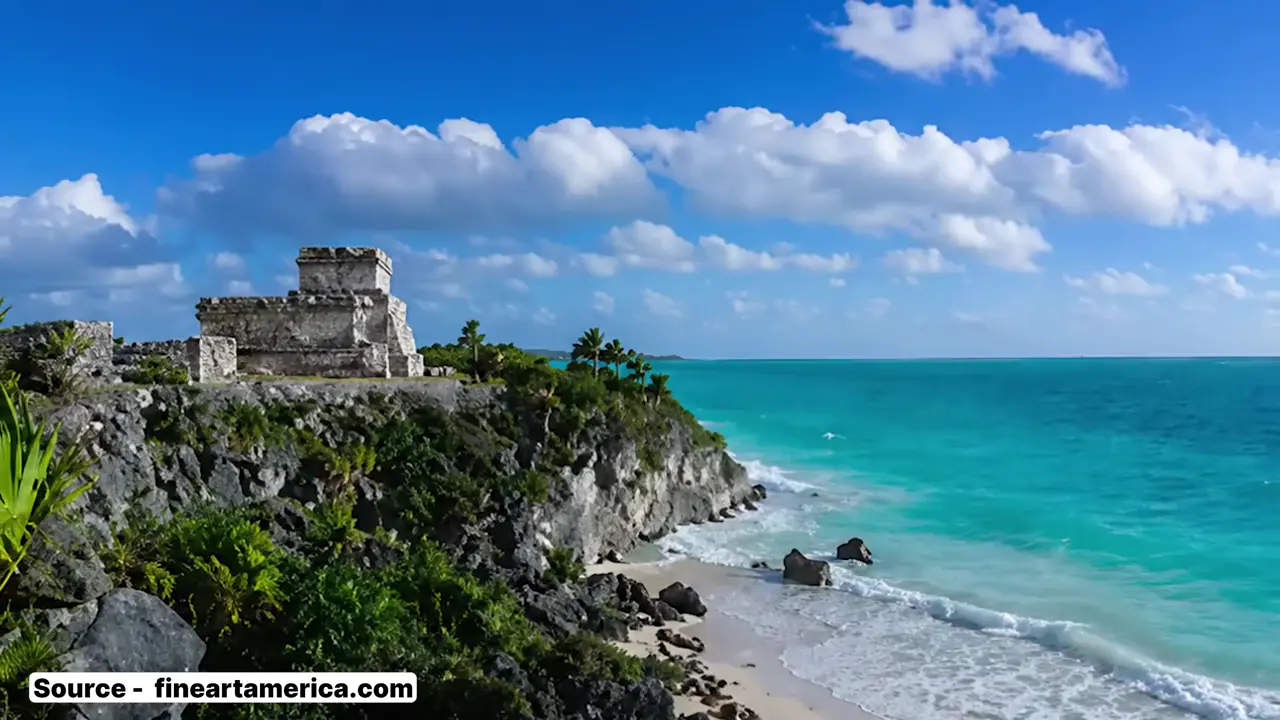
Key facts
- Juan de Grijalva sailed from Cuba to Yucatan in 1518 with a fleet of four ships
- He landed in Cozumel and took over a small town on its south end
- He sailed down the coast and observed what is believed to be Tulum
- He described Tulum as a citadel on a cliff with hundreds of Maya gathered on the coast waving him in
- Grijalva declined to land due to fear of the gathering Maya forces
Site mentioned
Sources
Juan de Grijalva desembarca en San Juan de Ulúa.memoriapoliticademexico.org
Celebraron una misa y luego, zarparon hacia Yucatán y costeando pasaron por Tulum, cabo Catoche y llegaron a Lázaro el 22 de mayo, y después a la laguna de ...
Juan de Grijalva - World History Encyclopediaworldhistory.org
Grijalva's expedition fleet left Cuba on 8 April 1518. He commanded 200-240 men in four ships. Two useful expedition members were Mayans taken ...
Juan de Grijalba | Conquistador, Yucatán, Mexico - Britannicabritannica.com
In 1518, Velázquez, as governor of Cuba, sent Grijalba to explore the Yucatán Peninsula. Setting sail from Cuba with four ships and about 200 ...
Juan de Grijalva - Wikipediaen.wikipedia.org
He was one of the early explorers of the Mexican coastline, and was killed by natives in Honduras on 21 January 1527. Juan de Grijalva. 1518 expedition.
THE EXPEDITION UNDER JUAN DE GRIJALVA.cambridge.org
IN the year 1518 the Governor of Cuba hearing the good account of the land which we had discovered, which is called Yucatan, decided to send out another.
Was this story useful?
Keep exploring
Every site on this page sits on the globe, and the people who research them are on the Discord.
3D Globe · Sites by country · Story Archive · Research Library · Weekly Journal · Search
AI-generated text · images from the original sources · always verify with the sources.