

Over 4,000 years ago, one of Africa's earliest urbanized societies thrived around Kerma in northern Sudan, home to the towering 60-foot Western Deffufa mudbrick monument. After Egyptian pharaohs including Thutmose I and III conquered Nubia, Kushite rulers rose under King Piye in the 8th century BC, founding Egypt's 25th Dynasty, whose rulers were known as the Black Pharaohs. Taharqa later commissioned Jebel Barkal's Amun temple and Nuri's first pyramid. In the mid-1st century BC, Natakamani and Amanitore built Naqa's Lion Temple, dedicated to Apedemak.
Kingdom of Kush rises from Kerma to the 25th Dynasty Black Pharaohs
 SudanGeneral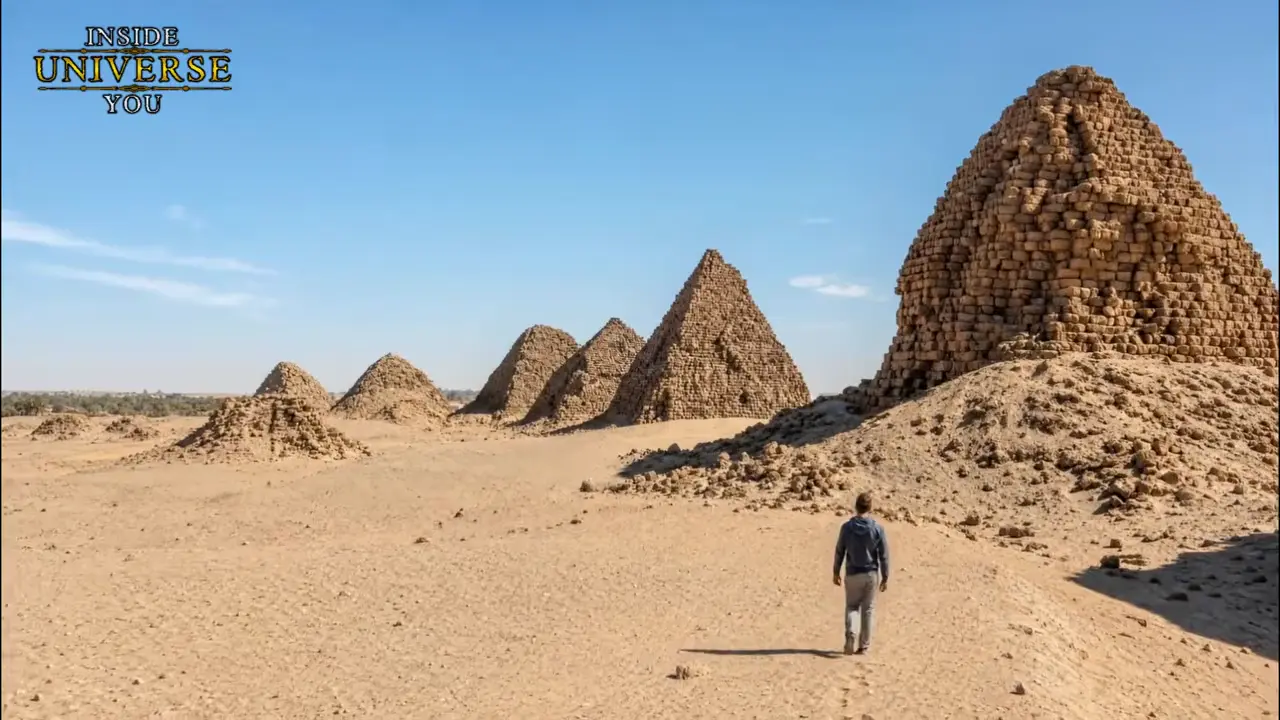
Site mentioned
Key facts
- More than 4,000 years ago, Kerma in northern Sudan was the centre of one of Africa's earliest urbanized societies.
- The Western Deffufa, a massive mudbrick structure at Kerma, was built from about the middle of the 3rd millennium BC and rises about 60 ft (18 m) above the surrounding ruins.
- From the 16th century BC, campaigns by pharaohs including Thutmose I and Thutmose III brought much of Nubia under Egyptian control by approximately the 15th century BC.
- Ramses II ordered the temples at Abu Simbel to be carved into sandstone cliffs in the 13th century BC; each has four seated colossi about 66 ft (20 m) high.
- Jebel Barkal became a sacred site dedicated to Amun under Egyptian rule and later the spiritual centre of the Kushite kingdom.
- In the 8th century BC, Kushite king Piye conquered Egypt and founded the 25th Dynasty, whose rulers became known as the Black Pharaohs.
- Taharqa, who ruled approximately 690-664 BC, commissioned a temple of Amun at Jebel Barkal and built the earliest pyramid at Nuri.
- The Meroitic writing system developed during the later Kushite period and remains only partially deciphered.
- In the mid-1st century BC, King Natakamani and Queen Amanitore built the Lion Temple at Naqa, dedicated to the lion-headed Kushite deity Apedemak.
Sources
Kerma Kingdom Rules Nubia | Anthropologyebsco.com
The Kerma Kingdom, located in what is now Upper Nubia, was a significant and powerful civilization that thrived between 2500 and 1500 BCE.
Historykerma.ch
American scholar George A. Reisner, known as the father of Sudanese archaeology, discovered during his excavations (1913-1916) the remains of a unique culture.
The Ancient Civilization of Kerma - Sudansomuchmoretosee.com
However, a great deal is not known about what is called Kerma Civilization and there is a lot of ongoing archeological work in the immediate region. Clearly ...
(PDF) Archaeology of the Kerma Cultureacademia.edu
Kerma was a Bronze Age culture (c. 2500–1500 bce) located in what is today Sudan and southern Egypt. It is one of the earliest complex societies in Africa ...
Skin, hair and cloth remains from the ancient kerma ...sciencedirect.com
by ML Ryder · 1984 · Cited by 34 — Animal skins from human burials, dated 2nd and 3rd millenium BC, including haired skin bags lined with cloth, provided evidence of ox, goat and sheep,
Western Deffufaen.wikipedia.org
The Western Deffufa, located in the ancient city of Kerma in northern Sudan, is one of the oldest known monumental structures in the Nile Valley.
16 Deffufa Stock Photos and High-Res Imagesgettyimages.com
Browse 16 authentic deffufa stock photos, high-res images, and pictures, or explore additional egyptian soldiers or nubian archers stock images to find the ...
The Monuments of the Kingdom of Kerma and Dokki Geilwhc.unesco.org
The monuments of the Eastern and the Western Deffufas represent unique and outstanding examples of massive mudbrick buildings, which reflect the traditional ...
Was this story useful?
Keep exploring
Every site on this page sits on the globe, and the people who research them are on the Discord.
3D Globe · Sites by country · Story Archive · Research Library · Weekly Journal · Search
AI-generated text · images from the original sources · always verify with the sources.