

False doors and niches at Alatri and Alba Fucens have been interpreted by some researchers as structural elements potentially providing lateral compression to prevent retaining walls from bending outward, analogous to modern dam buttresses. At Alba Fucens, archaeological evidence includes tunnels and retaining wall constructions. However, the characterization of pressurized aqueducts with siphons at these sites requires further verification, as does the claim that Romans generally avoided pressurized aqueducts due to complexity—some Roman aqueducts did employ pressurized sections and siphons.
False doors and niches function as buttress supports
 Italyunverified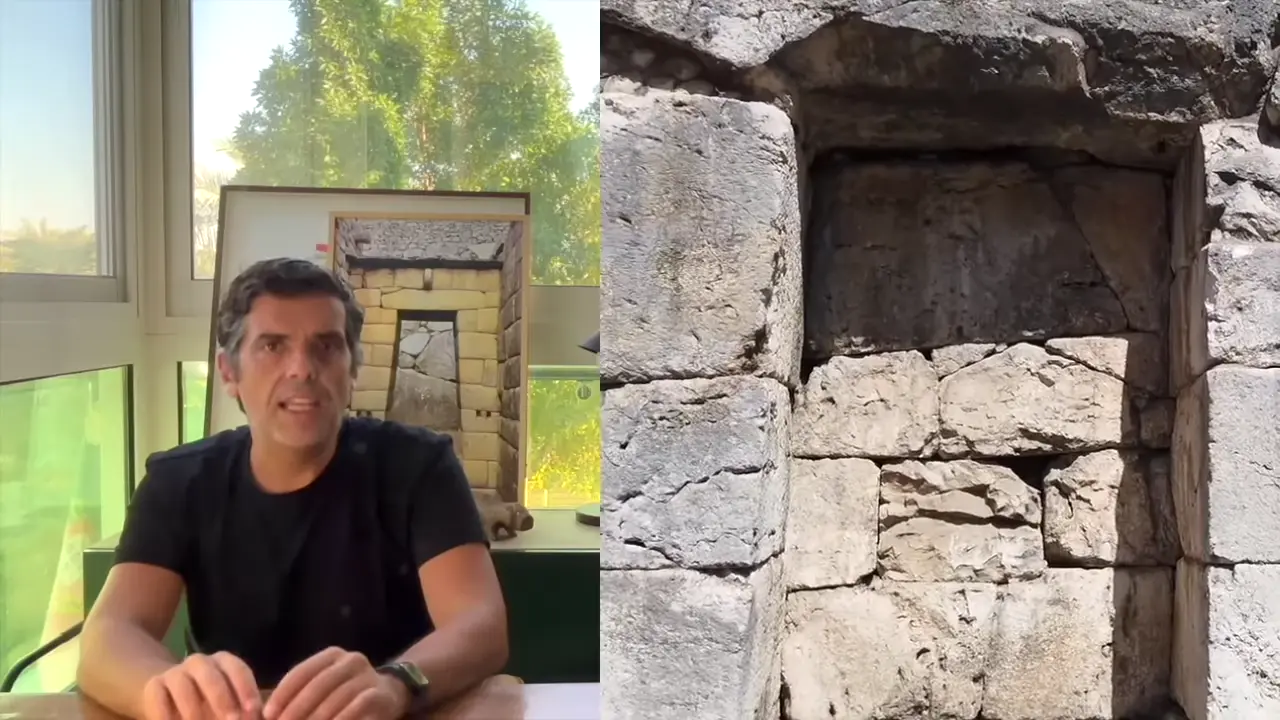
Key facts
- False doors/niches in Alatri and Alba Fucens served as structural supports - cyclopean equivalent of dam buttresses
- Niches provide lateral compression to prevent retaining walls from bending outward
- Similar to modern dam engineering - same structural principle
- At Alba Fucens: pressurized aqueduct with siphon, tunnel (cloaca/sewage), and buttress-style retaining walls
- Romans avoided building pressurized aqueducts due to complexity of pushing water uphill
- Three niches needed for compression effect - one alone insufficient
- Alba Fucens has most advanced building applications: tunnels, pressurized aqueducts, and slab-buttress walls
- Similar niches found in Peru at Moon Temple near Machu Picchu
Site mentioned
Sources
[PDF] preview-9781400886586_A29559555.pdfapi.pageplace.de
with gates, among them the gate called Aurea or Alba. The tombs discovered both inside and outside the walls contained rich deposits of vases and ...
Divine Interiors: Mural Paintings in Greek and Roman Sanctuaries ...dokumen.pub
Mighty marble facades, sculptures, and wall paintings played an important role in the decoration of Greek and Roman temp...
[PDF] Introduction to the study of Latin inscriptionsupload.wikimedia.org
METHODS OF MAKING INSCRIPTIONS ^. To study properly the forms of letters, and appreciate the changes which they undergo, it is very ...
1 - Urban Design and Architecture in Rome and Italy during the ...cambridge.org
The Comitium seems to have been circular, like those at Alba Fucens and Paestum (see later). This stepped, open-air assembly space could ...
NEXUS NETWORK JOURNAL - Springer Naturelink.springer.com
It exhibits the major goal of Islamic architecture, according to which designers strive to achieve harmony between people, their environment and their creator.
Was this story useful?
Keep exploring
Every site on this page sits on the globe, and the people who research them are on the Discord.
3D Globe · Sites by country · Story Archive · Research Library · Weekly Journal · Search
AI-generated text · images from the original sources · always verify with the sources.