

Pompeii excavation shows how Romans mixed durable concrete when Mount Vesuvius erupted! Builders premixed quicklime with dry volcanic pozzolan, then added water later — creating an intense exothermic reaction. Calcium migrated and re-mineralized as calcium carbonate after setting, meaning Roman concrete chemically evolved over time! 🏛️
Pompeii excavation reveals Roman hot-mixing concrete technique preserved by Vesuvius eruption
 ItalyTechnology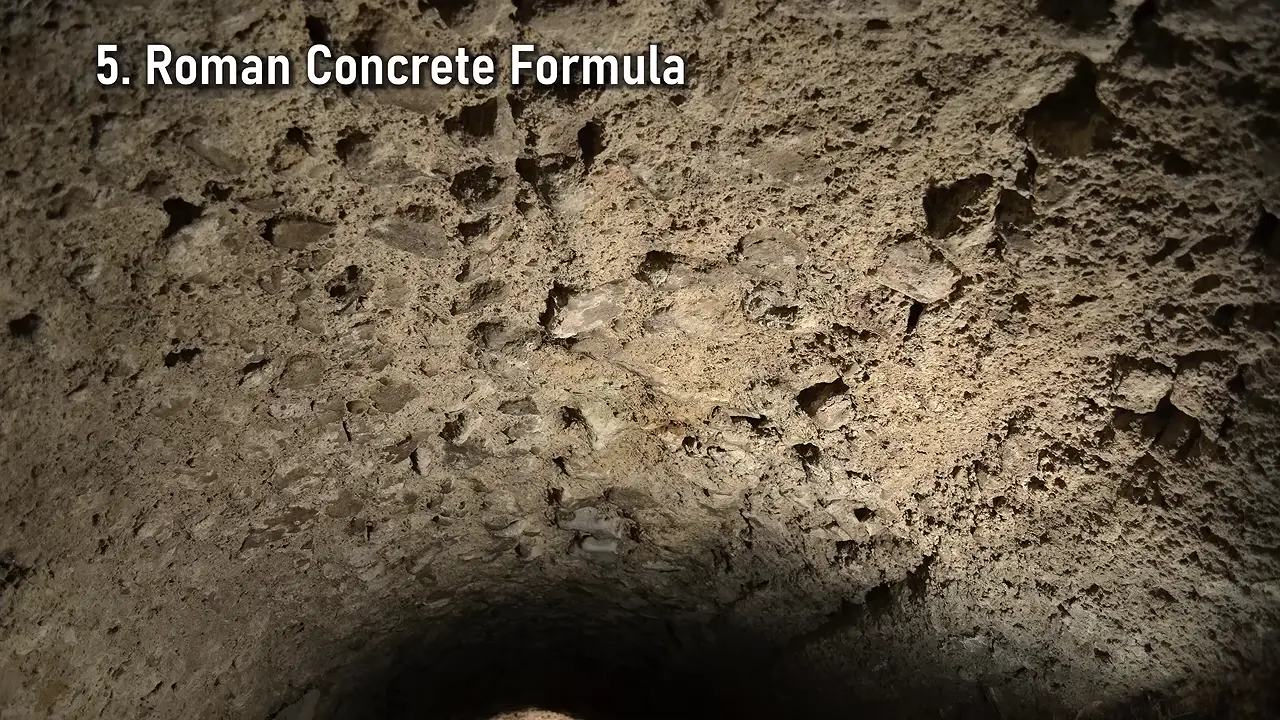
Key facts
- Active construction site preserved at Pompeii when Mount Vesuvius erupted in 79 CE
- Building had unfinished masonry, paving in progress, fresh plastering, and raw material piles left behind
- Roman builders premixed quicklime with dry pozzolan, then added water afterward
- This sequence created an intense exothermic reaction producing white lime/clay in Roman mortar
- Calcium from dissolving lime/clay migrated out and re-mineralized as calcium carbonate polymorphs
- Concrete continued chemically evolving after setting, explaining its famous long-term durability
Site mentioned
Sources
An unfinished Pompeian construction site reveals ancient Roman ...nature.com
Recent excavations at Pompeii's Regio IX have uncovered an intact ancient construction site, offering insights into Roman building ...
A novel view of the destruction of Pompeii during the 79 CE eruption ...frontiersin.org
The ancient city of Pompeii, destroyed by the 79 CE Plinian eruption of Vesuvius, is one of the most famous archaeological sites worldwide ...
Eruption of Mount Vesuvius in 79 AD - Wikipediaen.wikipedia.org
In 79 AD, Mount Vesuvius, a stratovolcano located in the modern-day region of Campania, Italy, erupted, causing one of the deadliest eruptions in history.
Archaeologists in Pompeii Find Ancient Construction Site ...smithsonianmag.com
At the time of Mount Vesuvius' eruption in 79 C.E., workers at the site were likely in the middle of a home renovation. Archaeologists found ...
Pompeii offers insights into ancient Roman building technologynews.mit.edu
MIT researchers analyzed an ancient Pompeii construction site to determine how the ancient Romans produced concrete that endured for ...
Was this story useful?
Keep exploring
Every site on this page sits on the globe, and the people who research them are on the Discord.
3D Globe · Sites by country · Story Archive · Research Library · Weekly Journal · Search
AI-generated text · images from the original sources · always verify with the sources.