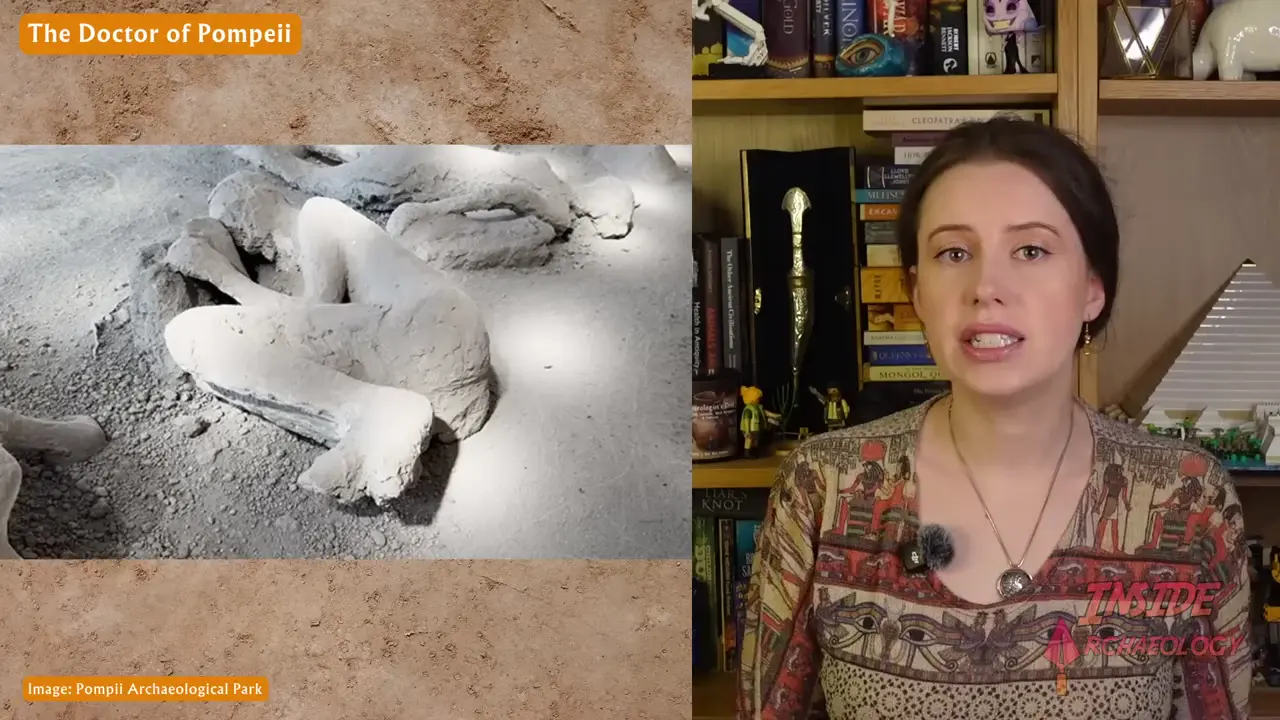
CT scans of a Pompeii plaster cast from the 1961-1962 excavation of the Garden of the Fugitives, located near the Nucerian Gate, revealed a hidden box with Roman coins, surgical instruments, and a slate slab — matching known medicus kits. The toothed-wheel lock and AI-assisted 3D reconstruction confirmed the victim was likely a Roman doctor.
Key facts:
- In 1961-1962, archaeologists at Pompeii identified an outdoor garden with 13 adults and children killed at the Nucerian Gate by hot gas, ash, and rock from Mount Vesuvius ~2,000 years ago
- Plaster casts of the victims were made from cavities left after flesh rotted away
- CT and X-ray scans of a small case hidden inside one cast revealed an organic box with metal elements, a fabric bag of bronze and silver coins, and metal surgical instruments
- A small slate slab found could have been used for mixing medicine or cosmetics
- The instruments match known Roman doctor's kits, supporting identification of the victim as a medicus (Roman doctor)
Sources
Pompeii. Porta di Nocera or Nuceria Gate. Excavated c.1803, 1814 ...pompeiiinpictures.comBy the 1950s, Maiuri devised a systematic plan to free the fortifications of Pompeii from the masses of excavation ... Porta di Nocera or Nuceria ...
Pompeii. Porta di Nocera or Nuceria Gate. Excavated c.1803, 1814 ...pompeiiinpictures.comPompeii. Porta di Nocera or Nuceria Gate. Excavated c.1803, 1814, 1952. Part 2 Part 1. Looking south. Porta di Nocera, Pompeii.
Pompeii - Excavations, Ruins, Archaeology | Britannicabritannica.comThe walls are 2 miles (3 km) in circumference, and they enclose an area of about 163 acres (66 hectares). Seven city gates have been excavated.
1900-1949 - Pompeii Perspectivespompeiiperspectives.orgHe directed and supervised the excavation and recording of almost 400 linear meters of via dell'Abbondanza between vicolo del Citarista (close to via Stabiana) ...
[PDF] A Guide to the Pompeii Excavations - Scavi di Pompeipompeiisites.orgThe casts of the 13 victims can now be seen near the back wall of the garden, in a glass case. Date of excavation: 1961-1962; 1973-1974. Garden of the Fugitives ...
AI-generated text · images from the original sources · always verify with the sources.