

Rungholt, the North Sea island city legend says drowned on 16 January 1362 after a desecrated sacrament, has been mapped by archaeologists using geophysical survey plus local sediment cores in 2023. They traced a 2 km chain of 64 dwelling mounds, drainage systems and one of the era's largest churches — a settlement big enough for ~3,000 people. Cast bronze and brass cauldrons, costly swords, and pottery from Muslim Al-Andalus point to a major medieval trade hub. The sea dike failed. ⚓🏘️
2023 geophysical survey finds drowned Rungholt city beneath German North Sea waters
 USAGeneral
Key facts
- Legend held that the North Sea island city of Rungholt was destroyed by a flood on 16 January 1362 after townspeople desecrated a sacrament
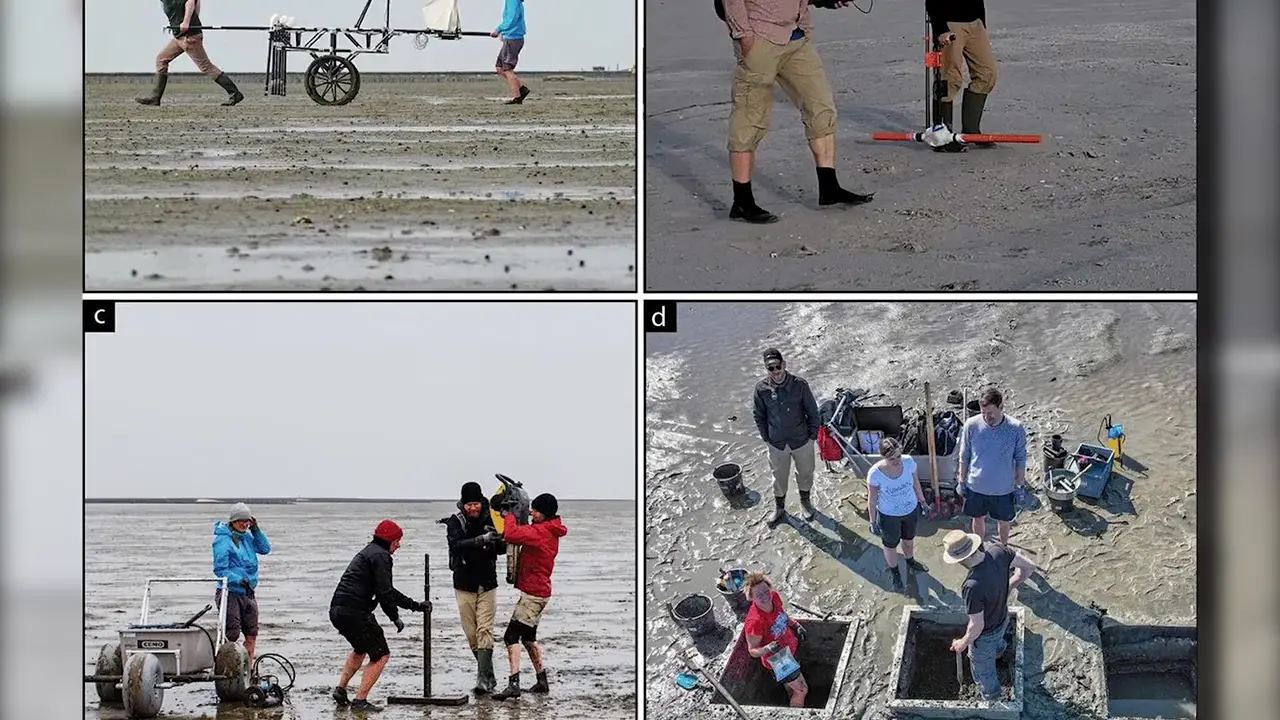
- In 2023 archaeologists used geophysical mapping and local sediment cores to map a 2 km long chain of 64 dwelling mounds, extensive drainage systems, and one of the largest churches of its time
- Site size suggests a population of about 3,000 at its height
- Finds include cauldrons of cast bronze and hammered brass, expensive swords, and Hispano-Moresque pottery imported from Muslim Al-Andalus in modern Spain
- The find indicates Rungholt was a hub of trade in the medieval North Sea
- The storm surge may have killed about 25,000 people in the region; the inhabitants' sea dike failed to contain the flood
Sources
DFG - GEPRIS - RUNGHOLT - GEPRIS - DFGgepris.dfg.de
Rungholten.wikipedia.org
Lost city of Rungholt found after 660 yearsarchaeologymag.com
Was this story useful?
Keep exploring
Every site on this page sits on the globe, and the people who research them are on the Discord.
3D Globe · Sites by country · Story Archive · Research Library · Weekly Journal · Search
AI-generated text · images from the original sources · always verify with the sources.