
 Ethiopia
Lalibela is roughly 2,500 metres above sea level [1]. Recent archaeological excavations at Lalibela have yielded abundant pottery and faunal remains dating to 900–1100, indicating that the site was largely a secular settlement before being transformed into a religious center by King Lalibela [1]. According to the Futuh al-Habasha of Shihab al-Dīn Aḥmad ibn ʿAbd al-Qādir ibn Sālim ibn ʿUthmān, Ahmad ibn Ibrahim al-Ghazi burned one of the churches of Lalibela during his invasion of Ethiopia [1].
Text: Wikipedia – 'Lalibela' (revision of 2026-09-25), CC BY-SA 4.0 · sentences selected and shortened by an AI system · source →Lalibela
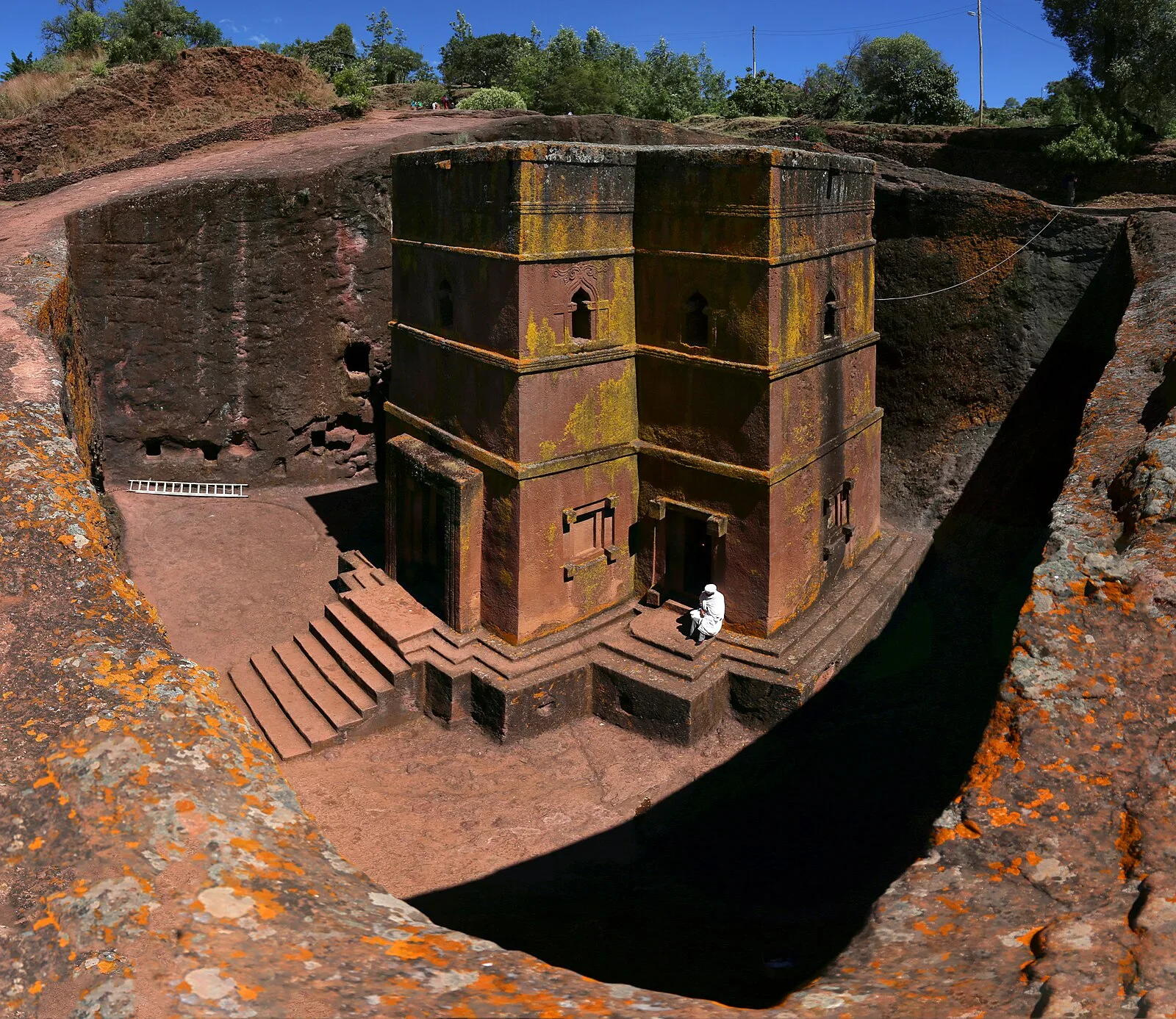
Also known as: 랄리벨라, Eaglaisí Lalibela, Giáo đường nham thạch Lalibela, Laalibalaa, Lalibala, Lalibela (Amhara), Lalibela (cidade), Lalibela (stad), Lalibella, Lalibelo, Lalibelos bažnyčios, Nhà thờ tạc đá ở Lalibela
| Type | Church |
|---|---|
| Period | 1000 - 1500 AD |
| Country | Ethiopia |
| Coordinates | 12.0336° N, 39.0469° E |