
 Belgium
Trou de l’Abîme also known as La caverne de l'Abîme and Couvin Cave is a karst cave located in Wallonia on the right bank of the Eau Noire river in the center of Couvin, Belgium, in Namur province [1]. The site consists of a large two level cave with the entrance on the upper level of the western face of an Eifelian limestone cliff and a large terrace which forms a rock shelter of 50 m width and 5 m depth [1]. Excavations of the cave entrance were first conducted in 1887 and 1902 but the evidence recovered from these is lost [1]. In a series of excavations between 1984 and 1985 Palaeolithic stone artifacts and Pleistocene faunal remains were uncovered [1]. Most of the lithic material is flint which had to be transported to the site from a mine at least 30 km away [1]. Associated with the material was a partial human molar [1]. At the time it was found scientists were unable to determine whether it was Homo sapiens or Neanderthal [1].
Text: Wikipedia – 'Trou de l'Abîme' (revision of 2026-07-31), CC BY-SA 4.0 · sentences selected and shortened by an AI system · source →Trou de l'Abîme
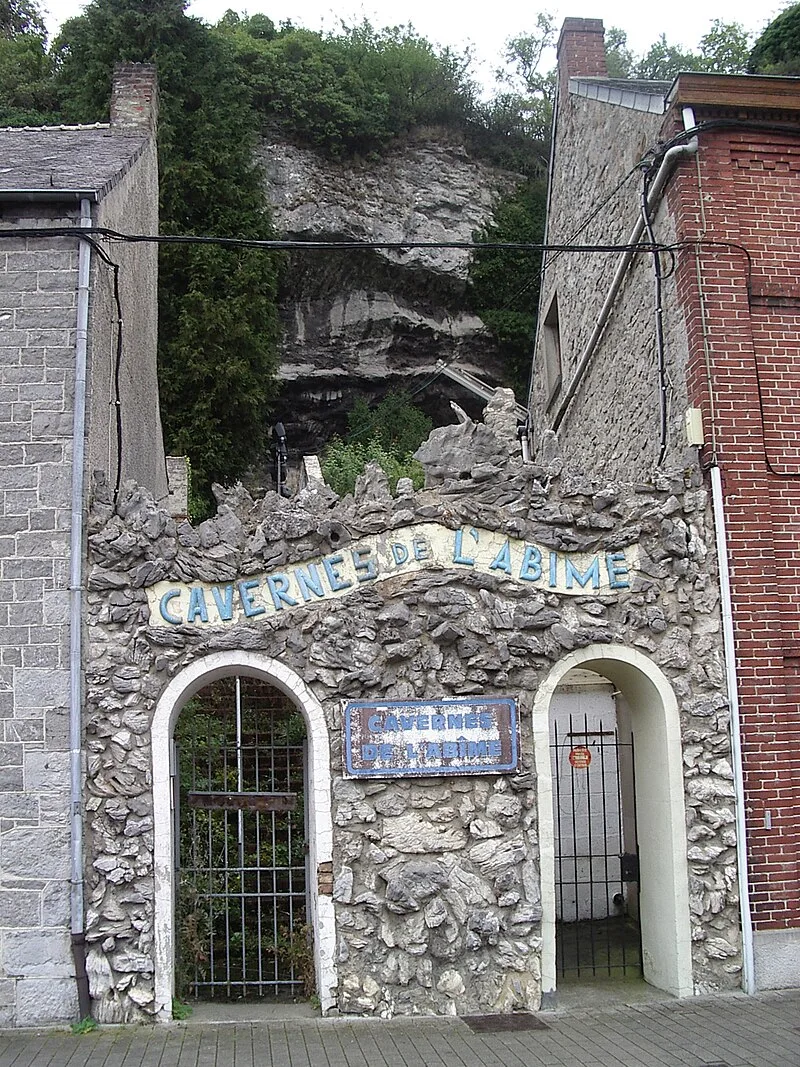
Also known as: Caverna Couvin, caverne de l'Abîme, La caverne de l'Abîme
| Type | Cave Structures |
|---|---|
| Period | 500 BC - 1 AD |
| Country | Belgium |
| Coordinates | 50.0504° N, 4.4974° E |