
 Belgium
Scladina, or Sclayn Cave, is an archaeological site located in Wallonia in the town of Sclayn, in the Andenne hills in Belgium, where excavations since 1978 have provided the material for an exhaustive collection of over thirteen thousand Mousterian stone artifacts and the fossilized remains of an especially ancient Neanderthal, called the Scladina child were discovered in 1993 [1]. The Scladina cave is located on a hill to the right of the Meuse river bank, south-west of Sclayn village, being one of a number of caves in the middle Meuse river region [1]. After the initial clearing of the entrance, the excavations uncovered two strata of Neanderthal occupation, the oldest dating back 130,000 years [1]. Dated to be around 127,000 years old, the first fragment of the now nearly complete mandible was found on 16 July 1993 [1]. The child's DNA is one of the oldest to have been extracted from a Homo neanderthalensis fossil and has significantly contributed to the genetic mapping of the Neanderthal genome and the comparison with Homo sapiens [1].
Text: Wikipedia – 'Scladina' (revision of 2026-09-20), CC BY-SA 4.0 · sentences selected and shortened by an AI system · source →Scladina
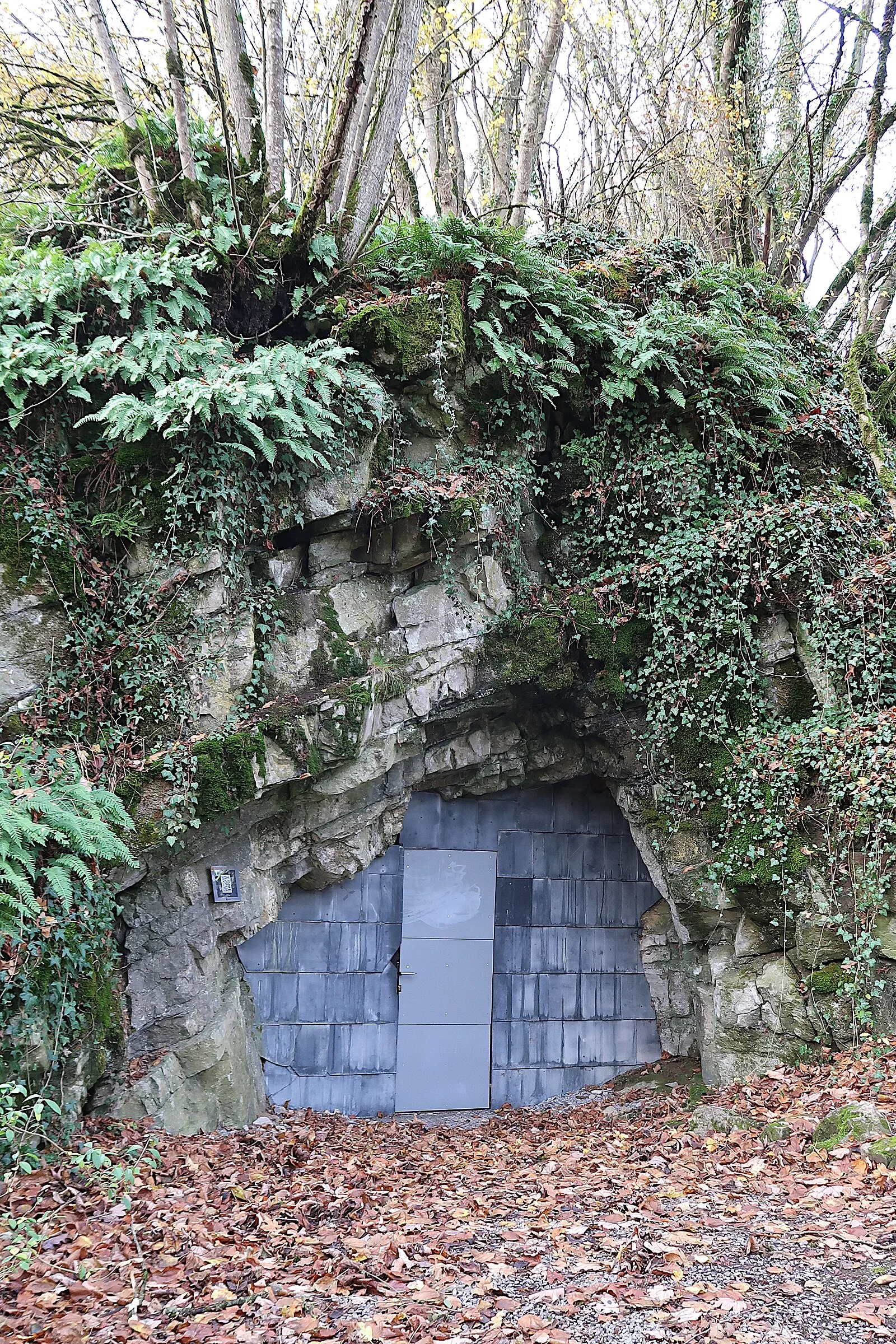
Also known as: Caverne de Scladina, Caverne Scladina, Grotte de Scladina, Grotte de Sclayn, Grotte Scladina, سكلادينا
| Type | Cave Structures |
|---|---|
| Period | 500 BC - 1 AD |
| Country | Belgium |
| Coordinates | 50.4839° N, 5.0255° E |