

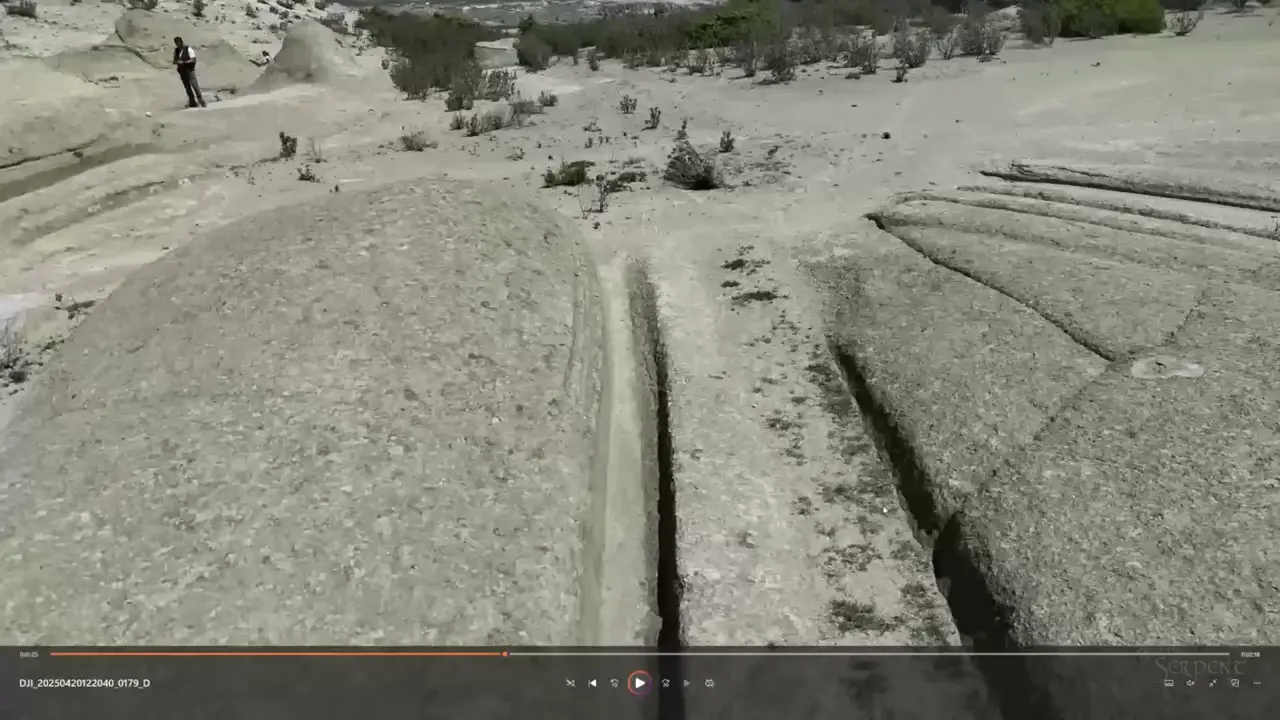
Turkey's volcanic tuff formed roughly 10-11 million years ago from ash mixed with pebbles. Meanwhile, Malta's cart ruts — linked to megalithic temples like Ġgantija — date to approximately 3000-4000 BC, predating metal tools. Turkey's ruts have wider bottoms than Malta's and don't match wagon-wheel profiles, complicating the standard cart explanation. ⛏️
Volcanic tuff dated to 10-11 million years; Malta ruts linked to 3000-4000 BC temples
Key facts
- Volcanic tuff formed as a slurry of volcanic ash mixed with pebbles and minerals
- Tuff hardens into a natural cement through rainfall and humidity
- Turkey tuff depositional period estimated at approximately 10-11 million years ago
- Malta cart ruts are associated with megalithic temples such as Ggantija
- Malta ruts estimated at approximately 3000-4000 BC, predating the availability of metal
- Standard explanation involves rudimentary single-axle wooden carts pulled by humans or animals on Malta limestone
- Turkey ruts have wider bottoms than Malta ruts and do not match wagon-wheel profiles
Sources
Fairy Chimneys Cappadocia: Where To See Themexploreworldwide.com
Formed by: Volcanic ash, erosion, wind and water shaping soft tuff rock. Age: Millions of years old! Famous areas: Göreme, Paşabağ, Love ...
The Story of Cappadocian Stone: The Forest of Rocksturkishstones.org
The region's soft tuff stone, shaped by ancient eruptions and centuries of wind, has long been a material not only of the earth but of cultural continuity.
Cappadocia, Turkey: Formation, Geology, and Unique Rock ...geologyscience.com
Tuff Formations (Volcanic Ash Layers). The foundation of Cappadocia is tuff, a soft volcanic rock formed when ash, pumice, and dust from ...
11 of the Top Rock Formations in Cappadociaviator.com
Formed over millennia of volcanic activity, the tuff cliffs slowly eroded into sweeping lava valleys and wind-sculpted fairy chimneys, creating a wild ...
5887 Cappadocia Tuff Formation Stock Photos - Dreamstime.comdreamstime.com
Fairy Chimneys Cappadocia. The exotic geography of Cappadocia, Goreme, Turkey. The fairy chimneys, a formation composed by a basalt rock on top of a tuff.
Was this story useful?
Keep exploring
Every site on this page sits on the globe, and the people who research them are on the Discord.
3D Globe · Sites by country · Story Archive · Research Library · Weekly Journal · Search
AI-generated text · images from the original sources · always verify with the sources.