

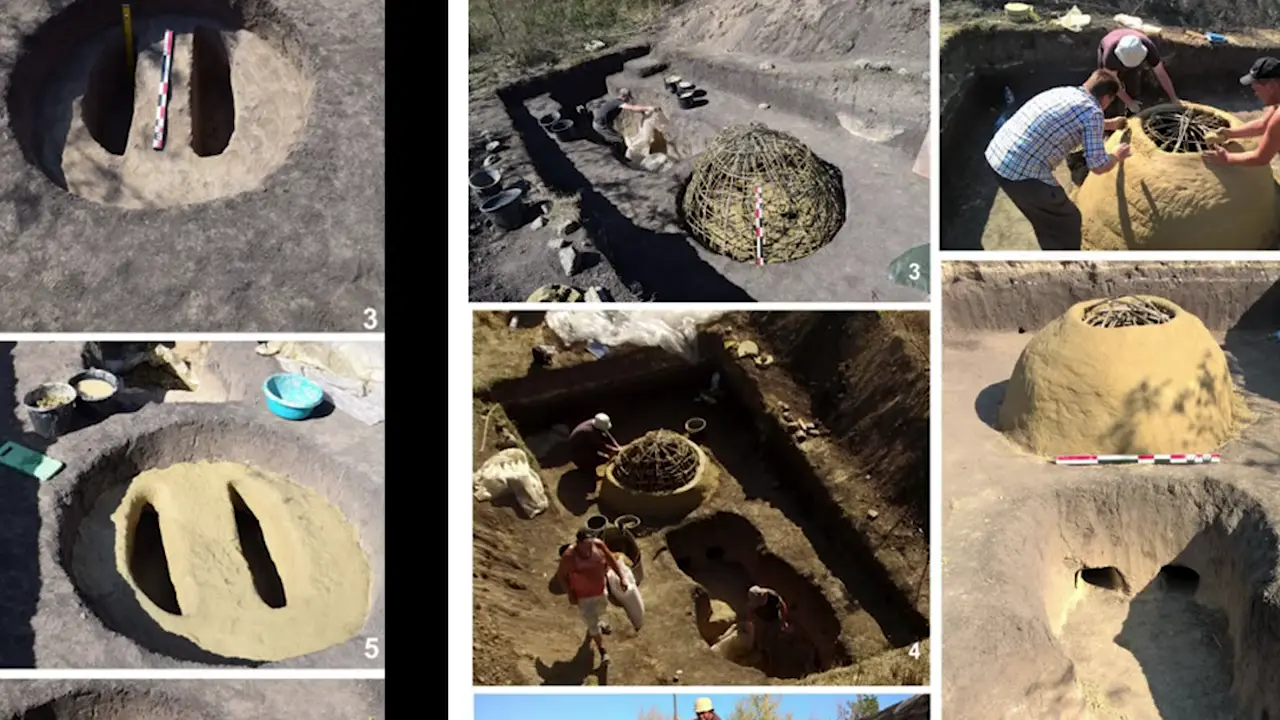
At Stâncești in northern Moldova, Cucuteni-Trypillia potters used dual-chambered updraft kilns that separated combustion from the pottery chamber. Some Cucuteni A wares were fired at 850–900°C. The video argues that this pyrotechnology may also have enabled copper smelting and speculates that female potters were among the first to extract copper. It credits Vinča culture with true metallurgy involving molten, cast metal.
Video argues Stâncești kilns may have enabled copper smelting
Site mentioned
📍 Stancesti
Key facts
- Analysis of pottery from Tărpești in Romania identified recipes using selected clays and crushed pottery as temper.
- Some Cucuteni A pottery samples were fired at 850–900°C.
- Stâncești in northern Moldova contained dual-chambered updraft kilns that separated combustion from the pottery chamber and directed hot gases through channels and openings.
- The video argues that the same pyrotechnology may have enabled copper smelting; this connection is not established by the supplied evidence.
- The video speculates that female potters may have been among the first to extract copper from ore using kilns initially developed for pottery.
- The Carbuna hoard in Moldova contained hundreds of copper objects.
- The video credits Vinča culture with the first true metallurgy involving molten, cast metal.
Sources
pmc.ncbi.nlm.nih.gov
Linked in video description
sfb1266.uni-kiel.de
Linked in video description
Largest Cucuteni-Trypillia Kiln Found in a 60-House Villageanthropology.net
A 5,900-year-old Copper Age pottery kiln at Ursoaia, Romania, is larger than any kiln yet published from the Trypillia megasites.
Firing West Coast Updraft Kiln - Forums - Ceramic Arts Networkcommunity.ceramicartsdaily.org
When loading my updraft I put a broken shelve about 2 inches from flue exit to sloww down heat /flame rise. Do this hwile loading. Next fire ...
Experimental (re)construction and use of a Late Cucuteni- ...europub.co.uk
This paper describes an archaeological experiment which took place in September 2017 in Stolniceni, Edineț County, Republic of Moldova, based on the recent ...
Giant 6000-Year-Old Pottery Kiln in Romania Sets a ...arkeonews.net
... Cucuteni–Trypillia kilns. Excavated in 2025, the kiln had a working surface of approximately 7.5 square metres and an estimated upper firing ...
experimental (re)construction and use of a late cucuteni- ...academia.edu
The experimental kiln's construction strictly adhered to the original archaeological dimensions from the Cucuteni-Trypillia site. Firing lasted over 10 hours, ...
Temper (pottery)en.wikipedia.org
A temper is a non-plastic material added to clay to prevent shrinkage and cracking during drying and firing of vessels made from the clay.
Was this story useful?
Keep exploring
Every site on this page sits on the globe, and the people who research them are on the Discord.
3D Globe · Sites by country · Story Archive · Research Library · Weekly Journal · Search
AI-generated text · images from the original sources · always verify with the sources.