

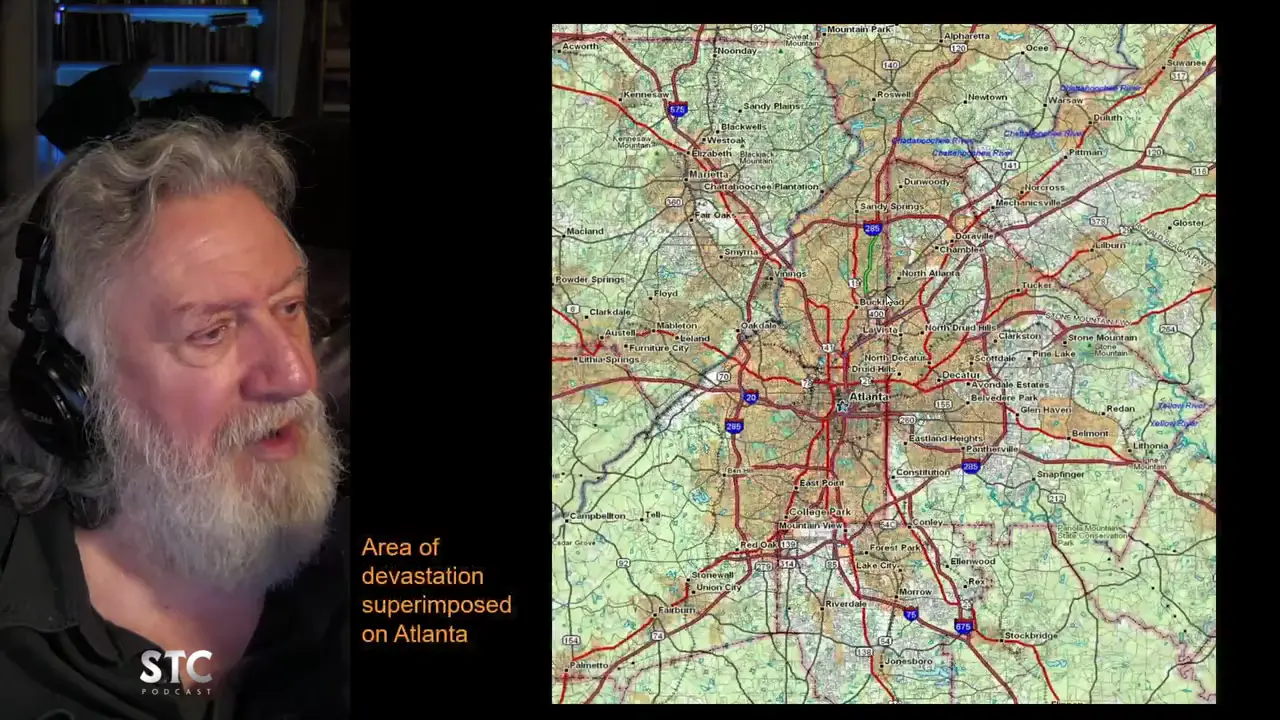
The blast flattened over 2,000 square kilometers of old-growth forest—an area comparable to the entire city of Atlanta. The devastation forms a distinctive non-radial "butterfly" pattern, with some trees stripped bare while hill-protected stands remained untouched. Even 19 years later, the landscape still showed massive scarring.
Tunguska blast flattened over 2,150 square kilometers of Siberian forest
Key facts
- Over 2,000 square kilometers of forest were flattened by the blast
- The devastation zone is referred to as the butterfly pattern and is not radially symmetrical
- The flattened area is comparable in size to the city of Atlanta
- Telegraph pole trees remained standing but were stripped of branches and bark
- Standing trees in some areas were protected from the blast wave by hills
- Shallow elliptical swamps near the epicenter may have formed from the blast, resembling Carolina bays
- After 19 years of regeneration, the area still showed significant devastation
Sources
Tunguska event - Wikipediaen.wikipedia.org
The Tunguska event is the largest impact event on Earth in recorded ... butterfly-shaped blast patterns similar to the pattern found at the Tunguska site.
THE TUNGUSKA EXPLOSION OF 1908icr.org
The Tunguska explosion occurred on the morning of June 30, 1908 at 7:17 AM local time (0h 17m 11s UT) in the area of the Stony Tunguska River.
The Tunguska event - Mensamensa.org.uk
Kulik described finding an 830-square-mile butterfly-shaped area of destruction and around 80 million uprooted trees. In the years that followed ...
Tunguska Event - Armagh Observatory and Planetariumarmagh.space
It was a visitor from outer space: a comet or asteroid explosively disintegrated in the atmosphere and caused a great amount of damage locally. The Tunguska ...
115 Years Ago: The Tunguska Asteroid Impact Event - NASAnasa.gov
... butterfly-shaped area of destruction of 830 square miles extending nine to 22 miles from the epicenter with millions of trees knocked over.
Was this story useful?
Keep exploring
Every site on this page sits on the globe, and the people who research them are on the Discord.
3D Globe · Sites by country · Story Archive · Research Library · Weekly Journal · Search
AI-generated text · images from the original sources · always verify with the sources.