

Token shapes evolved into cuneiform symbols, possibly inspiring board games. By 3,500 BCE, more complex token shapes and relationships to writing became obvious Cone-shaped tokens resemble early cuneiform symbol for silver (kubabar) Cuneiform symbol for administrator (SA) contains grid pattern resembling abacus

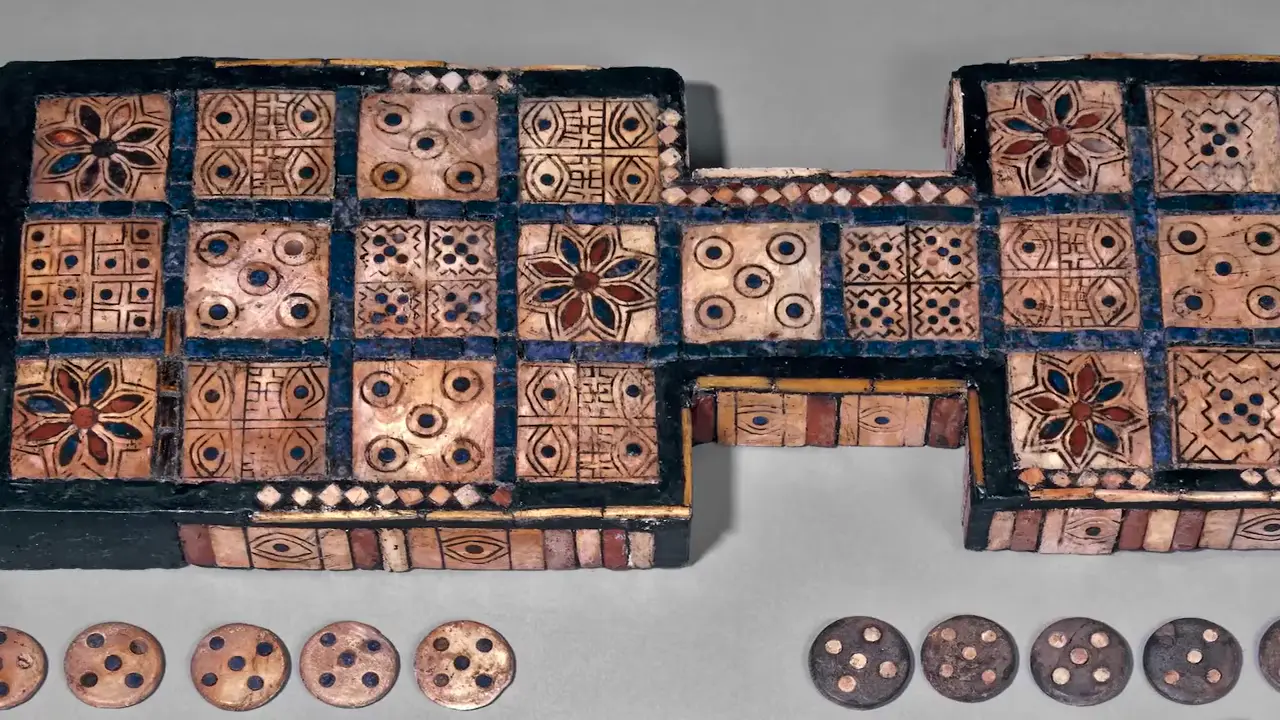
Cuneiform symbols evolved from clay tokens. The Royal Game of Ur board's grid mirrors the administrator symbol (SA). Board games likely developed from counting exercises using tokens on grids.

Key details:

- By 3,500 BCE, more complex token shapes and relationships to writing became apparent

- Cone-shaped tokens resemble early cuneiform symbol for silver (GI or NIDA)

- Cuneiform symbol for administrator (SA) contains grid pattern resembling abacus

- Royal Game of Ur board (from early third millennium BCE) discovered in Iraq by Leonard Woolley at Ur

- Rule book for Royal Game of Ur partially preserved on cuneiform tablet (dated to 177-176 BCE)

Key Facts

  • By 3,500 BCE, more complex token shapes and relationships to writing became obvious
  • Cone-shaped tokens resemble early cuneiform symbol for silver (kubabar)
  • Cuneiform symbol for administrator (SA) contains grid pattern resembling abacus
  • Royal Game of Ur board (4,500 years old) found by Leonard Woolley resembles SA symbol grid
  • Rule book for Royal Game of Ur preserved in clay tablet
  • Game boards with grids found on bricks in association with schooling and teaching
  • Board games may have developed from counting exercises using tokens on grids
  • Tokens impressed on clay at different angles to represent different numbers