

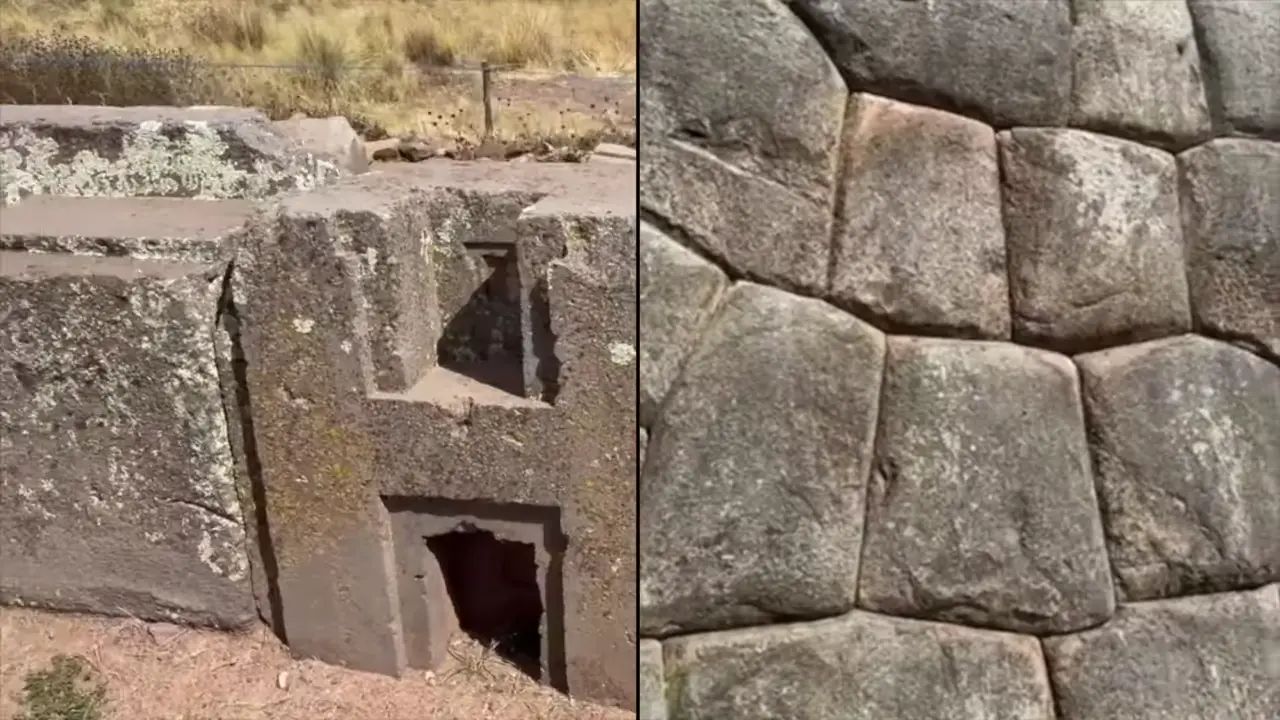
Puma Punku was built in phases from about A.D. 500–550 to A.D. 900–1000, with the best-known H-block work generally placed in the 8th–9th centuries. The oft-cited total is roughly 100 blocks, but the site is only partly excavated. If that count is assigned to those two centuries, the simple average is about one every two years—not one every four to five across the site's full chronology. Tiwanaku was an imperial capital for about 500 years, not 1,000; its urban core was roughly Cuzco-sized, and the main ceremonial precinct was largely abandoned after A.D. 1000, some 400–450 years before the Inca arrived. The video argues that rougher upper masonry was later work and presents the block count as a limited-output puzzle. Both remain interpretations, not established archaeological findings.
Tiwanaku’s H-Blocks: A 500-Year Site, Two-Century Block Phase
 BoliviaArchitecture
Site mentioned
Key facts
- Pumapunku is a ceremonial precinct within the Tiwanaku complex in Bolivia. The site was built in phases from about AD 500–550 to AD 900–1000, with the best-known H-block work generally placed in the 8th–9th centuries.
- The frequently cited total of about 100 H-blocks is approximate. Pumapunku is only partly excavated, so this is not a complete inventory.
- Tiwanaku served as the capital of its empire chiefly from about AD 500–1000—approximately 500 years, not 1,000.
- Tiwanaku's urban core covered roughly 15–20 km², broadly comparable in scale with Cuzco's urban area. Pumapunku itself was much smaller.
- The main ceremonial precinct was largely abandoned after about AD 1000. The Inca reached Tiwanaku in the 15th century, roughly 400–450 years later.
- The claim that rougher upper courses were later additions mistakenly attributed to the original construction is the video's interpretation, not an established archaeological finding.
Sources
Pumapunku - Wikipediaen.wikipedia.org
Construction of Puma Punku is believed to have begun after AD 536. Pumapunku was the most important construction in Tiwanaku, other than Akapana, which is ...
Ancient cities of Tiwanaku and Puma Punkuroamingourway.com
Puma Punku site is about 2 kilometers from Tiwanaka and built around 560 AD by the Tiwanakans. The structures here are different in shape that ...
Tiahuanaco Monuments (Tiwanaku / Pumapunku), Bolivia are made ...geopolymer.org
Tiahuanaco Monuments (Tiwanaku / Pumapunku), Bolivia are made of geopolymer artificial stones created 1400 years ago.
A Bayesian chronology for the collapse of Tiwanaku - PMC - NIHpmc.ncbi.nlm.nih.gov
Here we present a generational-scale chronology of Tiwanaku using Bayesian models of 102 radiocarbon dates, including 45 unpublished dates. This chronology ...
Scientific Evidence that the Puma Punku H-Blocks Are ...thearchaeologist.org
Some blocks of stone are more than 7 metres long, weighing more than 130 tonnes. Some are made of a type of red sandstone, which would have had ...
Puma Punku & Its Advanced Technologytheancientconnection.com
blocks weighing in the range of 100-130 tons. One notable block has been measured at 36 feet long, 16 feet wide, and 6 feet thick.
(PDF) ON THE BLOCKS OF PUMA PUNKU. Explaining ...researchgate.net
The blocks are made from sandstone or andesite, and the largest was estimated at 137 tones. an “H” block on top of the other.
Tiwanaku and Puma Punku - Odyssey Travellerodysseytraveller.com
Dates for Tiwanaku vary between sources, and some building at the site is much older, but most archaeologists place its monumental peak between about AD 500 ...
Was this story useful?
Keep exploring
Every site on this page sits on the globe, and the people who research them are on the Discord.
3D Globe · Sites by country · Story Archive · Research Library · Weekly Journal · Search
AI-generated text · images from the original sources · always verify with the sources.