

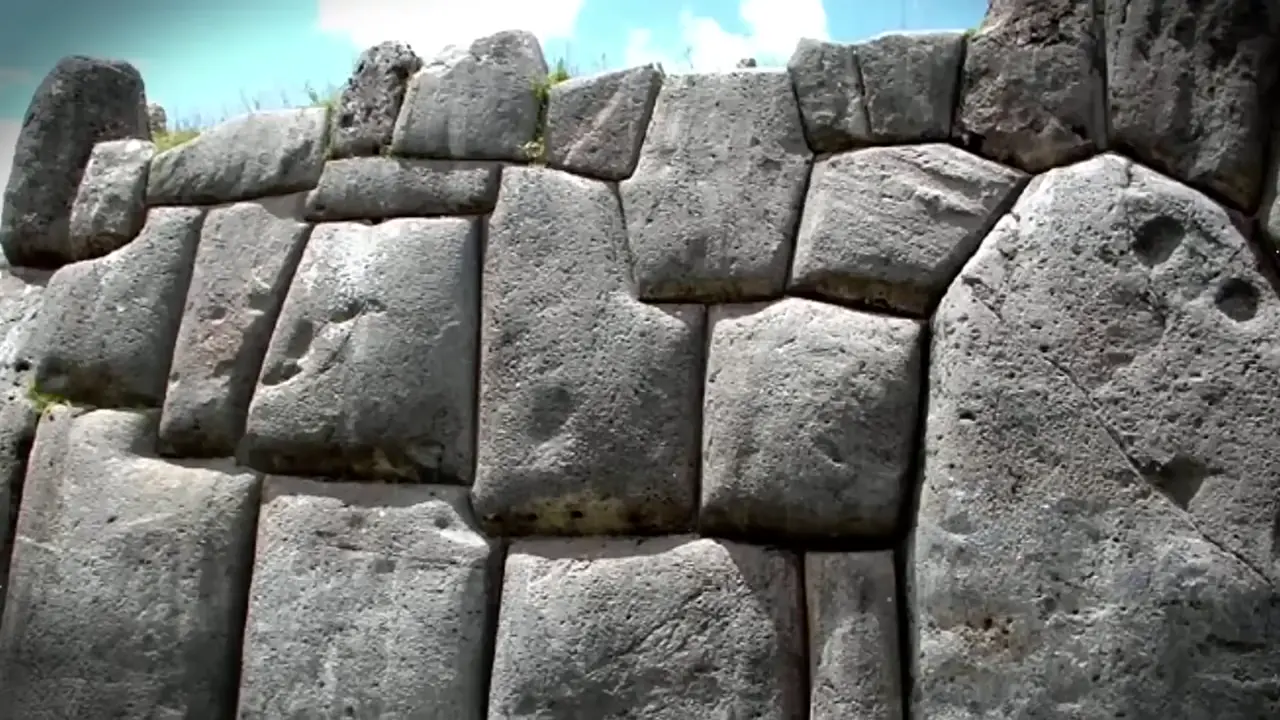
Pumapunku in Bolivia: radiocarbon evidence dates its initial construction to about AD 536–600, although Arthur Posnansky argued for an age of as much as 17,000 years using archaeoastronomy. The complex contains precisely fitted andesite blocks, including H-shaped recesses and other geometric cuts; some joints are described as too tight for a razor blade. The video argues that the precision would be nearly impossible to reproduce, but experimental archaeology shows the stonework can be produced with stone tools and abrasives. Pumapunku had largely been abandoned before the Incas arrived in the 15th century, and no surviving written record identifies its builders or dates its construction.
Pumapunku’s dating controversy and precision-cut stonework
 BoliviaGeneral
Key facts
- Radiocarbon evidence dates Pumapunku’s initial construction to about AD 536–600; construction continued for centuries.
- Arthur Posnansky, an Austrian archaeologist and engineer, argued that the complex was as much as 17,000 years old on archaeoastronomic grounds. That date has not been accepted.
- The best-known Pumapunku blocks are cut andesite, a volcanic rock; “granite and diorite” is not an accurate blanket description of Pumapunku’s structures.
- Some joints are described as too tight for a razor blade to pass.
- The famous blocks have H-shaped recesses, channels and other geometric cuts; they are not a uniform series of circular drill holes of identical size and depth.
- Archaeological and experimental work indicates the blocks could have been shaped with stone tools and abrasives. The claim that modern experts consider the work nearly impossible to reproduce is false.
- Pumapunku had largely been abandoned before the Incas reached Tiwanaku in the 15th century. No surviving written record identifies its builders or gives a construction date.
Sources
Watch Ancient Aliens Season 9 Episode 17 | HISTORY Channelhistory.com
But in 1945, archaeologist Arthur Posnansky proposed that Puma Punku was much, much older–perhaps going back to 15,000 BC. And Ancient Astronaut theorists point ...
Tiwanaku - Wikipediaen.wikipedia.org
From 1910 to 1945, Arthur Posnansky maintained that the site was 11,000–17,000 years old based on comparisons to geological eras and archaeoastronomy.
The non-mystery of Puma Punku and Tiwanakudiggingupancientaliens.com
Posnansky most often claimed that the Tiwanaku site was 12,000 years old, but to Newman's credit, there are some mentions of 17,000 BCE. How was ...
Arthur Posnansky, the Czar of Tiwanaku Archaeologyarchaeologybulletin.org
Posnansky proposed a five-stage sequence that began over 12,000 years ago (the date varies and is as old as 17,000 years ago in some publications) when the ...
Arthur Posnansky, the Czar of Tiwanaku Archaeologyarchaeologybulletin.org
by EJ Marsh · 2019 · Cited by 12 — In the days before radiocarbon dating, astronomical measurements were among the few potential dating methods. Posnansky solicited the German government for
(DOC) The Enduring Enigma Of Puma Punku in Boliviaacademia.edu
Initial construction at Puma Punku dates around 1510 ±25 B.P., The more drastic dating view, that espoused by the engineer Arthur Posnansky, and more ...
Pumapunkuen.wikipedia.org
This layer was deposited during the first of three construction epochs, and dates the initial construction of the Pumapunku to AD 536–600 (1510 ±25 B.P. C14, ...
Cotsen Institute of Archaeology Pressescholarship.org
by JP Protzen · 2013 · Cited by 38 — Posnansky, likely dating to May 1927 (Figure 2.5b), and published as ... at Pumapunku is, once more, due to Posnansky. He published a ...
Was this story useful?
Keep exploring
Every site on this page sits on the globe, and the people who research them are on the Discord.
3D Globe · Sites by country · Story Archive · Research Library · Weekly Journal · Search
AI-generated text · images from the original sources · always verify with the sources.