

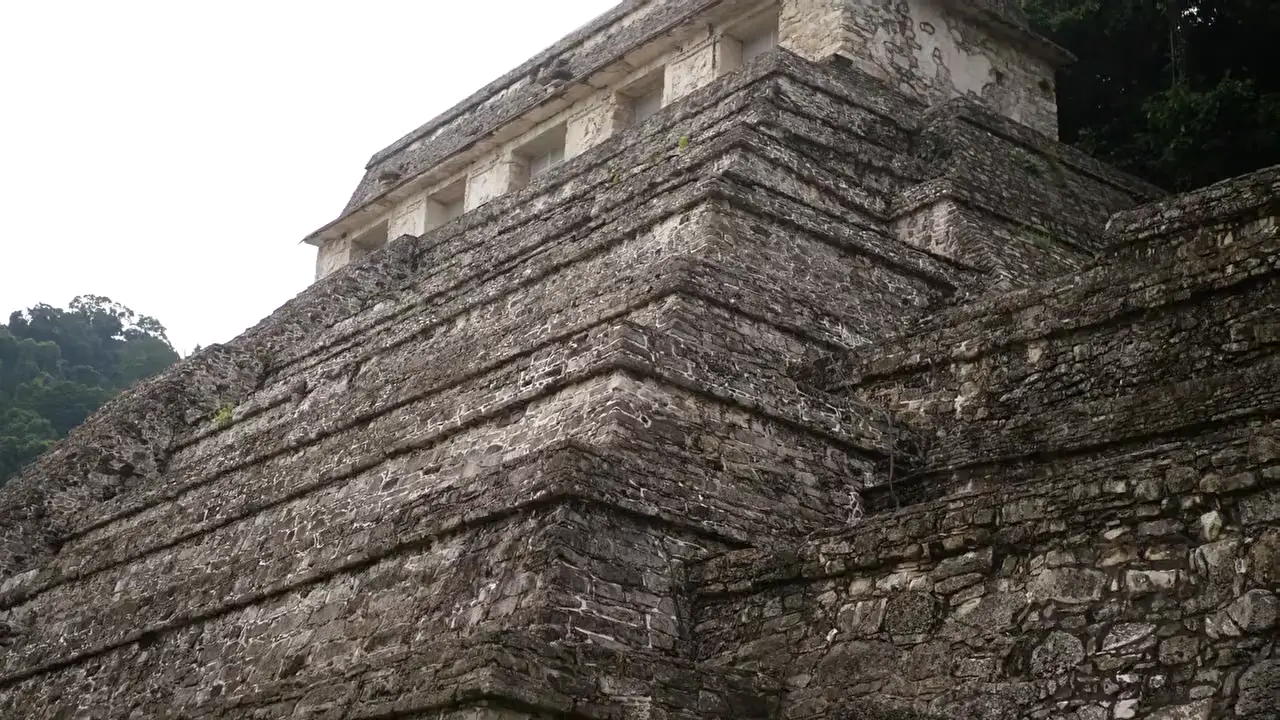
The Temple of Inscriptions at Palenque is a stepped pyramid with levels representing levels of the Maya underworld. Rising above an interior stairway, it contains 617 glyph blocks across three panels — the longest known Maya hieroglyphic text at Palenque, documenting approximately 180 years of the city's history. Hidden behind a stone slab lies Pakal the Great's tomb, containing his limestone sarcophagus, stucco attendants, a jade mosaic funeral mask, and sculptured heads. A psychoduct tube connects the tomb to the temple floor for ritual communication. The sarcophagus lid shows Pakal at the base of the world tree, flanked by a double-headed vision serpent.
Temple of Inscriptions: Pakal's Tomb and 617-Glyph History
Site mentioned
📍 Temple of Inscriptions
Key facts
- Temple of Inscriptions contains nine-level stepped pyramid representing nine levels of underworld
- Structure contains 617 glyph blocks constituting second-longest Maya hieroglyphic text
- Three tablets record approximately 180 years of Palenque's history
- An 80-foot stairway descends into the pyramid's interior
- Behind triangular stone slab was tomb chamber containing limestone sarcophagus
- Tomb also contained nine stucco attendants, jade mosaic funeral mask, and sculptured heads
- A psychoduct tube runs from tomb chamber to temple floor for ritual communication
- Sarcophagus lid depicts Pakal at base of world tree with double-headed vision serpent
Was this story useful?
Keep exploring
Every site on this page sits on the globe, and the people who research them are on the Discord.
3D Globe · Sites by country · Story Archive · Research Library · Weekly Journal · Search
AI-generated text · images from the original sources · always verify with the sources.