

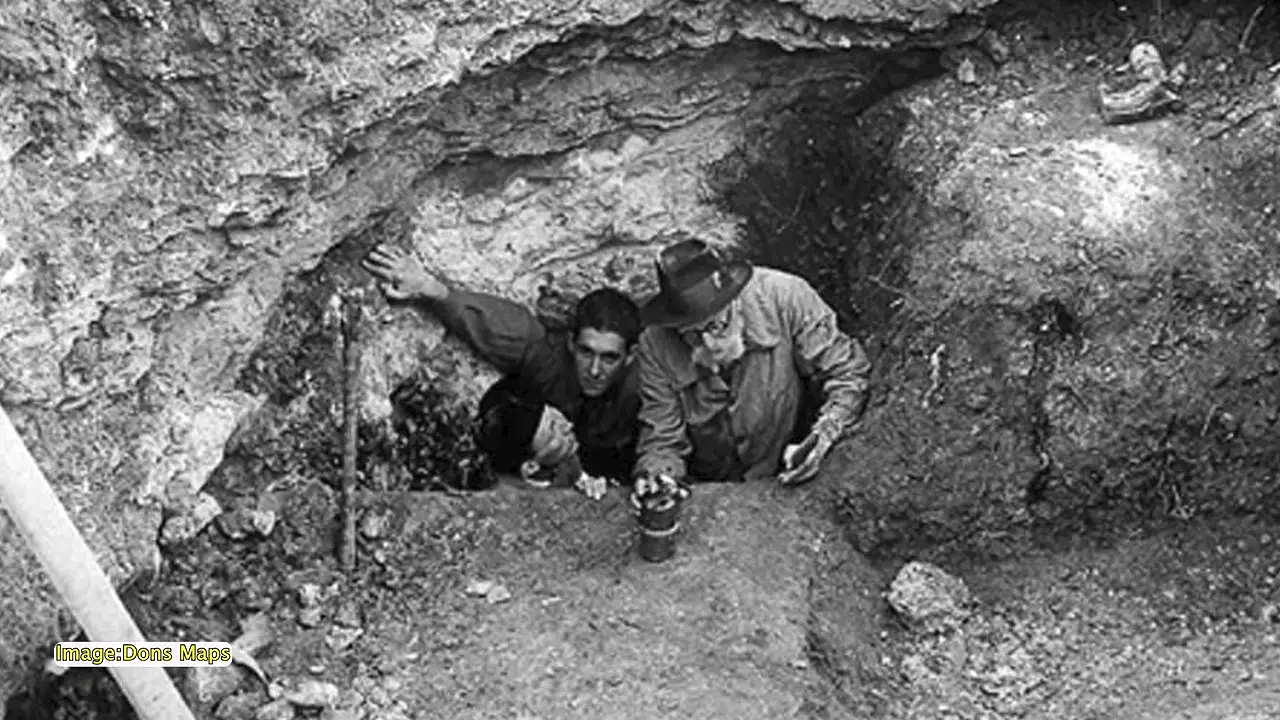
Lascaux in the Dordogne, France was rediscovered in 1940 when schoolboy Marcel slid down a muddy slope ~15 m into an underground chamber. The next day the boys roped down a second shaft, ~8 m deep, and found a painted man confronting a bison 🐂 Rock art radiocarbon dates to about 21,000 years ago, at the Badelian–Magdalenian transition. Over 6,000 painted figures fill seven galleries, and the Hall of the Bulls includes a 5.2 m bull — the largest animal figure known from cave art. Popularity was the enemy: ~1,200 daily visitors in the 1960s fostered fungi and lichens, so the cave closed in 1963. Today only a few experts enter on a handful of days each month, and replicas plus a virtual tour carry the experience to the public. A great reminder that access and preservation are always a balancing act. 🎨
Teenagers' cave find reveals Lascaux's 21,000-year-old painted halls
 FranceGeneral
Site mentioned
Key facts
- Lascaux in the Dordogne, France, was entered in 1940 by a group of schoolboys including Marcel, who slid down a muddy slope about 15 m before reaching an underground chamber.
- The boys returned the next day with a rope and descended a second shaft about 8 m deep, where they found a painted scene of a man confronting a bison.
- The group showed the cave to visitors for a small fee before their schoolteacher, Leon Laval, a member of a local prehistoric society, recognized the paintings as prehistoric and required that they be guarded against vandalism.
- A week later French archaeologist and Catholic priest Abbe Breuil visited with other prehistorians to authenticate the find and compare the paintings with securely dated caves.
- Radiocarbon dating of charcoal and other material from the cave indicates use around 21,000 years ago, at the transition between the Badelian and Magdalenian periods.
- More than 6,000 painted figures were made across seven galleries, the most famous being the Hall of the Bulls, containing bulls, horses, aurochs, stags and the cave's only bear.
- One bull in the Hall of the Bulls measures 5.2 m, the largest animal figure known from cave art.
- Development work opened the cave to the public in 1948 and archaeological excavations began a year later.
- At around 1,200 visitors per day, carbon dioxide, light and humidity fostered fungi and lichens that damaged the paintings; the cave was closed to the public in 1963, and today only a few experts are admitted on a few days a month.
- Replicas of the cave and a virtual tour were created, and an international committee was established to regulate human access to caves containing prehistoric art.
Sources
The four discoverers | Lascaux cavearcheologie.culture.gouv.fr
Four boys and a dog called Robotcatherinewilsongarry.substack.com
Discovery of the Lascaux Cave Paintingshistorytoday.com
How four teenagers accidentally discovered a 19000-year-old cave ...m.economictimes.com
Was this story useful?
Keep exploring
Every site on this page sits on the globe, and the people who research them are on the Discord.
3D Globe · Sites by country · Story Archive · Research Library · Weekly Journal · Search
AI-generated text · images from the original sources · always verify with the sources.