

The Tashtyk culture dominated southern Siberia from the 2nd century BC to the 4th-5th century AD, cremating their dead and placing bones in leather effigies stuffed with grass, then adding gypsum masks. In 1969, archaeologist Leon Kauslazov excavated Tomb 4 at the Oglakhty burial ground, finding a tattooed mummy aged 25-30 with reddish-brown hair and Western European DNA shaped by Scythian and Sarmatian influences. CT scans revealed the young man had a trepanation—a roughly 6x7cm hole chiseled into the temporal bone to remove the brain. A long stitched wound from his left eye to his ear may have been the cause of death. Of 26 surviving masks, this remains one of the only tattooed individuals found.
Tashtik warrior culture tombs at Oglakhty reveal tattooed mummy with trepanation
 RussiaGeneral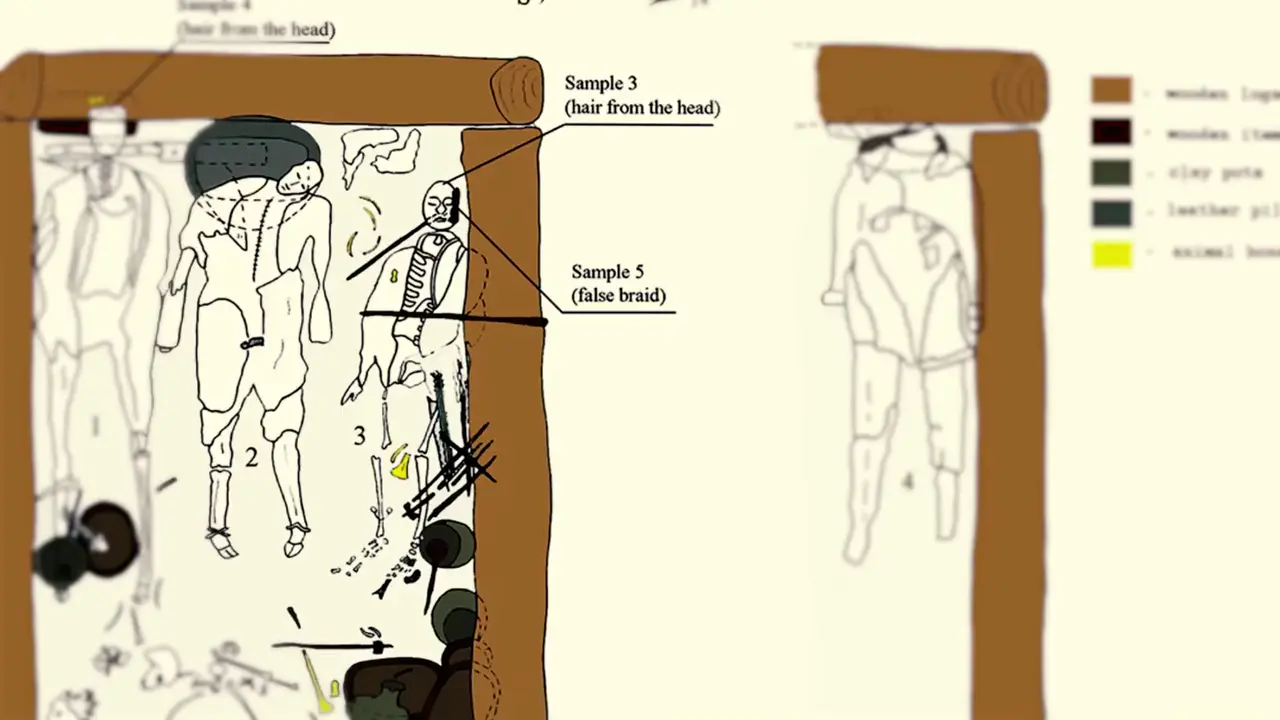
Site mentioned
Key facts
- Tashtik culture dominated southern Siberia from roughly the 1st century to the 7th century AD
- They built fortified settlements along the Ira River and worked metal, textiles, and bred cattle
- When someone died, they cremated the body, placed bones inside leather effigies stuffed with grass, then added a gypsum mask
- In 1969, archaeologist Leon Kauslazov excavated Tomb 4 at the Oglakhty burial ground and found one of the only Tashik mummies with tattoos
- CT scan revealed the mummy was a young man aged 25 to 30 with reddish brown hair
- A long suture ran from his left eye to his ear; researchers believe it was stitched after death and may have been the cause of death
- His skull had been trepanated: a hole 6 by 7 cm chiseled into the temporal bone to remove the brain
- The genetic studies showed individuals had mostly blue eyes, blonde or light brown hair with primarily Western European DNA shaped by Scythians and Sarmatians
- 26 fully intact masks survive today along with fragments of nearly 200 more
- The communal crypts were burned to the ground after funeral rituals concluded
Sources
2,000-Year-Old Siberian Funerary Masks Reveal Secrets of the ...arkeonews.net
Unlike many ancient cultures that practiced inhumation (burial of the body), the Tashtyk were known for cremation rituals. After cremating the ...
Ancient DNA gives insight into the mysterious Tashtyk peoples of ...musaeumscythia.substack.com
The Tashtyk as a material culture. Following the Tagar culture, the Tashtyk culture lasts from the first century BC up until the fifth century ...
A Message From a Mysterious Ancient Culture in Siberia - ICMGLTicmglt.org
The Tashtyk culture was common in the Khakassian Minusink basin, in southern Siberia, from almost 2,000 to about 1,600 years ago. But the ...
The face hidden behind the mask - Archeotravelers.comarcheotravelers.com
The Tashtyk culture developed along the Yenisei valley and surrounding areas of southern Siberia from the 2nd century BC. to the 4th century ...
Tashtyk culture - Grokipediagrokipedia.com
The Tashtyk culture was an Iron Age archaeological culture that flourished in the Minusinsk Basin of southern Siberia, along the Yenisei River in modern-day ...
Was this story useful?
Keep exploring
Every site on this page sits on the globe, and the people who research them are on the Discord.
3D Globe · Sites by country · Story Archive · Research Library · Weekly Journal · Search
AI-generated text · images from the original sources · always verify with the sources.