

Warm, wet climate boosted Roman agriculture, supporting a substantial population peak by 180 AD. Famines remained largely localized. Lead and ash levels in Greenland ice cores reflect Roman-era mining and smelting. Climate deterioration and increased variability after ~250 AD prompted irrigation projects in North Africa and contributed to economic stresses.
Socio‑Economic Impacts of Climate Change on the Roman World
 SpainTheory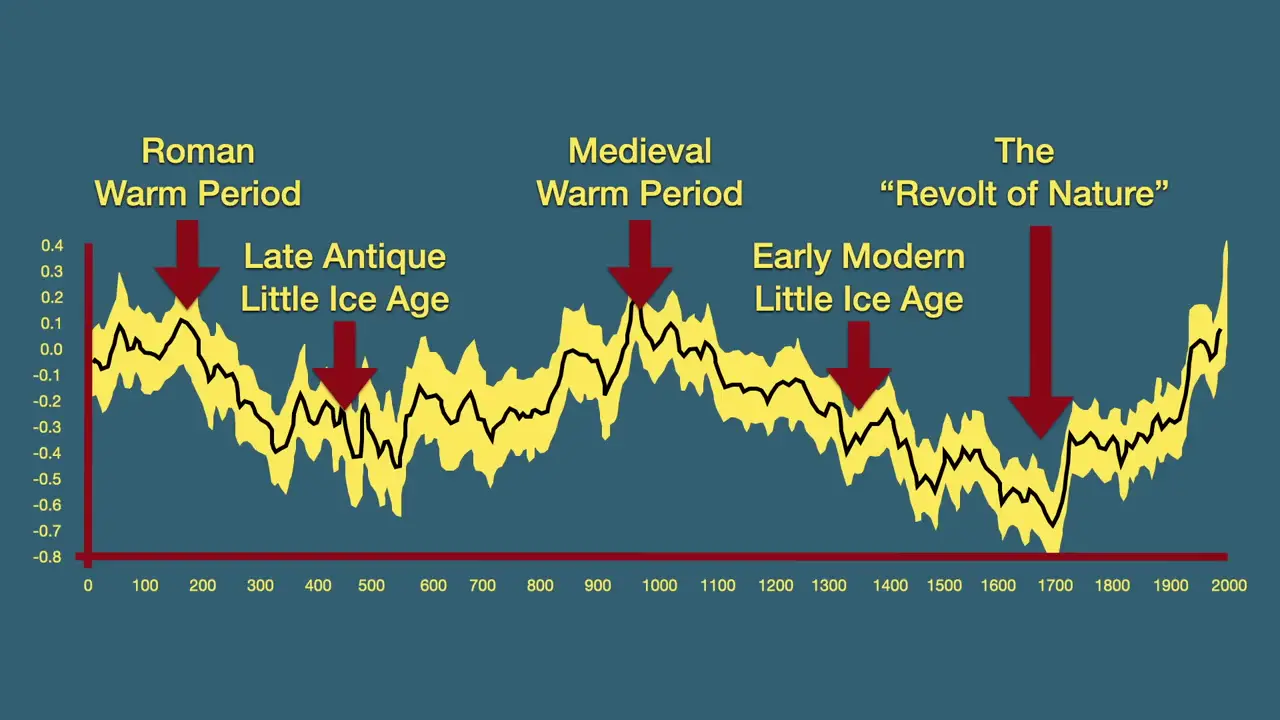
Key facts
- Warmer climate supported intensive agriculture, enabling a population of 60–75 million by 180 AD.
- Famine and food crises remained localized, suggesting overall agricultural stability.
- Lead and ash levels in Greenland ice cores reflect peak Roman mining and smelting activity in the 1st–2nd centuries.
- Later climate cooling and drought (post‑120 AD) led to irrigation projects in North Africa and contributed to economic and demographic stresses.
Sources
Agriculture in ancient Rome - Wikipediaen.wikipedia.org
Roman agriculture describes the farming practices of ancient Rome, during a period of over 1000 years.
Climate change helped end the Roman empire, says study - Gristgrist.org
Climate change helped end the Roman empire, says study. If you thought the fall of the Roman Empire was caused by lead poisoning or that old ...
How Climate Change and Plague Helped Bring Down the Roman ...smithsonianmag.com
The empire-builders benefitted from impeccable timing: the characteristic warm, wet and stable weather was conducive to economic productivity in ...
The impact of climate change on the agriculture and the economy of ...pmc.ncbi.nlm.nih.gov
We conclude that the warm and wet climate of the Roman period may have had an extremely beneficial effect on the profitability of wine and olive farms ...
The Roman Empire changed the environment so much it cooled all ...zmescience.com
The Roman Empire released so many aerosols from burning fuel (ie large quantities of organic matter like wood) and cleared so much land for agriculture that it ...
Was this story useful?
Keep exploring
Every site on this page sits on the globe, and the people who research them are on the Discord.
3D Globe · Sites by country · Story Archive · Research Library · Weekly Journal · Search
AI-generated text · images from the original sources · always verify with the sources.